For centuries Kraków was Poland’s most important city – a place of artists, scholars and kings. Its magnificent town square, atmospheric cobbled-stone streets, ancient buildings and medieval castle on a hill replete with stories of a resident dragon are stuff on which Gothic fantasies are dreamt up.
Kraków is also a lucky city. It could easily have ended up after the Second World War like Warsaw, Poznan and Gdansk – Polish cities that were vandalised, mutilated and destroyed either by the Nazi occupiers on their way out or the Soviet invaders on their way in.
Some historians say that in January 1945 Konev the Soviet Commander purposefully liberated Kraków in time to save it. Most people now believe that, in truth, the Nazis were simply just too busy running for their lives to have time to lay a dynamite in every house.
Whether by dint of fate or a miracle, Kraków was left unharmed. The beautiful city you see today is authentically old and original.
Sadly not everything about Kraków survived the German Occupation. Kraków’s large and important Jewish population did not. It was entirely wiped out. The Jewish citizens of Kraków were herded like cattles and taken to concentration camps and killing factories in Bełżec, Plaszow and nearby Auschwitz to be murdered on an industrial scale.
The genuinely eccentric Krakowian charmBeautiful Olga at her coffee kioskPoland has a population of about 38.6 million. The population growth rate stands at a paltry 0.02% a year but at least, unlike most of Eastern Europe, it is not falling by much despite high emigration.Striding past a traditional Polish restaurantAt a park in KrakowKrakow has a tradition of learning. Young people from all over the country come to study at the Jagiellonian University, the second oldest in Eastern Europe, founded on 12 May 1364 by Casimir the Great
Youthful commuters at a tram stopIn 2013 Krakow was made a UNESCO City of Literature in recognition of the city’s reading and scholarship tradition. Other cities awarded around the world include Edinburgh (2004) and Baghdad (2015)
Although Poland in November 2010 finally followed Europe in banning smoking in public areas, the country remains moderately smoker-friendly.
The Krakow Barbican built around 1498 is the remnant of a system of fortifications and defences that once encircled the city
Ci, co wiedzieli
o co tutaj szło,
musza ustąpić miejsca tym,
co wiedzą mało.
I mniej niż mało.
I wreszcie tyle co nic.
W trawie, która porosła
przyczyny i skutki,
musi ktoś sobie leżeć
z kłosem w zębach
i gapić się na chmury.
Those who knew
what was going on here
must give way to
those who know little.
And less than little.
And finally as little as nothing.
In the grass which has overgrown
reasons and causes,
someone must be stretched out
blade of grass in his mouth
gazing at the clouds.
From “The End and the Beginning” by Wisława Szymborska, translated by Joanna Trezeciak
Graffitied-shop front in the old Jewish quarter of Kazimierz
Electric trams were introduced in 1901 when Krakow was part of the Austrian Hapsburg Empire.Polish comfort food – pork fat spread or smalec on crusty breadClub owner cum jazz saxophonist piping before the gig
Words and Pictures Copyright Kerk Boon Leng May 2016
Measured by percentage of population, Poland is less rural than at least a dozen other countries in Europe. Richer countries like Finland and Ireland have proportionately more people living out in the countryside, yet the cherubic image of Poland as a pastoral land of priests and peasants lives on, often in a powerful, magical and romantic way.
When Pawel asked if I would like to spend a weekend with his family at their home on a farm about 40 km from Łódź I jumped at the opportunity and quickly said yes to the invitation. It was for me a rare chance as a stranger from Asia to get close and personal to the real soul of an important and resurgent nation at the very heart of Europe.
As a nation, Poland is an authentic European hybrid.
Despite being Western in culture, religion and politics, Poland is by geography and recent history an Eastern European country with a language that sounds like a rustling swishing variety of Russian but written in Latin alphabets like French and English.
Present day Poland may not be rich or even stylishly influential in world affairs but with its homogenous society rooted in a decisive role in history and Roman Catholic tradition, the country has pressing lessons for a Europe facing a crisis of divided societies fractured by the issue of mass mainly male muslim migration.
The first lesson learnt is in the heart-melting kindness felt by travellers, including non-white people, to Poland. Such experiences are signs of a people largely at peace with their identity, faith and conscience. They also prove that Poland unlike Western Europe with its history of colonisation and slavery see no need to give out residency or passports on a huge scale to nationalities of people of different skin colours in order to be nice, tolerant and respectful of them and their cultures. After all, to cherish ones own heritage and wanting to protect it from a deluge by migrants of a different religion after centuries of foreign domination and subjugation does not equal racism or exclusion.
Indeed if Europe is today honest about defending what it considers to be its inalienable and inherent secular liberal values from the twin threats of terrorism and rising intolerance, then those values must also necessarily and urgently be enlarged to include Poland’s right to remain Catholic and Polish without being branded superstitious or regressive.
All images and words Copyright Kerk Boon Leng 2016
Getting lost in Łódź (pronounced “wootsh”) is an entirely easy thing to do. Although Łódź is strategically situated in the middle of Poland where long distance railways and roads intersect, the city does not have a central railway station or one within walking distance of its urban heart.
Long distance trains use the Łódź Kaliska or the Łódź Widzew stations. Both stations are in non-descript surroundings looking more like suburban stations of a college campus than a transport hub for the country’s third largest city. I remember arriving south from Krakow in one of the stations and departing north to Warsaw from another.
Łódź was actually at one time a great industrial centre in Eastern Europe famous for its textile factories. Like Manchester half a century before,Łódź’s textile industry declined and workers lost their jobs and purpose, pushed out of the market by cheaper imported clothes when communism ended in 1989 and Poland turned expectantly to Western-styled capitalism.
These days Łódź is taking steps to polish up its rust belt image of empty mills and silent chimneys. The old architecture has been spring-cleaned, refurbished and given a new use.
All pictures and words Copyright Kerk Boon Leng 2016
Not yet a prime tourist destination but Warsaw is already a pretty famous spot on earth. This city gave its name to an international air carriage treaty, a Marxist military alliance and a romantic musical composition. But it is with less gleeful things and greyness in general that Warsaw seems to have a lingering association.
Warsaw’s tragic history is the result of its tensile geography. The city is a cream blot in the middle of a giant Polish pancake, part of the Great European Plains that stretch the entire extent of the continent from the Ural Mountains to the Atlantic shores. With no towering range or wide seas as shield against invaders, the lands where Poland has been were fought over and owned back and forth between two of Europe’s nastiest neighbours – Germany and Russia.
For most of last century, fate has dealt Poland a particularly bad hand. Warsaw witnessed repeated wars, extermination and annihilation. Yet the city with its motto Contemnit Procellas (to defy the storm), seemed to had refused to just give up and die.
The Polish capital is remembered for not one but two large and ill-fated uprisings against German occupation in World War 2. The Warsaw Ghetto Uprising that took place in 1943 was the single largest Jewish revolt against the Nazis followed a year later in 1944 by the Warsaw Uprising that went into history books as the largest military operation by a resistance movement in Europe during the war.
These historical episodes and their aftermaths not only proved that Warsaw was solely the city in occupied Europe that had the balls to defy the Nazis in large scale open outnumbered and outgunned rebellion, they also testified to the city’s desperate heroism and its indestructibility.
In fact, the Polish people’s defiance and unbreakable will to survive pissed Hitler off so much that he ordered their capital Warsaw to be razed to the ground. By the time the war ended in 1945 almost 90% of Warsaw’s buildings had been reduced to rubble and its population either murdered, expelled or both.
The story of Warsaw’s resurrection is epic.
While the world has seen many war damaged cities rise from their ashes none had been so deliberately, completely and systematically destroyed yet meticulously and painstakingly put back together to be an exact copy of the original as Warsaw and its beautiful old city.
This, to me is reason enough to want to see Warsaw.
As 2015 makes way for 2016 the people of the Kingdom of Cambodia have really a lot to smile about. Already enjoying more economic, political and social freedom than any other country in South East Asia, Cambodia is now the fresh hot destination for tourists, foodies and property investors.
After three trips in two months (Christmas, Chinese New Year and one in between) I am almost convinced that Phnom Penh is one of the most pleasant cities in the world.
Here are three tips for a great trip:
Accommodation: The branded hotel chains have not yet made it to Phnom Penh. Around USD60 will get you a clean and comfortable boutique room with breakfast. Avoid the riverfront area (Sisowath Quay) instead stay in the quiet, central and upscale districts near BKK ( Boeung Keng Kang) and Tonle Bassac.
Dining: Eating well in Phnom Penh is easy especially if like me you like fish, seafood and vegetables (try the spinach). No need to consult your guide book or trip advisor just eat where the food looks fresh and clean. Food (especially Chinese) is good in Phnom Penh although eating out is a tad pricier than Vietnam, Thailand or Malaysia due to the “local” currency the US Dollar.
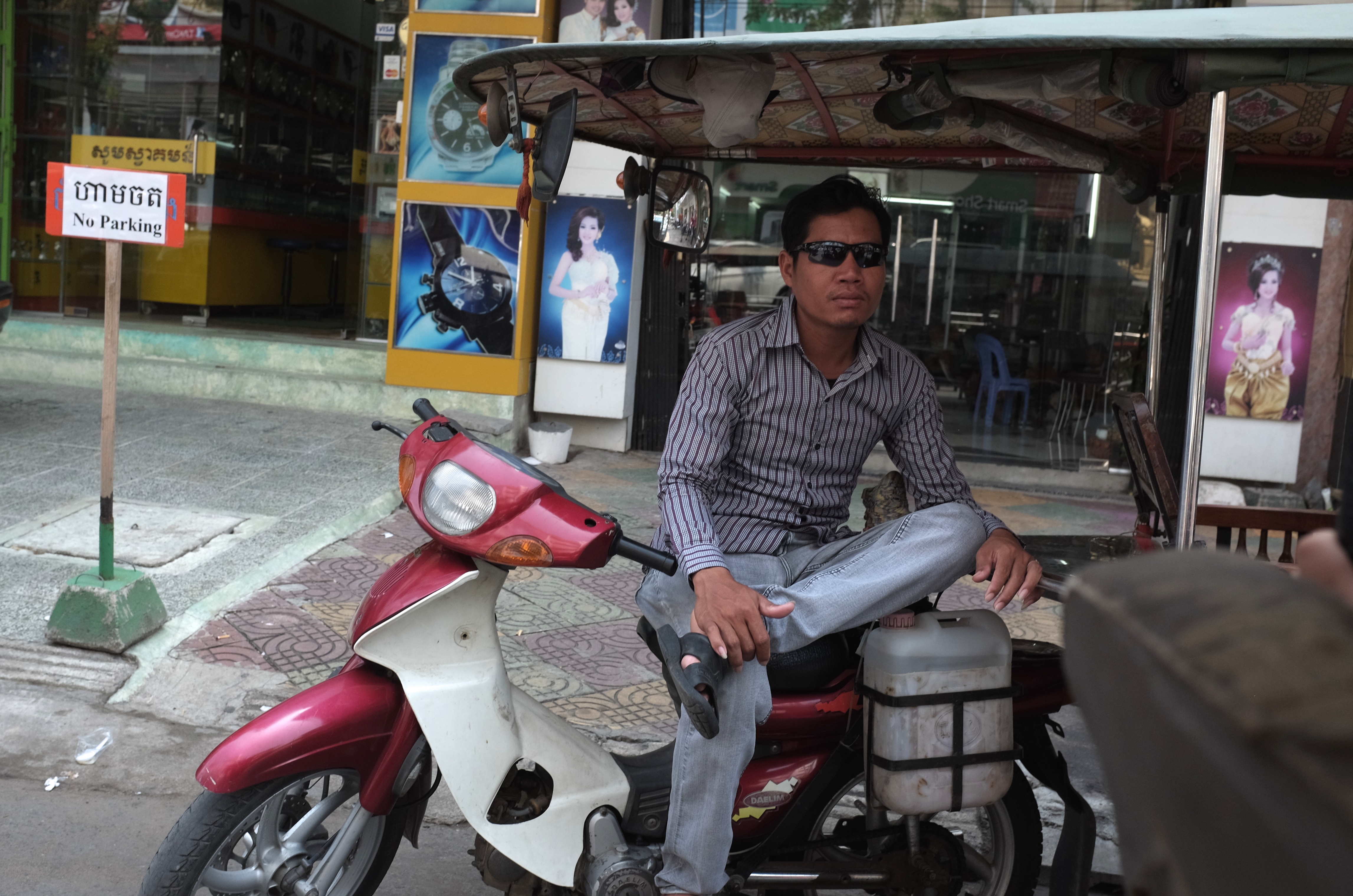
Transport: Although PP is not a huge city, the heat and often humidity rule out walking to where you want to go. The transportation of choice for most tourists is the remork moto (tuktuk). Find an honest-looking driver and book him on a daily or half daily rate for the rest of the trip. Between USD10 to USD15 for a 6 -hour day is fair.
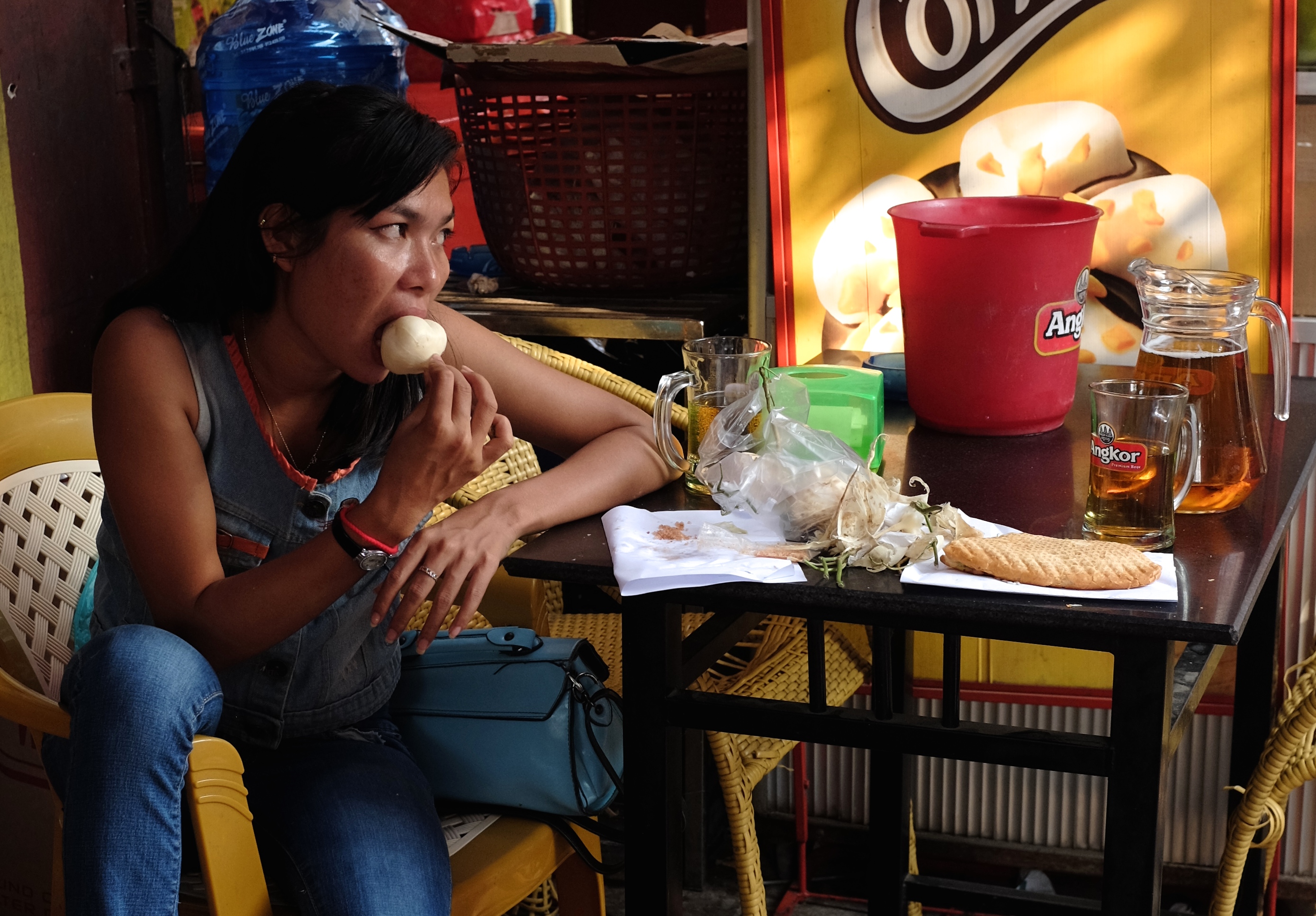
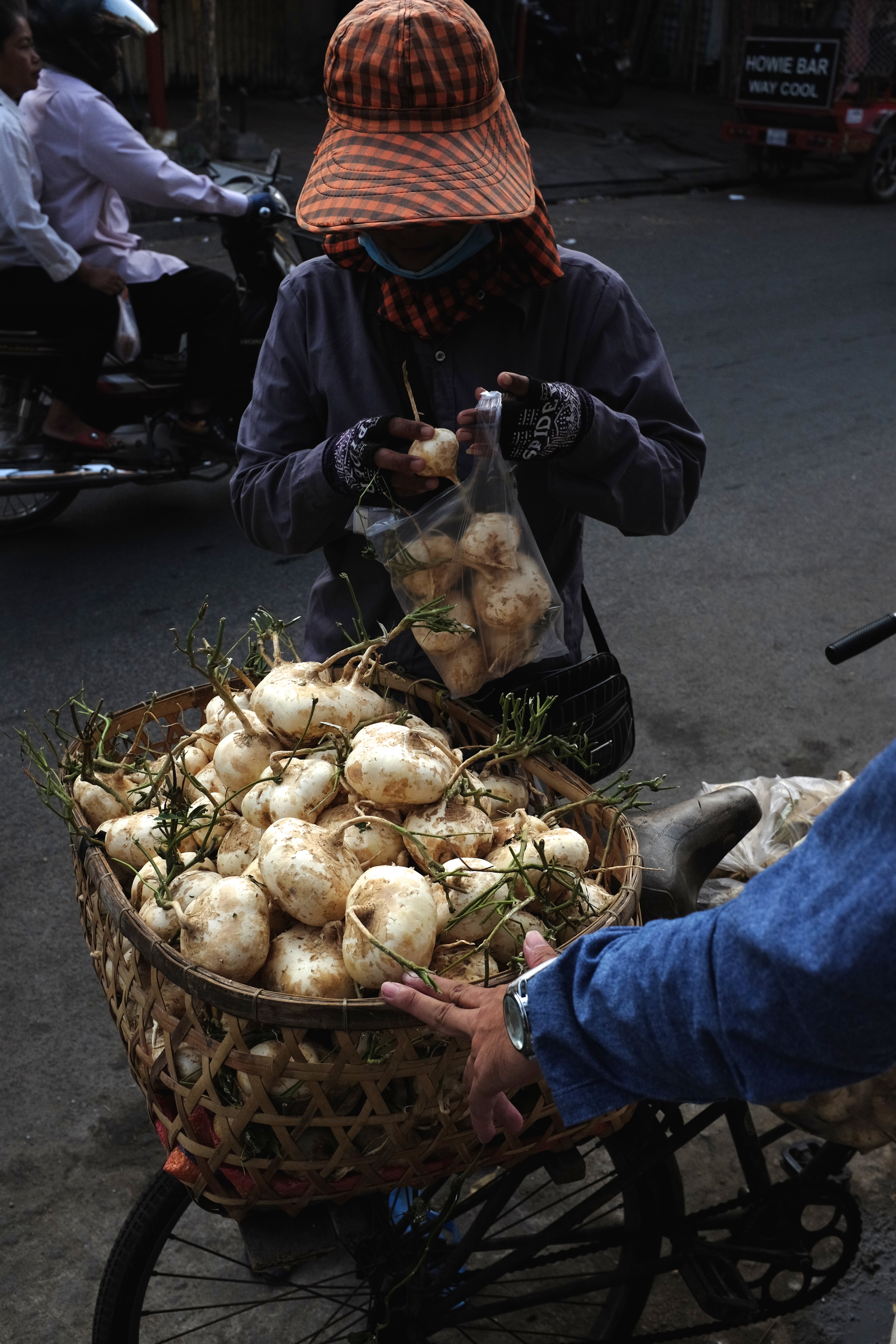
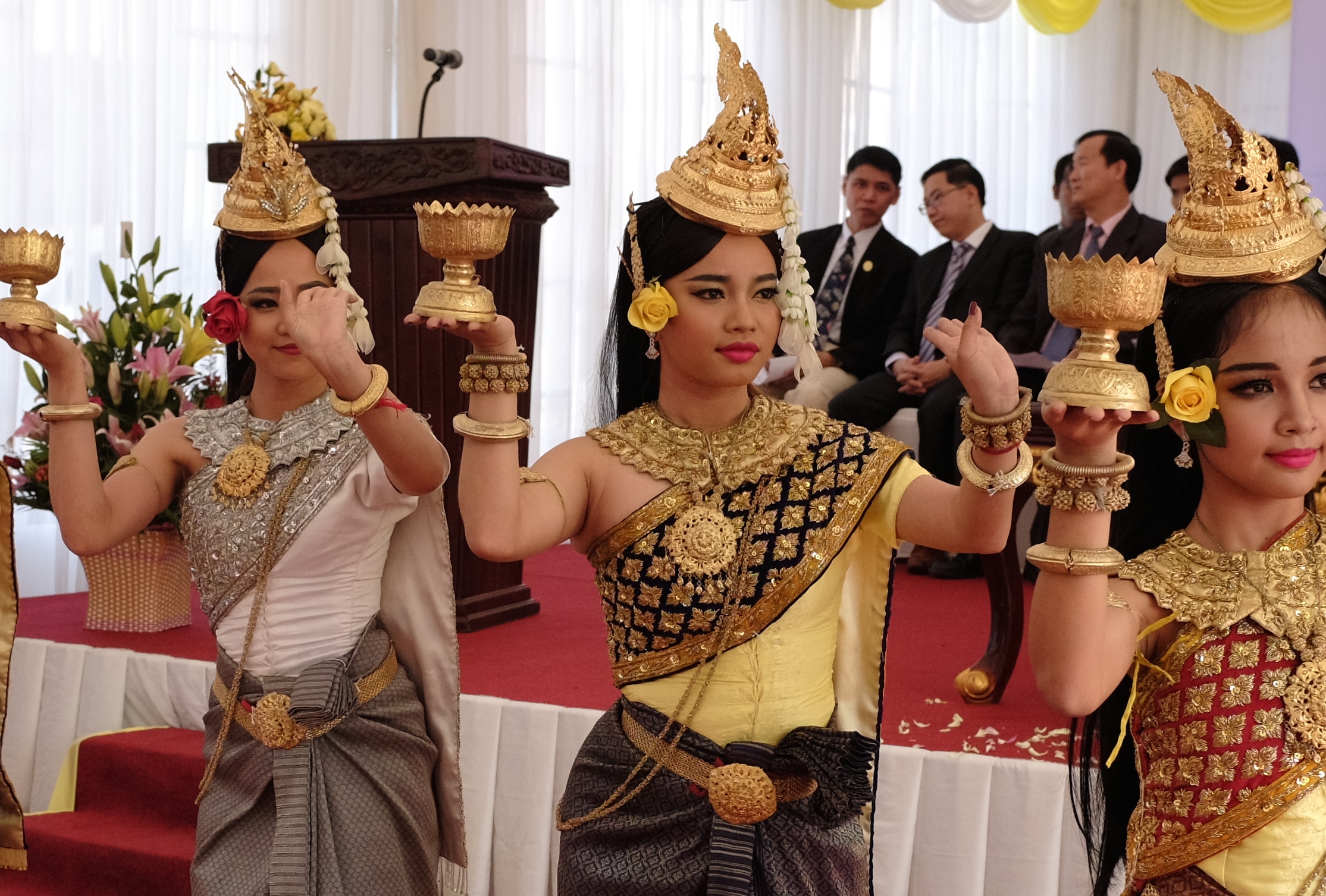
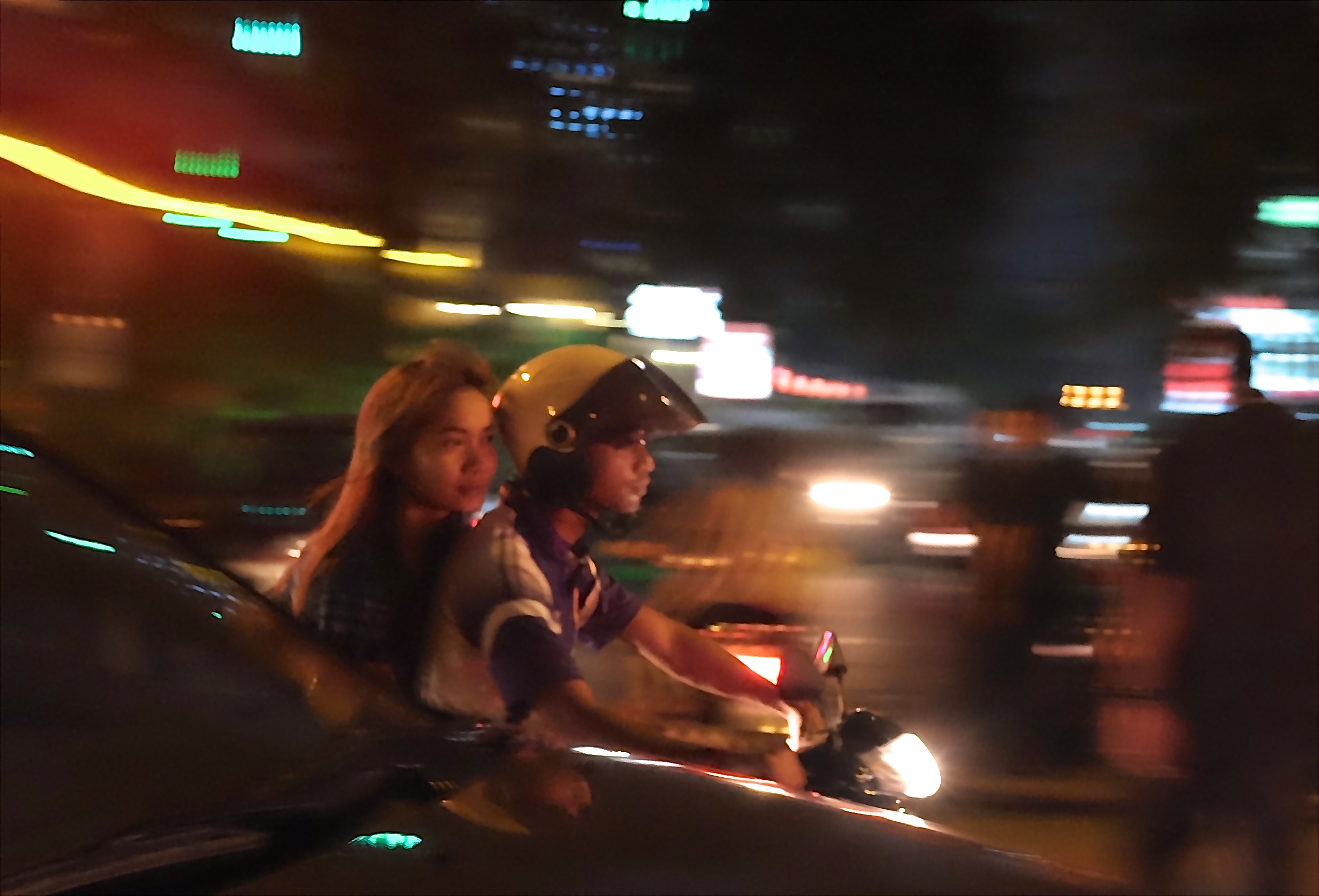
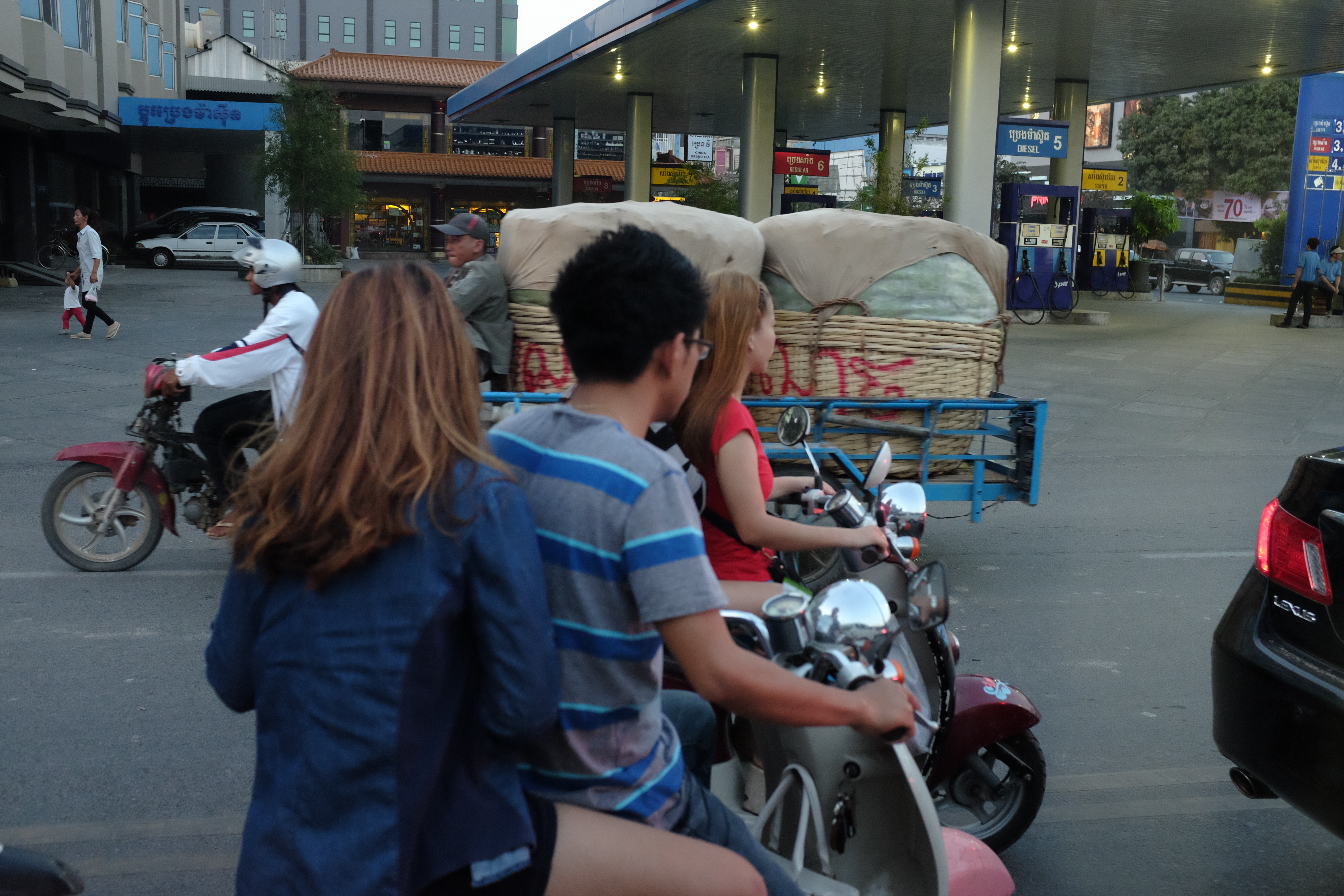
Santa Claus at the Sorya Mall, one of the city’s pioneer shopping mallSugar cane vendor outside a house in the south eastern township of Boeung TumpunAfrican woman on Street 271Clean luck on the second day of Chinese New YearPhnom Penh is a great place for beer drinkers. Happy Hour price for draught beer is 50 US Cents per pint in many barsMr Kao Vanarinn who escaped from the Khmer Rouge at age 14 by making his way on foot across the country to a refugee camp in Thailand exemplifies the steely spirit of Cambodians of his generationOne benefit of not wearing a helmetRiding friends at a traffic lightsmasked and mopedAngkorian motif outside a walled villa in the upmarket Boueng Keng Kong area
All images and text copyright Kerk Boon Leng February 2016
It takes just over 4 hours to get to Riga by bus from Vilnius. It is a gentle journey from inland to the shore brushing the belly button of Europe as we pass near the continent’s geographic midpoint.
The Lux Express is a comfortable coach. I settle cozily next to an empty seat and a coffee machine that unfailingly dribbles ten percolations of free black brew. Outside the bus window the scenery is monotonous and sleep-inducing. It is day two of my flu.
Straight, sunlit highways run silently along expansive fields with a lone stone barn, horse, or truck showing occasional signs of farm life.
As the sun descends I catch sight of an iron bridge with a girder of five steel arches over an imposing river – the Daugava or Dvina which flows to the sea here from Russia. We have just reached Riga. The bus steers into a parking lot beside a moat with early evening views of warehouses and a yellow Stalinist skyscraper.
Riga is the biggest, most industrial, and least medieval-looking of the Baltic capitals.
Despite damage done to it by two world wars and scars from the soviet era makeover, Riga by the Gulf is still by any standard a stunning head turner.
Its streets, moods and buildings recall the city’s days as a northern seafaring citadel of thin fog-piercing spires and spirited playful German art nouveau architecture voguishly termed Jugendstil.
In all but a few short decades of its nearly one thousand years history Riga was a city inside other people’s empires, a great Latvian seaport ruled in succession by outsiders.
From the very beginning German merchants, monks and medieval knights came and ran Riga, terming themselves the Livonian Brothers of the Sword. After the Teutonic Knights came the Polish-Lithuanian Commonwealth which ruled Riga for a period of time, followed by almost a century under the Swedish Crown when Riga became the largest city in Sweden.
Of all the legacies bequeathed by its many foreign masters, it is that of Russia that is most tangible, recent and a constant source of friction and unease.
The giant next door neighbour left behind not only houses, statues and cooking style but also its people. Today half of Riga’s population of 700,000 is Russian by race or mother tongue rousing the city’s cosmopolitan air and feminine allure.
All images and text copyright Kerk Boon Leng October 2015
Sitting on the Baltic Sea with their backs to Russia and eyes toward Northern Europe is a group of three small, highly sophisticated countries that a generation ago was unwillingly part of the Soviet Union. They are called the Baltic States or simply the Baltics. Of the trio, Lithuania is the largest, most beautiful and zaniest.
The locals call their country Lietuva, a land of large sand spit, flat fields and forests inhabited by 2.8 million mainly tall, fair-haired people who speak an ancient Indo-Aryan language that astonishingly resembles Sanskrit.
Its inland, Central European location and long links with Poland sets Lithuania apart from its fellow Baltics.
Unlike Latvia and Estonia ( both mainly Lutheran states), Lithuania is Catholic in spirit and appearance as testamented by the many southern-styled Baroque buildings punctuating the white, pretty and swirling skyline of its capital Vilnius.
Lithuania was Europe’s last official pagan nation. Its thick forests of pine and spruce provided cover for its medieval traders, artisans and peasants hiding from Teutonic missionaries and knights with swords who came to force a foreign faith upon them.
Lithuania finally became Christian on 14 August 1385 when Grand Duke Jogaila accepted Poland’s packaged proposal to convert to catholicism and become its king.
Despite their country’s conversion many Lithuanians kept their indigenous religion up until perhaps the 16th century and even beyond. A German writer in 1775 remarked this about the Lithuanians:
“This is the most superstitious nation among all Christians. They are so persistent that no measures bring desired fruits”.
Traces of this ethnic belief remain and have been revived in a contemporary ritualistic form called Romuva.
In common with other polytheistic faiths like Hinduism and Taoism, the basic tenet of Romuva is the sanctity of nature and respect for all living things.
A prayer recorded in 1938 contains the following verses:
Those who today kill animals with delight will tomorrow drink human blood. The more hunters live in Lithuania, the further fortune and a happy life escapes us.
That I may not fell a single tree without holy need; that I may not step on a blooming field; that I may always plant trees.
That I may love and respect Bread. If a crumb should accidentally fall, I will lift it, kiss it and apologise. If we all respect Bread, there will be no starvation or hardship. “
All words and images copyright Kerk Boon Leng 2015
I can’t say I know what a hip and radical city looks like but in my first hour in Berlin I saw a lad swing from the arm of a socialist statue, two male lovers kiss on Karl-Liebknecht-Strasse and an above average density of beards, bikes and baby-strollers.
For all its edgy energy, Berlin is an austere and absorbing place with a pre-eminent but painful past. It is a metropolis that reeks of memories and reminders of defeat, division, dissent and death on a scale unmatched by any other in modern history.
The city began around 800 years ago as two trading towns built on flat, sandy and infertile land on opposite sides of the River Spree. It was a frontier place inhabited by people who spoke Slavic languages akin to Polish. Due to migration from other parts of Europe especially from the German lands to the west the region grew gradually “German”. The area was ruled by a succession of kings of the Hohenzollern dynasty who enlarged their territorial possessions by conquest and marriage to become in 1701 a Kingdom they named Prussia.
Despite its prominent and pivotal presence in Europe (in fact if not in form), Germany only became a country in 1871 when Prussia finally defeated France and united the German states under one empire. Berlin the Prussian capital became the capital of Germany.
Berlin goose-stepped into the 20th century with a potent mix of ambition and self-doubt. It wanted to become a world city and harboured hopes of rivalling London’s imperial status and Paris in its culture and sophistication.
As the capital of Germany under Hitler known as the Third Reich, Berlin experienced the horror of World War Two at first hand. Targeted by sustained Allied bombing and full scale Soviet ground offensive in 1945 the city suffered the largest non-military loss of life of any city of Western and Central Europe with an estimated 200,000 civilian death toll. It also became in the final days of the war the municipal grounds for the largest rape, humiliation, and sexual torture in history of up to 100,000 women in Berlin by rampaging soldiers of the Russian Red Army.
Berlin pulls and surprises because it is not the kind of place one would normally expect of the capital city of Europe’s most successful, disciplined and systematic country.
I suspect that Berlin’s greatest attribute and appeal lie in its ability to be a city about everything and anything at different times in the course of its tumultuous history. It has swung the full human pendulum back and forth a few times in the past.
Berlin under the Prussian King Frederick the Great, developed into a social laboratory for both German Enlightenment as well as despotic militarism. The city later turned itself into the intolerant, racist and slavishly obedient capital under the Nazis. The Cold War separated the city into two parts and divided its people between those who became ardent supporters of American capitalism and those who believed vehemently in communism by making the German Democratic Republic the most loyal in the Soviet Bloc.
This year Berliners (and their fellow Germans) shocked Europe and the rest of the world with their hipster humanity in accepting into the country a million Arab, African and Afghan migrants resting such decision on just a simple belief that a country as rich as theirs should and could do so.
All images and photographs Copyright Kerk Boon Leng October 2015
Except to intrepid travellers, Phnom Penh and having a good time don’t come readily together. This medium-sized capital of a small South East Asian nation, which claim to fame is a magnificent cluster of ruins and faces of Buddha peering out of jungles and rice fields embedded with unexploded landmines and human skulls, is in reality Asia’s most free and openly tolerant city.
Amazing, because no country in Asia has endured so much physical and psychological abuse as Cambodia.
According to recently released data, the US Forces during the American Indochina war dropped 2,756,941 tons of bombs on Cambodia- almost a third more than the entire Allied bombs used in World War II making Cambodia the most heavily-bombed country in history.
between songs in the downtown casinobreakfast of beer, bread and fruitThe National Museum of Cambodia built by the French in 1920 houses possibly the world’s largest collection of Khmer artmobile vendor of unnamed vegetablestylo on a cyclo – waiting for shoppers on a SaturdayNot Paris – late evening view of the Royal Palace from the Mekong River promenade. Historians say that of all the cities the French built in Indochina Phnom Penh was the prettiest.dancing for the boss – modern live version of the celestial nymphs, Apsaraeducation in horror – children on a visit to Tuol Sleng Genocide Museum a former high school turn prison known as “S-21” where as many as 20,000 men, women and children were photographed, chained, beaten and gruesomely murdered
Then, exactly forty years and a fortnight ago, Communist troops drove out the US-backed government of Prime Minister Lon Nol forcing him to flee into exile in Hawaii. The band of ragtag peasant soldiers led by an ex-teacher from a local French school named Saloth Sar, known to the world after 1976 as Pol Pot, took over Phnom Penh and within hours emptied it of people by ordering everyone out to the countryside where they were to face exploitation, cruel beatings and death.
In less than four years of rule by Pol Pot and his followers called Khmer Rouge, the regime overworked, starved, tortured and executed to death a quarter of Cambodia’s population. The Khmer Rouge wanted to create a socialist Utopia. In their mad experiments of horror and paranoia they laid waste to the entire country and literally set Cambodia back to ‘Year Zero’ by abolishing money, markets, schooling, religion and private ownership.
Things did not exactly turn rosy when the Vietnamese Army invaded in 1979 getting rid of Pol Pot. Fighting continued between the Vietnamese installed government of People’s Republic of Kampuchea (PRK later rebranded in 1989 as State of Cambodia to attract a wider international appeal) and the China-backed Khmer Rouge who retreated to territories along the Thai border.
Other groups such as the Khmer People’s National Liberation Front (KPNLF) and FUNCIPEC under Prince Sihanouk soon joined in the fray creating a four-corner fight.
By the time Peace Agreements were signed in Paris on 23 October 1991 hundreds of thousand of Cambodians had been displaced in refugee camps in Thailand and tens of thousands killed by the civil war.
The Paris Agreements created the United Nations Transitional Authority in Cambodia (UNTAC) to temporarily run Cambodia. UNTAC with a 22,000 strong multinational civilian and military peacekeeping force drawn from 45 countries was given the mandate to disarm and de-mobilize the four Cambodian armed factions and to prepare the country for elections which eventually took place in May 1993.
Today Phnom Penh has come a long way from its previous incarnations as a French colonial gem in 1920s, independence-era model city in the 1950’s, Khmer Rouge Ghost city in the 1970’s and UN-NGO cowboy town of the 1990s.
In its freewheeling and anything goes spirit, Phnom Penh is now peerless in this part of the world, perhaps reminiscent of Macau or Hong Kong in its mid colonial heyday or Malaya during the tin rush. With its high number of entrepreneurs and emigres from Asia and beyond, a magnificent river frontage, excellent Chinese restaurants and budding coffee culture, Phnom Penh is ready to take on its larger, richer but socially and politically shackled regional rivals.
As proof, Cambodia is already growing faster than China, India,Indonesia and Malaysia.
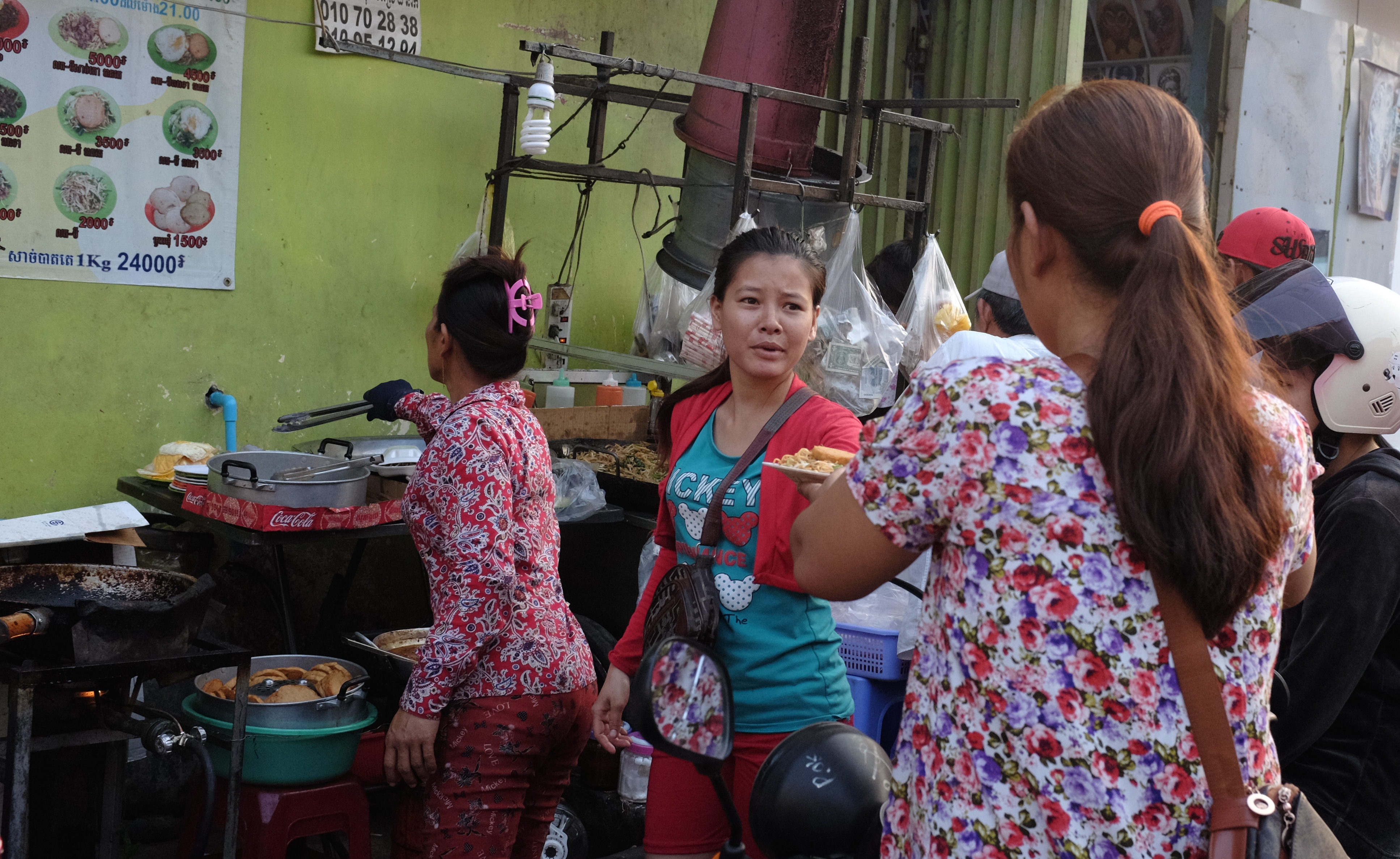
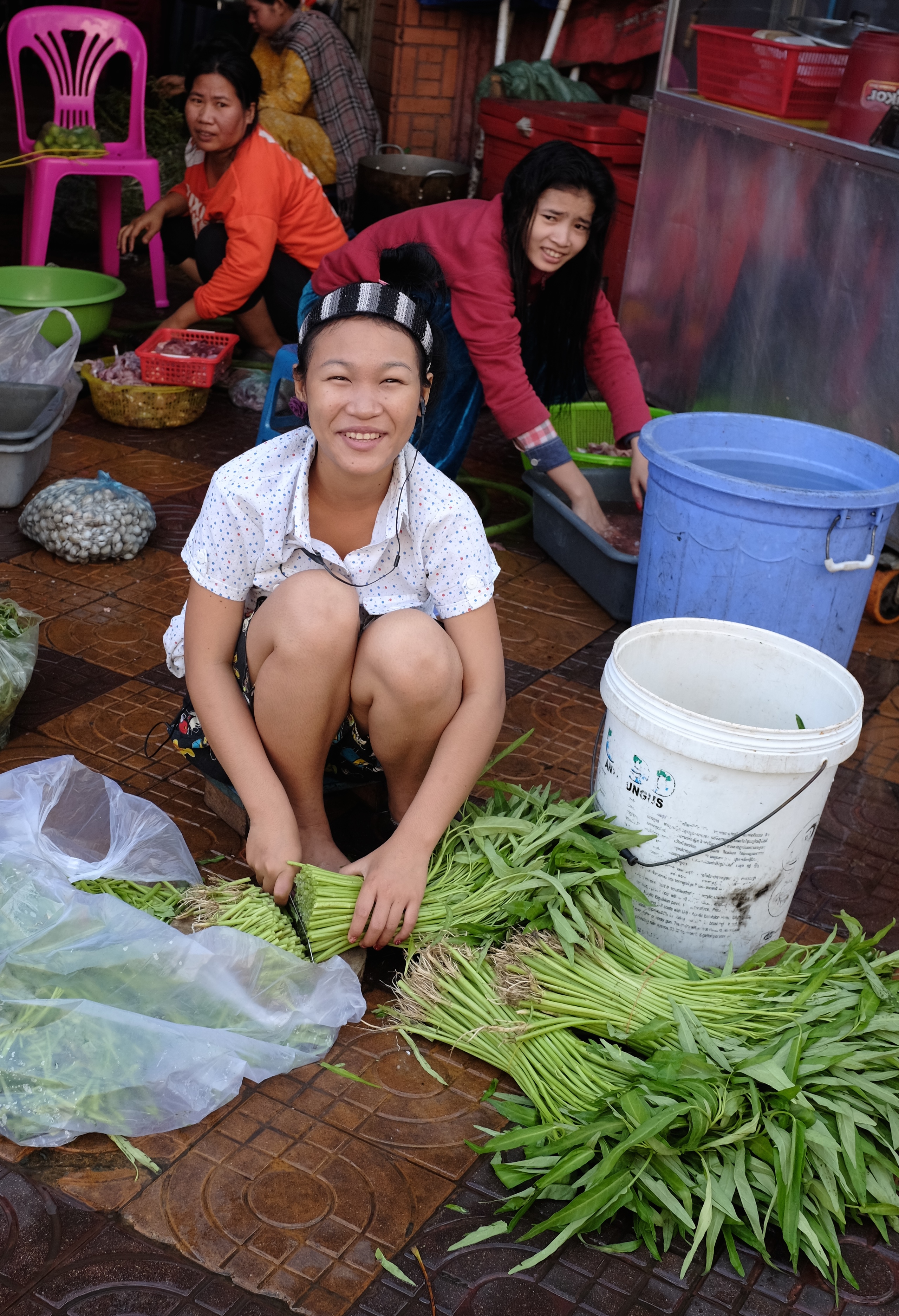
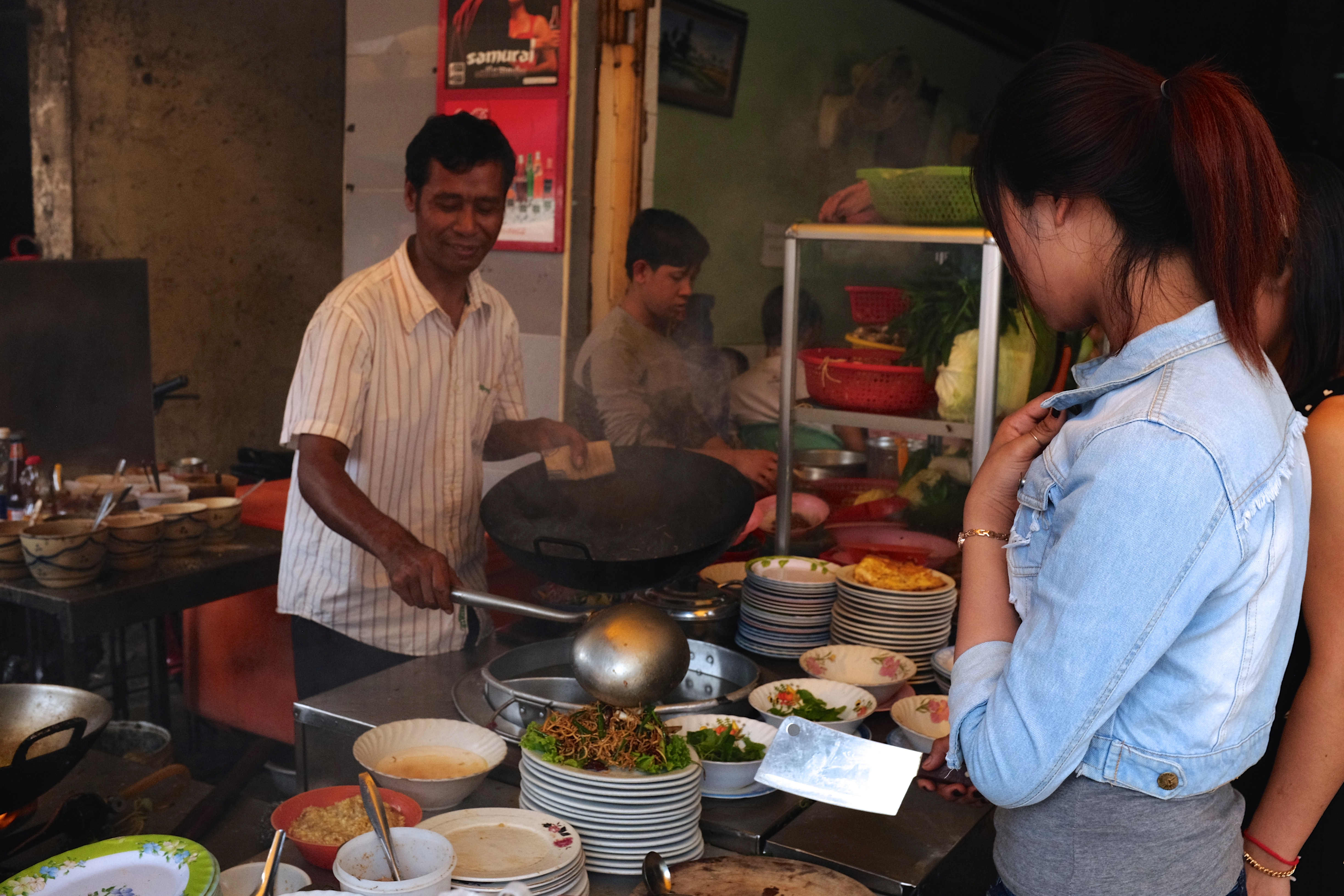
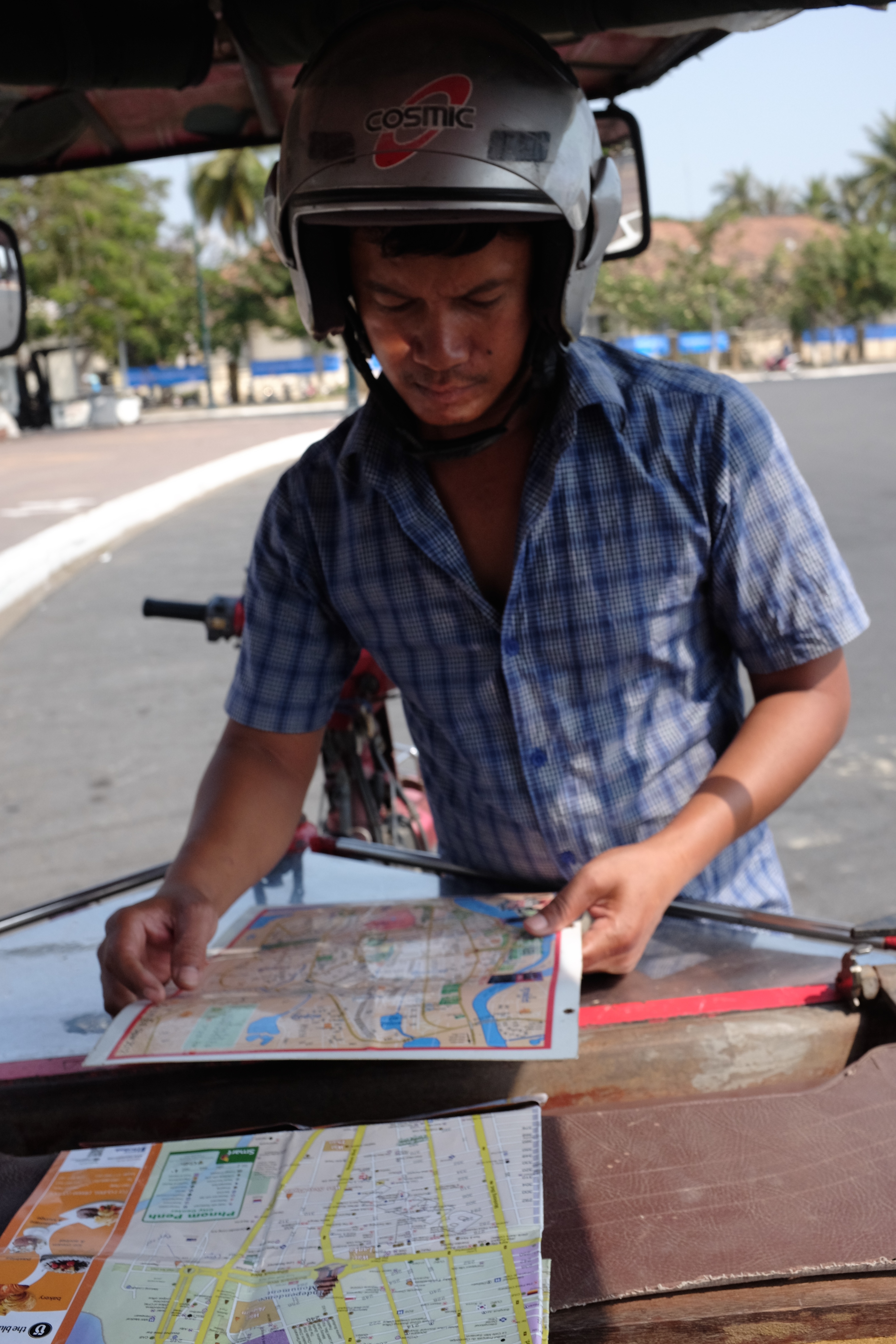
young entrepreneurs at a company inaugural eventCambodian food may not be world renowned as Thai or even Vietnamese but in its street version it is varied and uses lots of fresh seafood and organic ingredientschopping up trokuon / kangkung an aquatic vegetable cultivated and eaten throughout tropical south east Asiaquintessentially phnom penhVietnamese newcomers make up a huge percentage of migrants in Phnom Penh. Like successful immigrants and ethnic groups elsewhere Vietnamese are often targets of discrimination in part because of historic enmity between the two. Cambodians have been taught that large parts of southern Vietnam and the Mekong Delta including where Ho Chi Minh City now stands were once Khmer Lands.Modern Cambodian cooking style shows a strong Chinese influencedisappearing view – older buildings have been torn down or refurbished at a quick rate to make way for glass, steel and concrete as Phnom Penh zooms aheadtuk tuk driver reading a map – many young Cambodians are gaining fluency in English as more foreigners come to visit, work and stay in their country. Their mother tongue Khmer is mainland South East Asia’s only non-tonal language and is a cousin of the indigenous Orang Asli languages of the Malay Peninsula.Beautiful but shy – waitress at Sam Doo, a downtown restaurant open until the early hours of the morning that serve I think the best wonton noodle in the worlda typical view of a youthful tropical Asia at nightfallflower shop at the Phnom Penh’s famous art deco Central Market
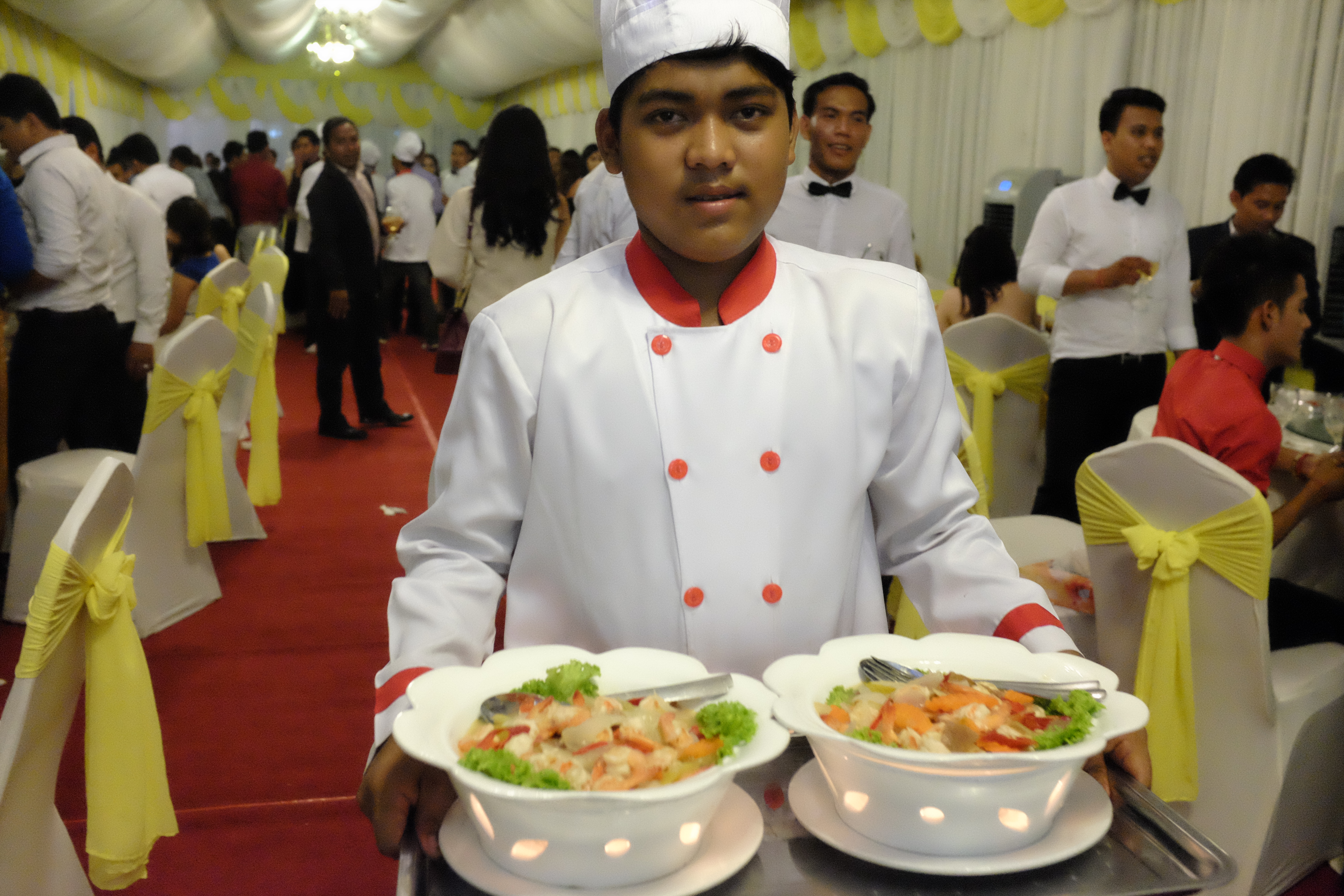
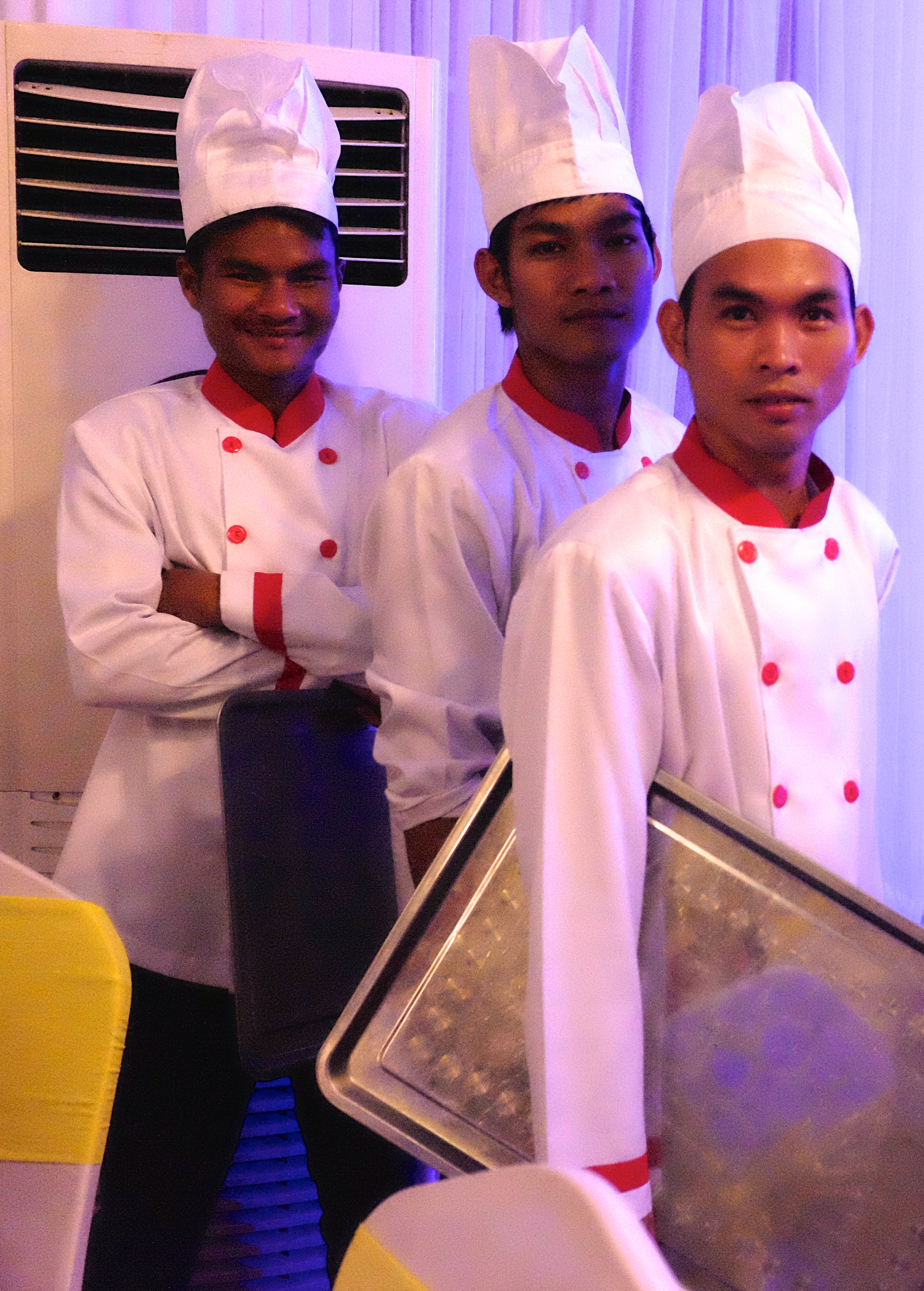
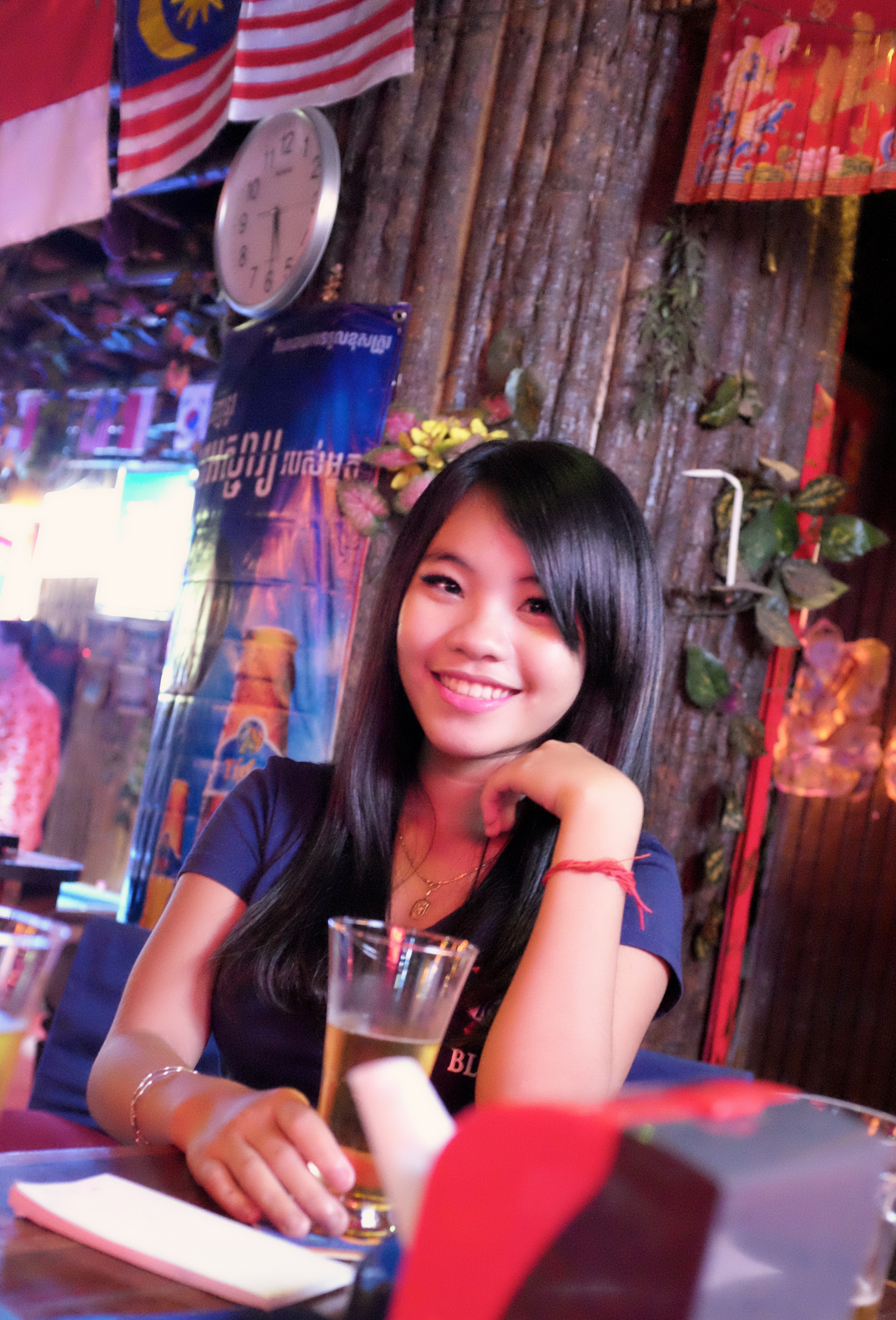
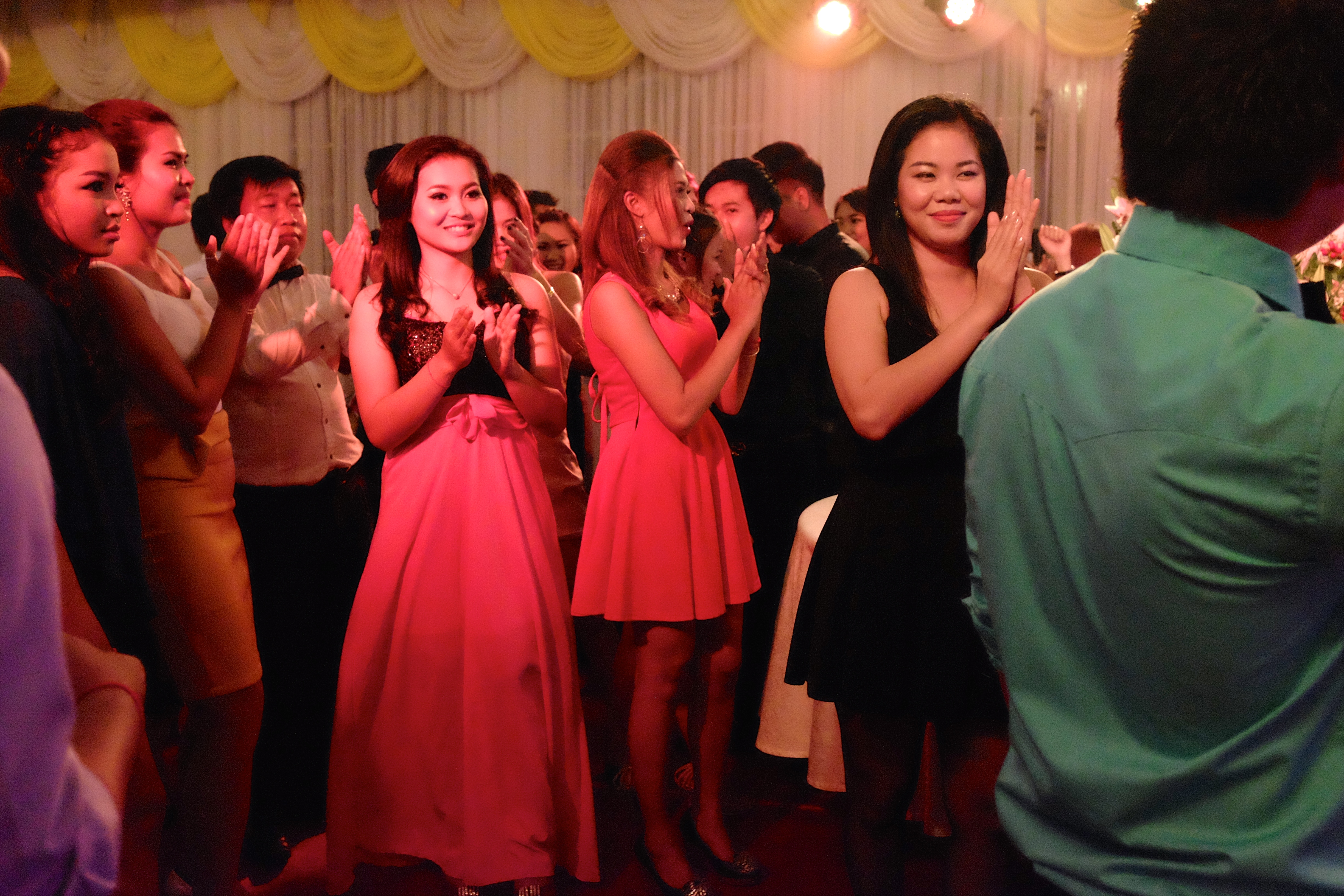
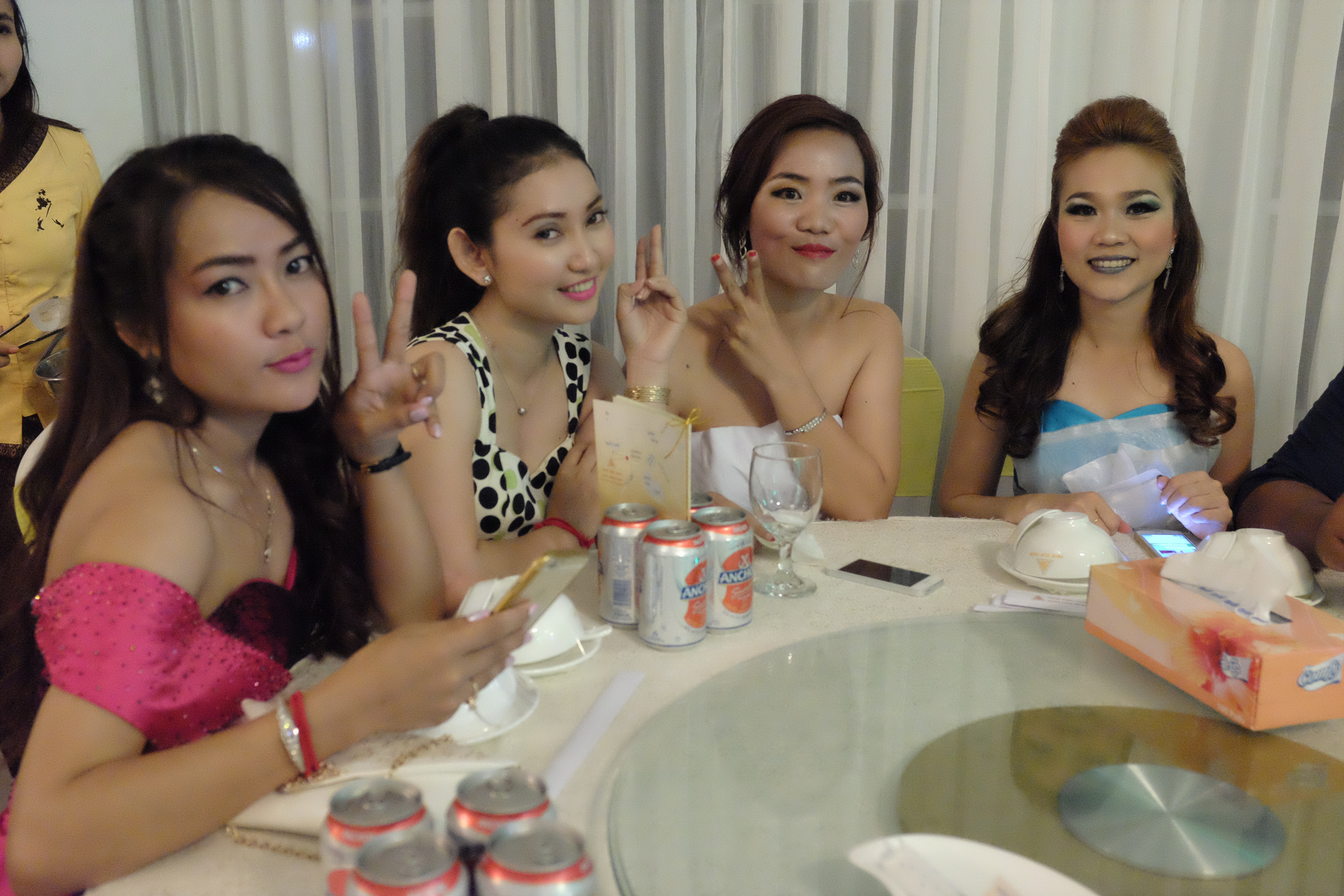
family day outdoor boys at the city’s hotel and casinofriends at breakfastLotus seller at Wat Phnomwaiters at an annual dinnerhostess at the Cat House one of the city’s oldest pubsA reminder that despite breakneck progress Phnom Penh is still a poor city. Here residents of an inner city slum on Street 99 prepare their food stalls for the day’s businesswoman crushing cane juice for sale on a hot dayboom town phnom penhapplauseand peace signs at a party in Phnom Penh
All words and images Copyright Kerk Boon Leng April 2015
“Uncle! Many mutton!” Muralee exclaims from behind the wheels of our rented Innova, mustering the English he picked up as a municipal cleaner in Singapore. I awake from my front seat doze to focus blearily on a herd of grazing goats hurried along the roadside by a tall thin man with a long stick.
Muralee stops the car. I get off with my camera. Goats in the blinding afternoon sun make good foreground subjects against the featureless scenery that typifies much of Tamil Nadu – scrub forest, dusty fields and thirsty palms. We have left the hill town of Palani and are now deep in India’s spiritual South.
Being among these bearded four legged creatures is auspicious and culturally comforting. I am smitten by conscience for abandoning family and friends on the second day of the Chinese New Year of the Goat for a Hindu pilgrimage to India.
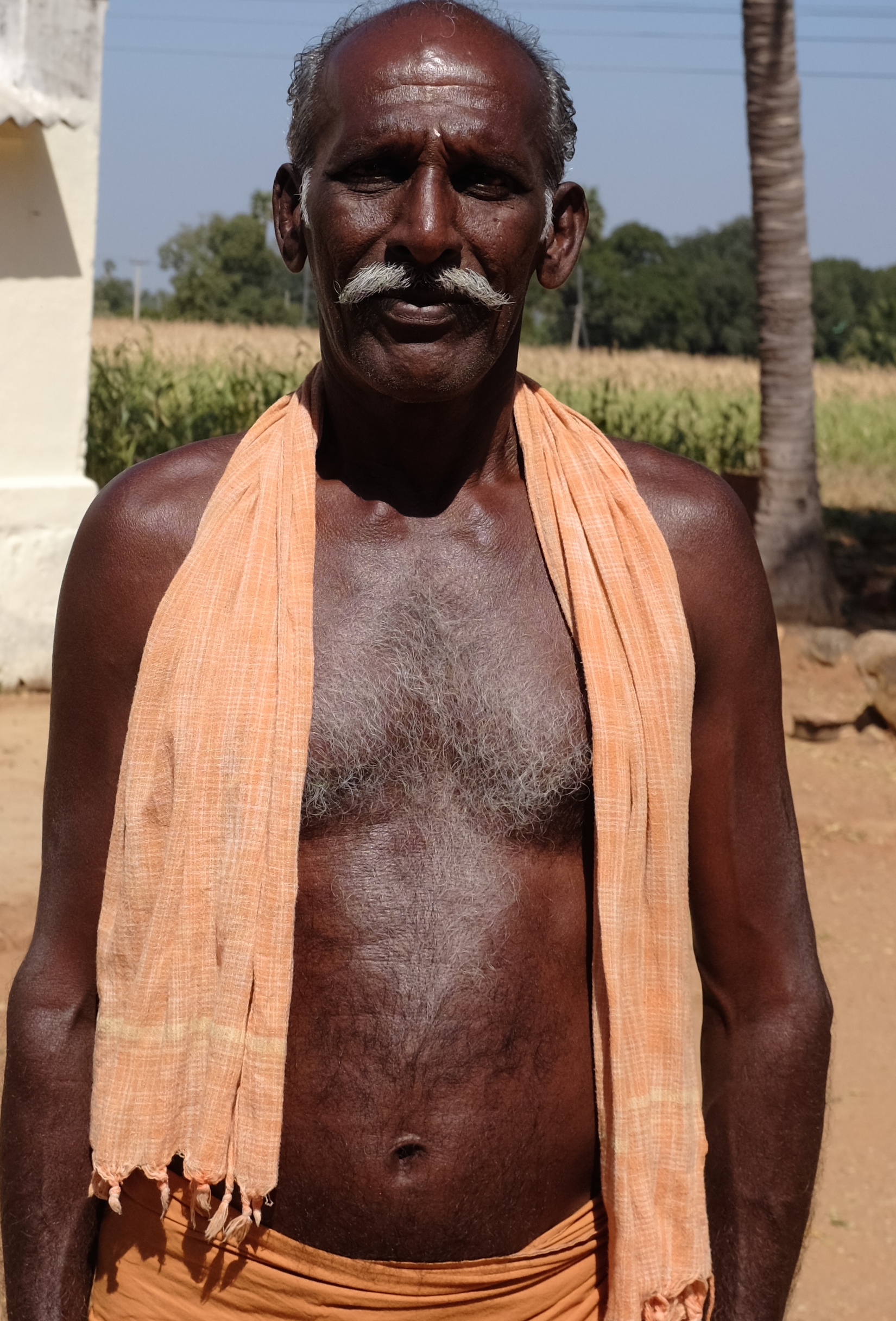
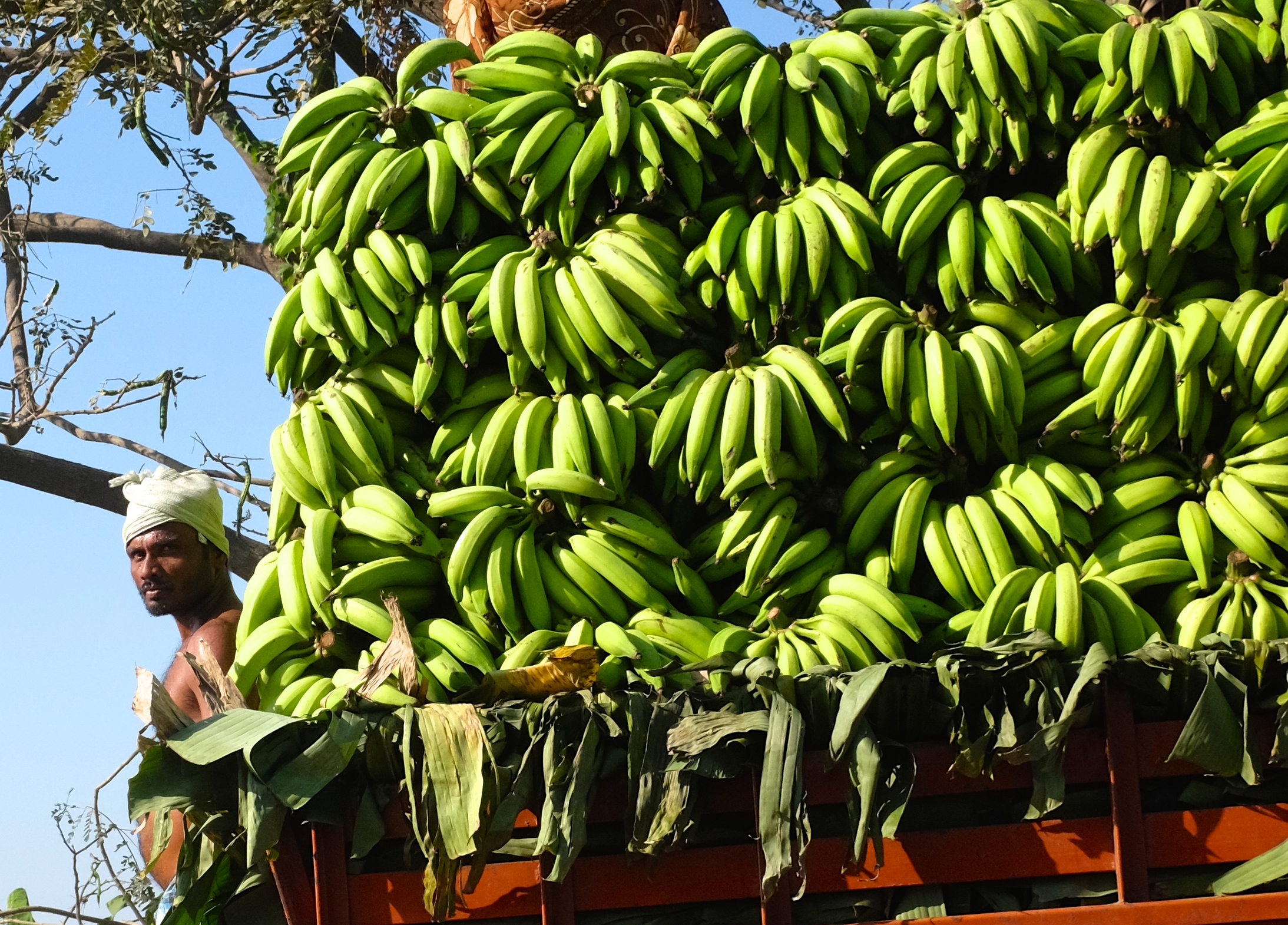
Playing with a young billy goat in the village square, south of MaduraiOwner with working pet elephant, SrirangamProud and glistening. A handsome headman strikes a pose outside his homestead on a farm on the road to PalaniFreshly harvested bananas near Kallanai Dam in the Kaveri River, Tiruchirappalli District
The desire for this trip was born more than a few years ago when I made a call to my late friend and guide Logan for his help in planning it. He asked for my horoscope to prepare an astrological chart to work out the right temple to go to for the prayers. Sadly, Logan passed away before our trip details were discussed and finalised. I make this trip now to pay belated obeisance to Murugan -the God of the Tamils, in his home temples located in the plains, hill and shore of Tamil Nadu and in memory of Logan.
Tamil Nadu -the land of the Tamils, is vintage Vedic India in so many ways.Here Hinduism has managed to still keep many of its traditions, lexicons and amazing temples. Separated from the racial and religious cauldron of the northern plains by monsoonal seas and the Deccan plateau, the land of the Tamils developed its own kingdoms, culture and customs, safe and far away from the pathway of muslim invaders and conquerors.
Today together with the rest of South India, Tamil Nadu is the domain of the Dravidian people. Smaller, darker brown and speaking melodic tongue-twisting languages, Dravidians have been “Indians” for far longer than the Indo-Aryan northerners whose ancestors only began settling in India around 3500 years ago. Tamil civilisation is one of mankind’s oldest. It is the world’s only surviving classical civilisation, one that has continued in almost its original form unchanged since the age of ancient Greeks and Romans.
Making a pilgrimage through the temples and holy shrines of Tamil Nadu is for me a deeply meaningful experience and a privilege. It is also the closest thing to time travel in the 21st century.
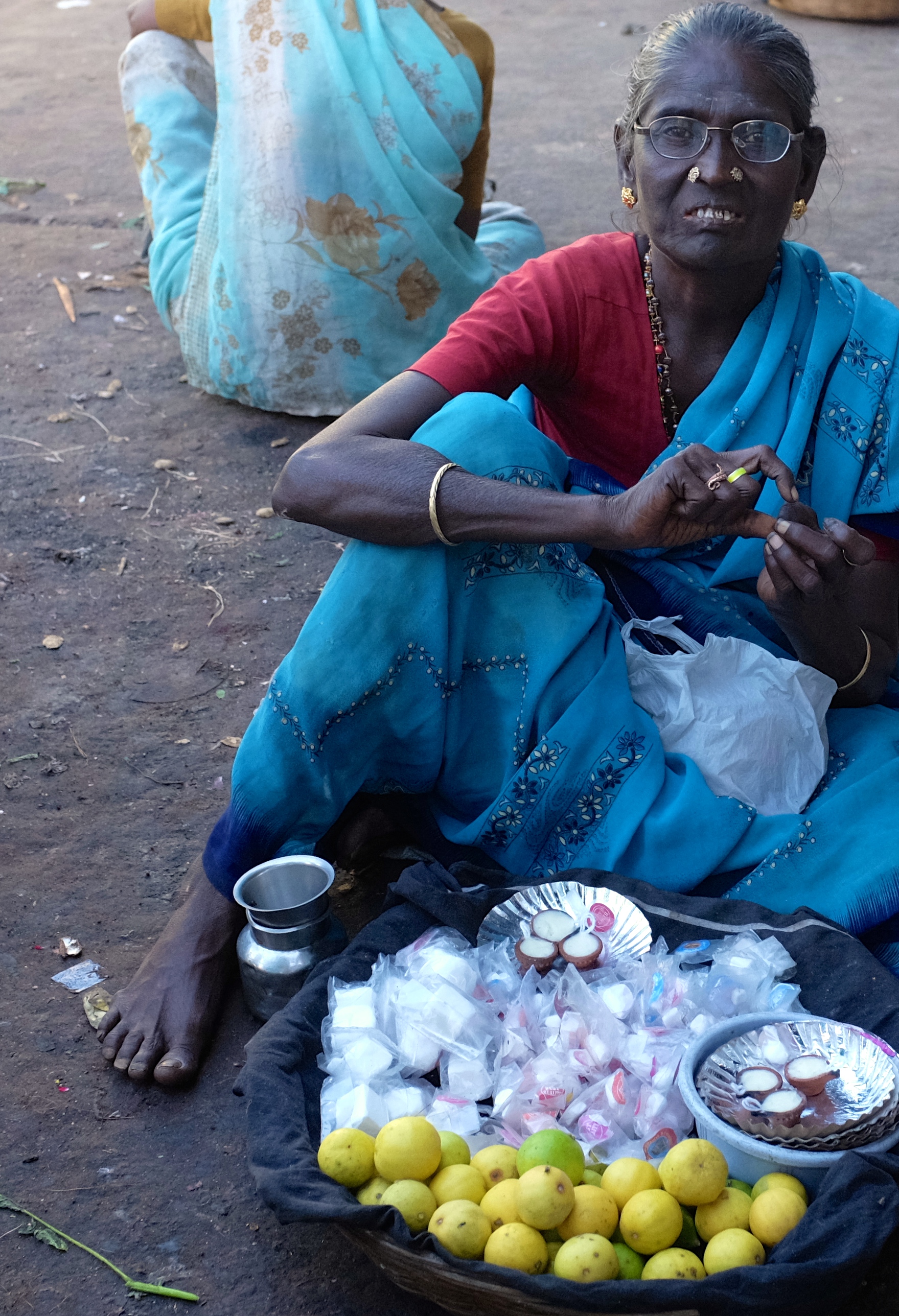
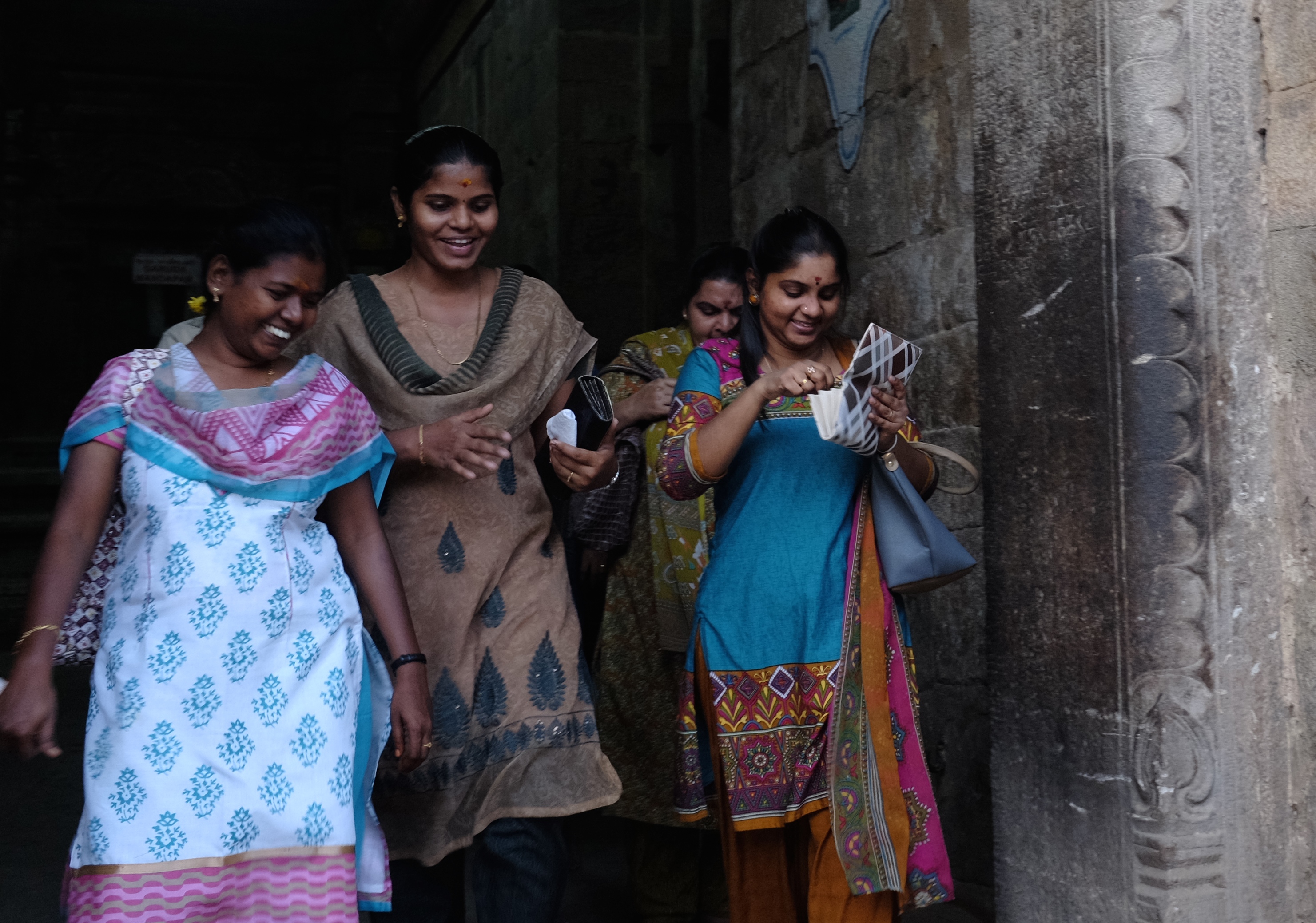
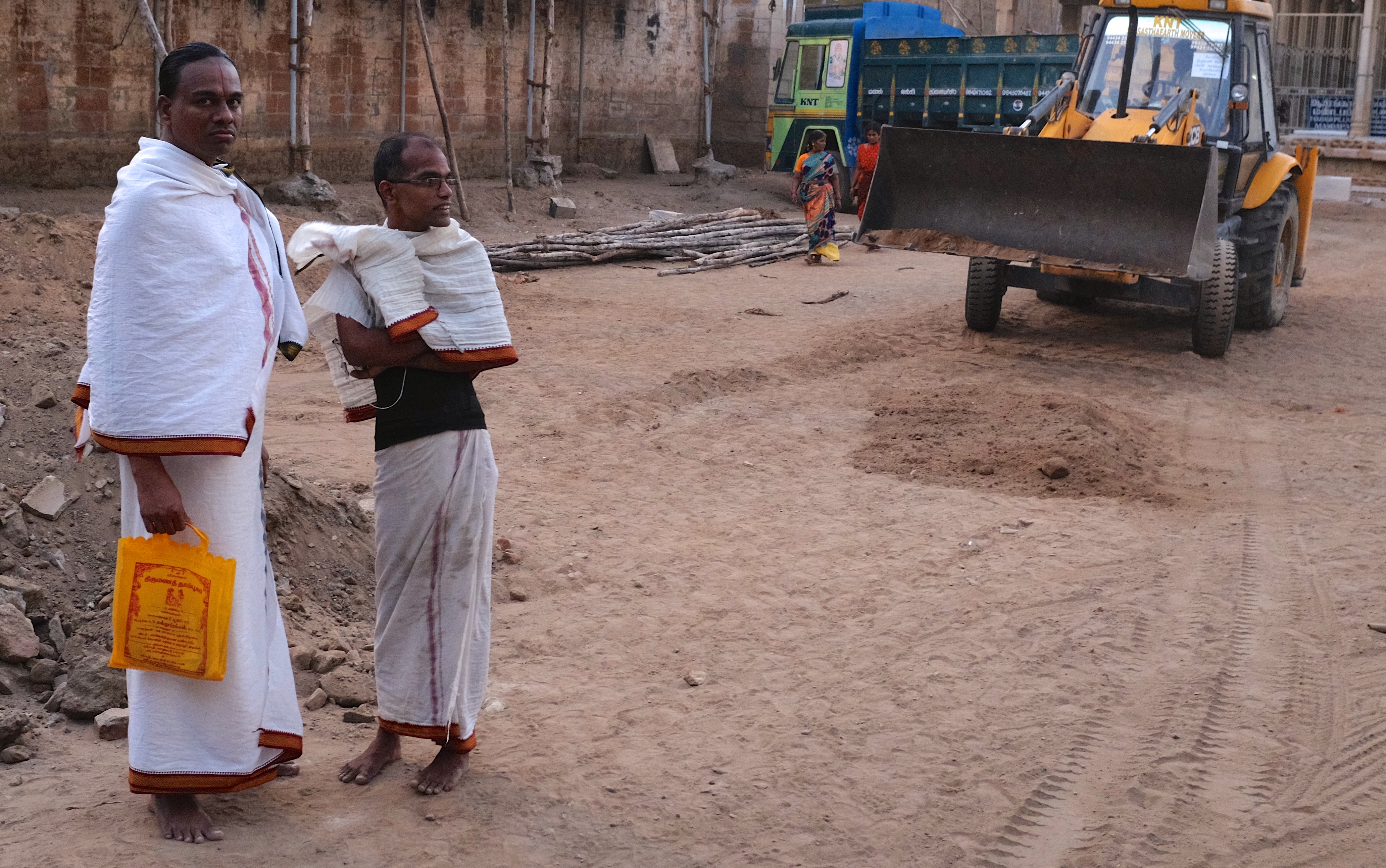
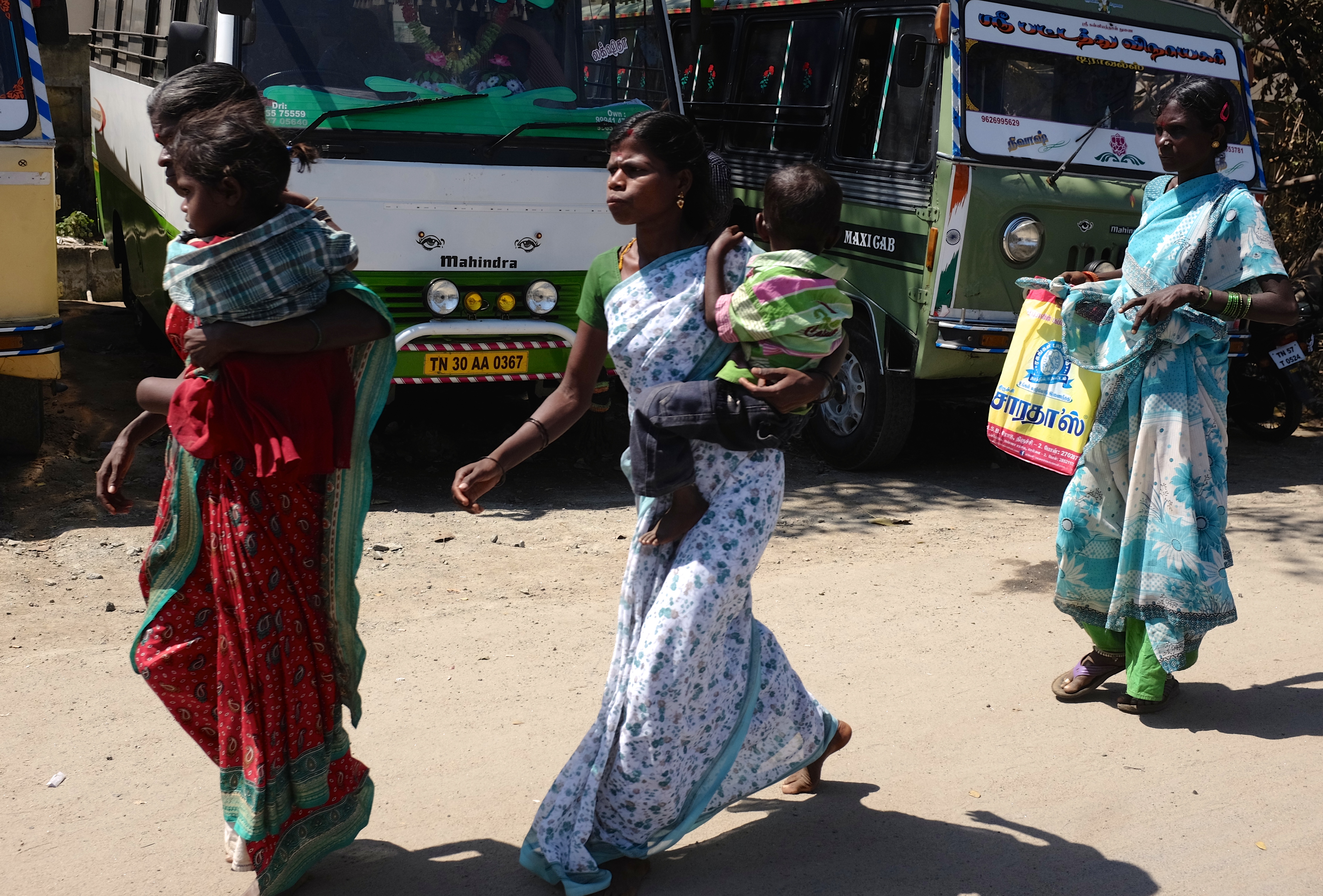
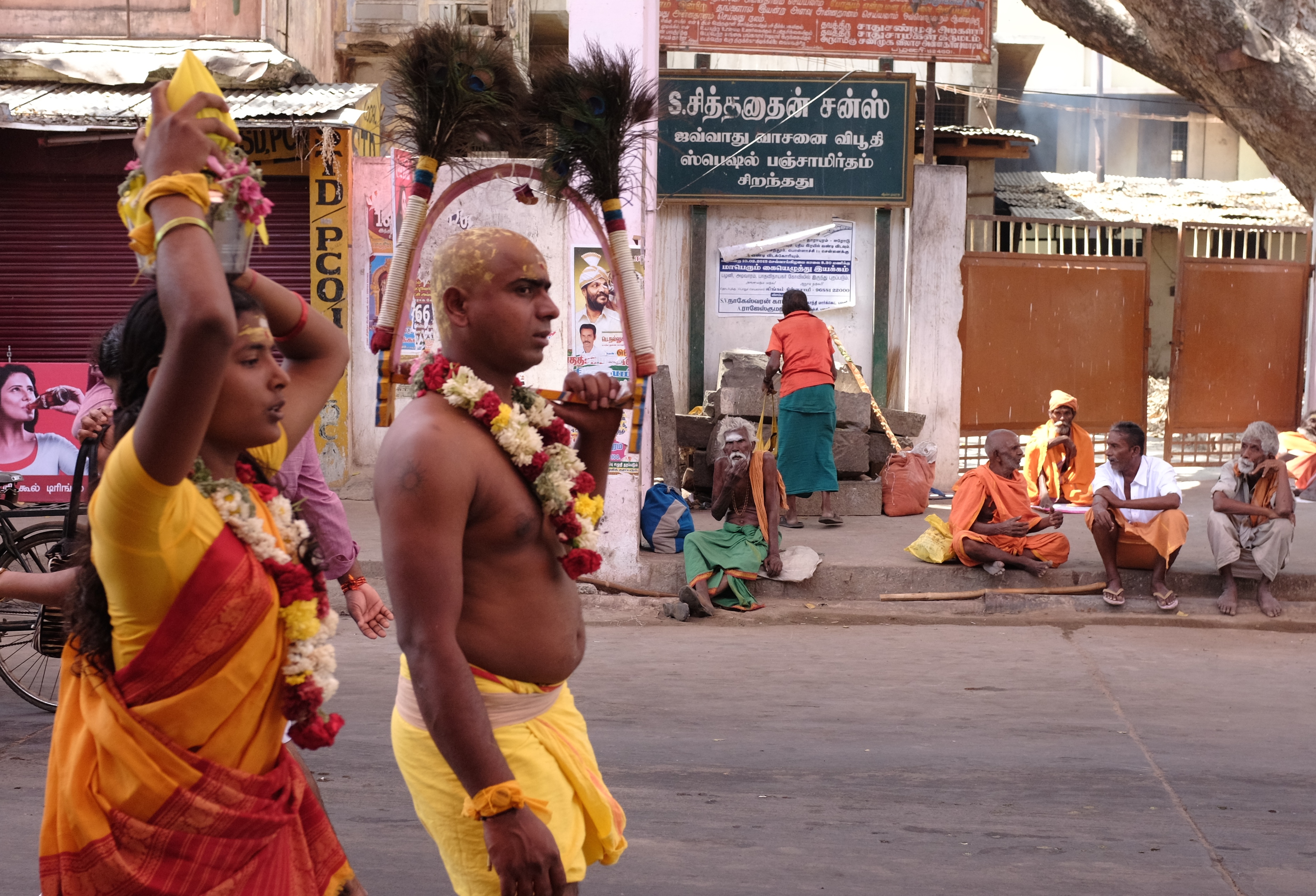
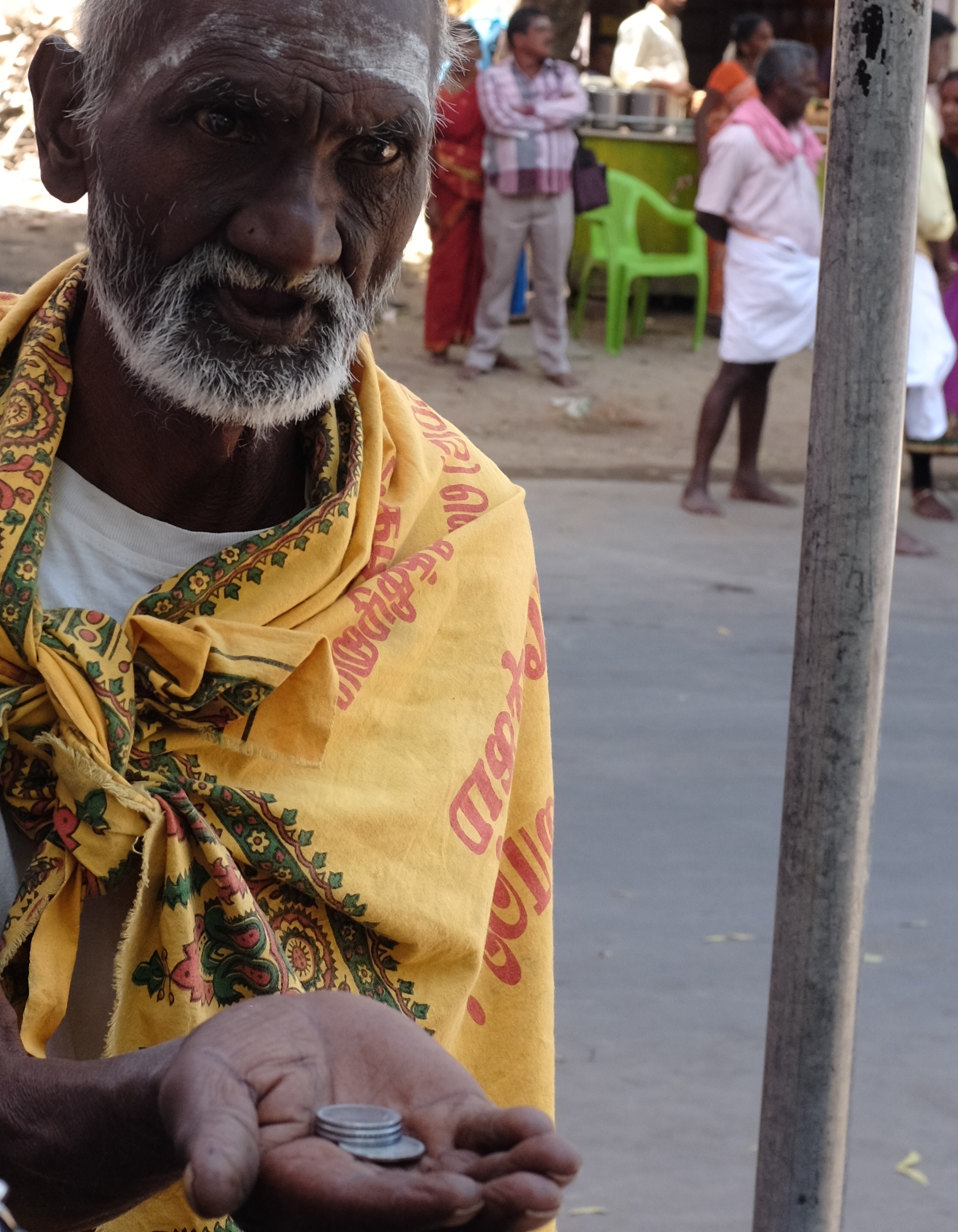
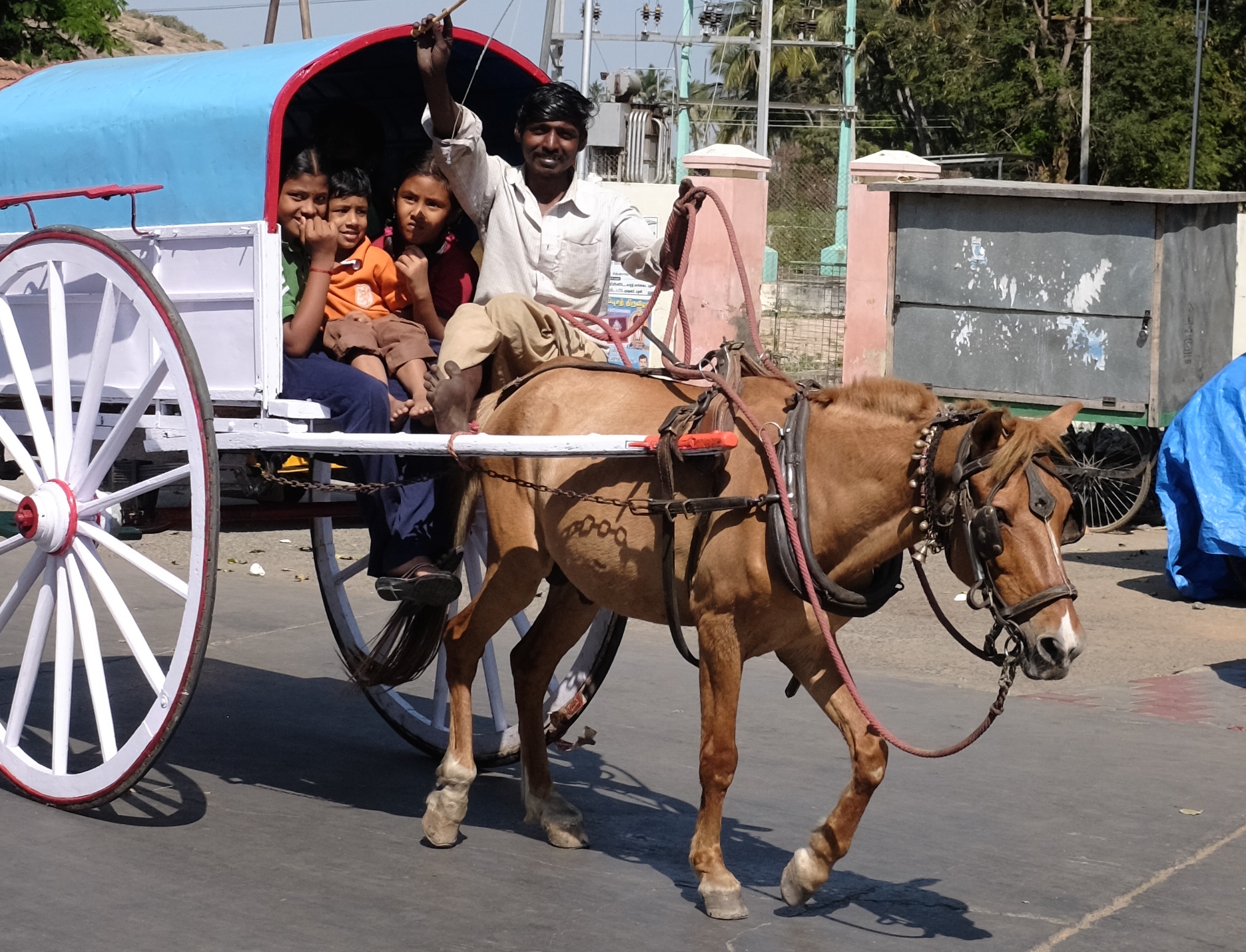
Vendor selling limes and lamps at the entrance to the Samayapuram Mariamman Temple, outside TiruchirappalliCrowded bus, TiruchirappalliScooter at the road junction, SrirangamEvening in SrirangamHappy devotees at the Sri Ranganathaswamy Temple in SrirangamConstruction works at the temple complex in Srirangam which is located on an island in the Kaveri River north of Tiruchirappalli. The Srirangam Temple occupies an area of 156 acres and is the largest hindu temple in the world.Pilgrims at the foothill of the Temple, PalaniTourist horse cart, Palanicaged pilgrims waiting in the queue to get onto the rope cars up to the Murugan Temple, PalaniDevotees with offerings at the foothill of the Temple, PalaniBegging for penitent’s pennies, PalaniIt can take up to an hour’s wait in the queue for a seat in the rope car even for passengers in the 50 rupee lane, PalaniLunch time at the temple courtyard, Palani Murugan TemplePony cart ride, PalaniMuralee and Madhi getting ready for our lunch served on banana leaves, Palaniinteresting rock outcrop before MaduraiIn a village we stopped for tea and cigarettes before Madurai
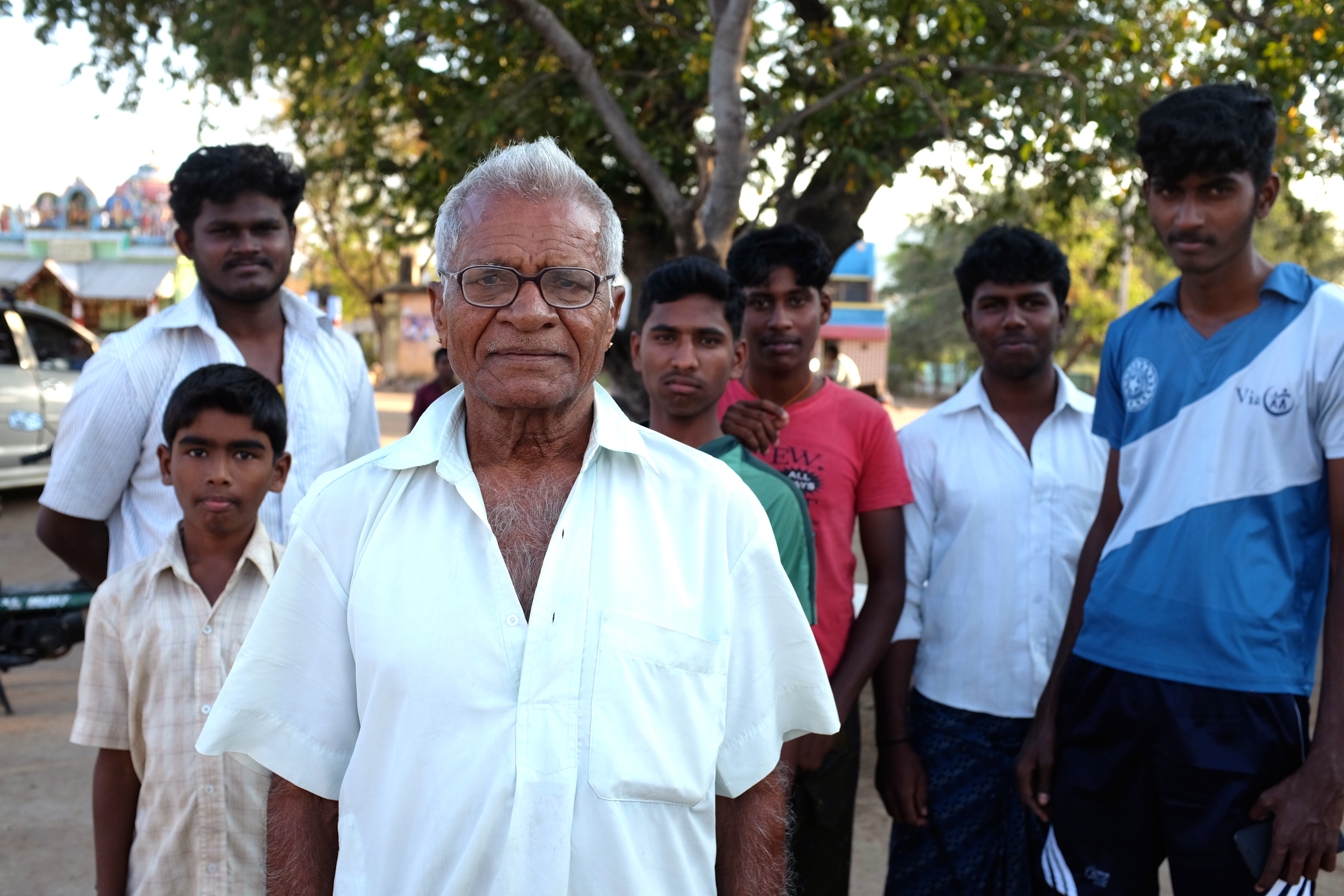
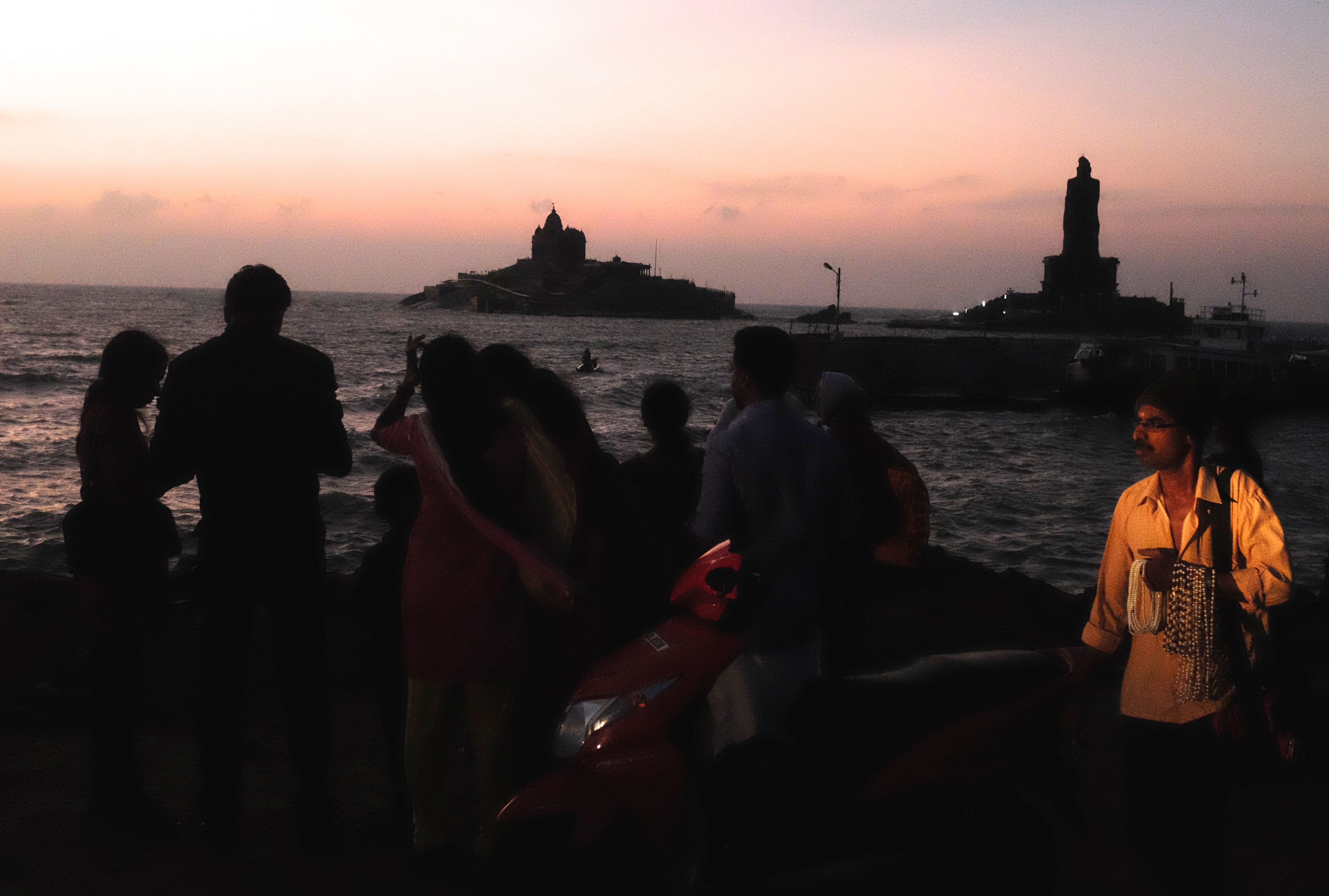
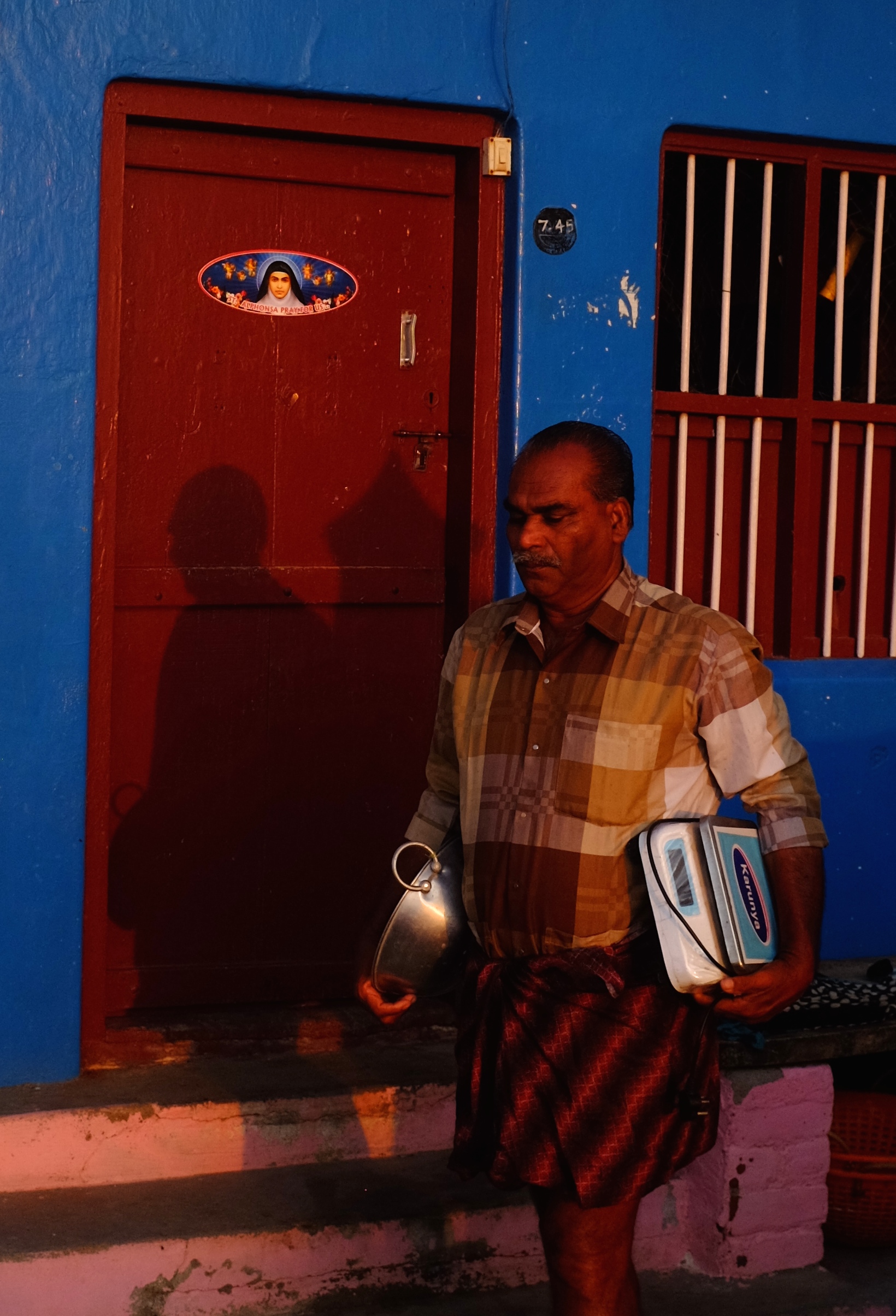
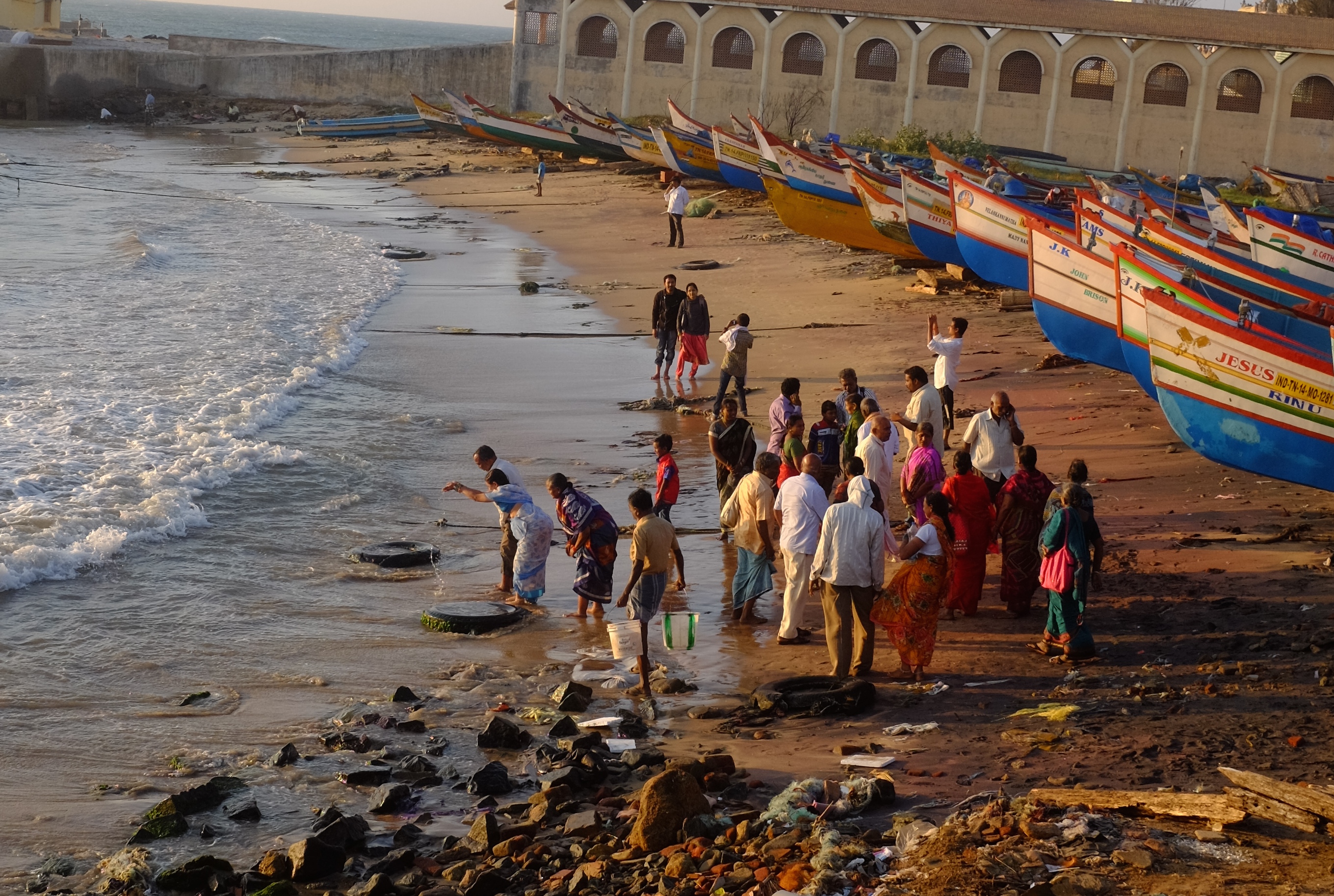
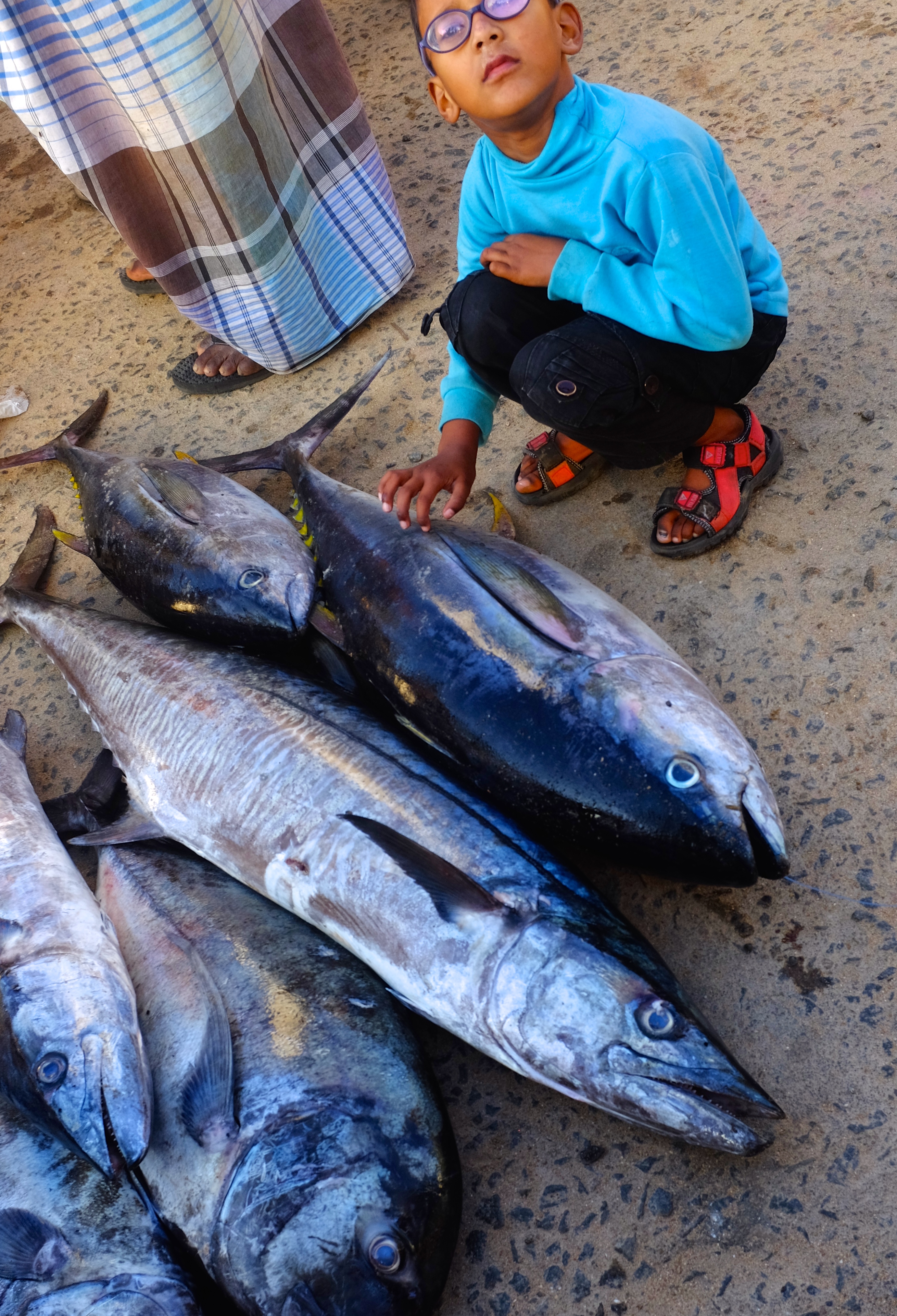
Outside the Temple, ThiruparankundramWedding receptionists, ThiruparankundramSternness in monochrome, ThiruparankundramWomen devotees at the Murugan Temple, ThiruparankundramThiruparankundram Temple Priest and devoteesDevotees with gentle faces, ThiruparankundramHoly dip at sunset, ThiruchendurPopular road side tea stall serving a pre-dawn cuppa, KanyakumariKanyakumari Sunriseoff to the beachside market with pot and scales, KanyakumariSinging the Lord’s praises at Land’s End in a church overlooking the southern most tip of India, KanyakumariKanyakumari or Cape ComorinBoy squatting next to auctioned fish, KanyakumariAuctioning the morning’s catch, KanyakumariGirl from NagercoilGoats near Palani


 All pictures and words Copyright Kerk Boon Leng 2016