We checked out of the lovely Lotte City Hotel Tashkent early in the morning on Uzbekistan’s National Day and headed for the airport. From my window seat, the one-hour flight offered a spectacular view of what I took to be the western end of the Roof of the World. Jagged ranges rose one behind another, their summits capped with summer snow and their slopes streaked with glaciers and waterfalls, folding into each other like some enormous granite accordion.
Dushanbe—meaning Monday—was named after the day of its weekly market. I expected the capital of a poor former Soviet republic—shaped by Soviet planners once home to a large Russian population and formerly known as Stalinabad—to have a somewhat crumbling back-to-the-USSR feel, with a hint of East Slavic nostalgia.
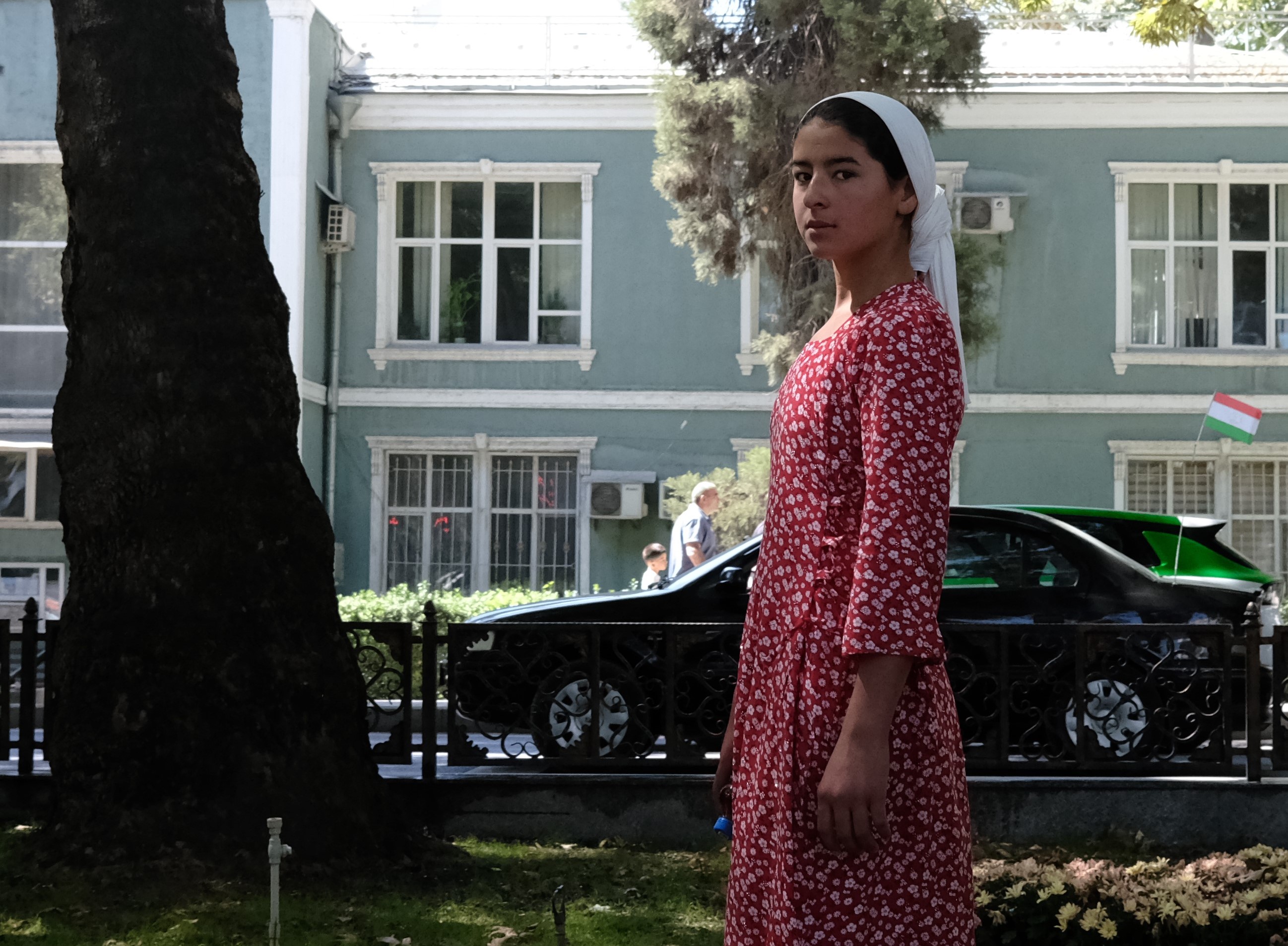
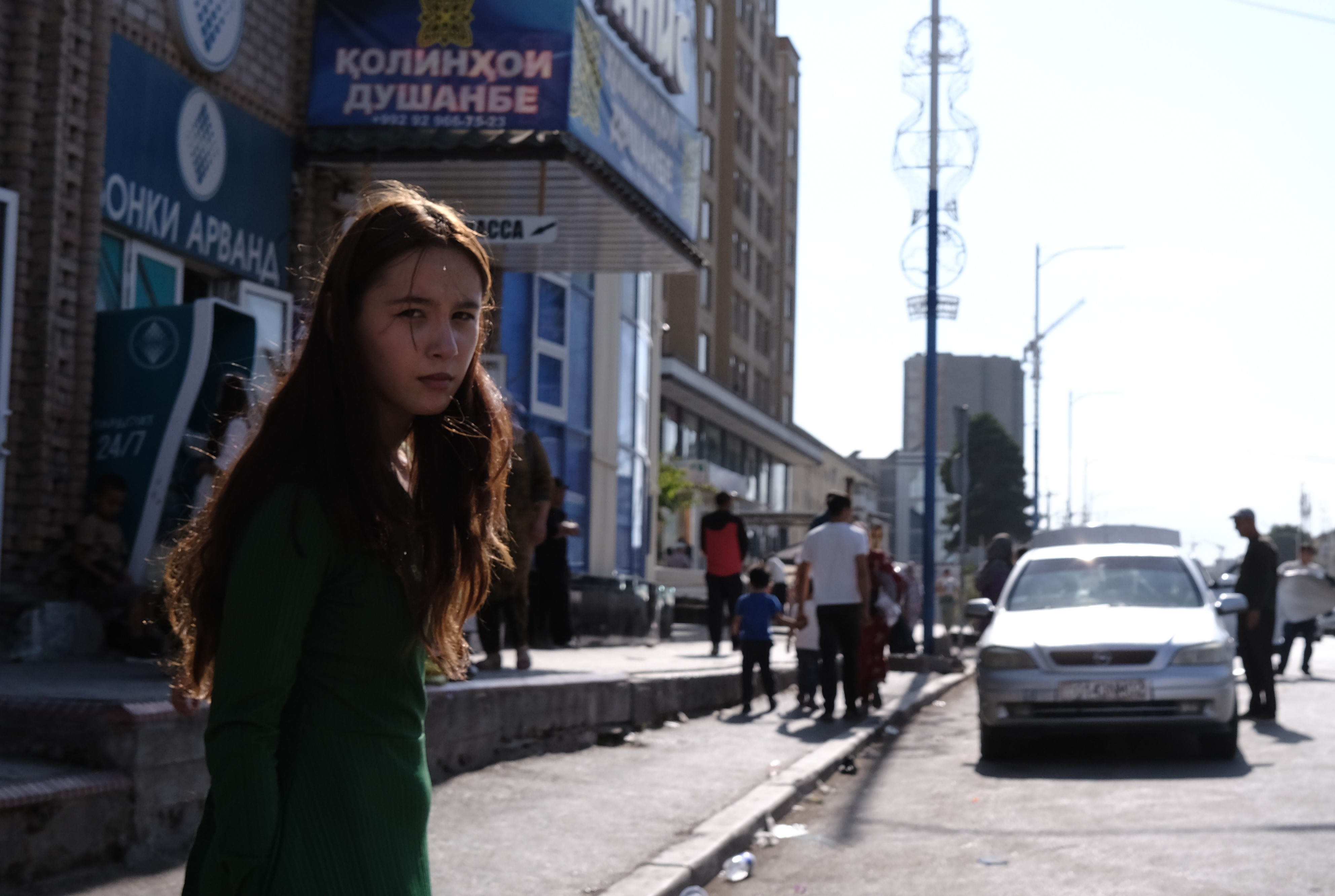
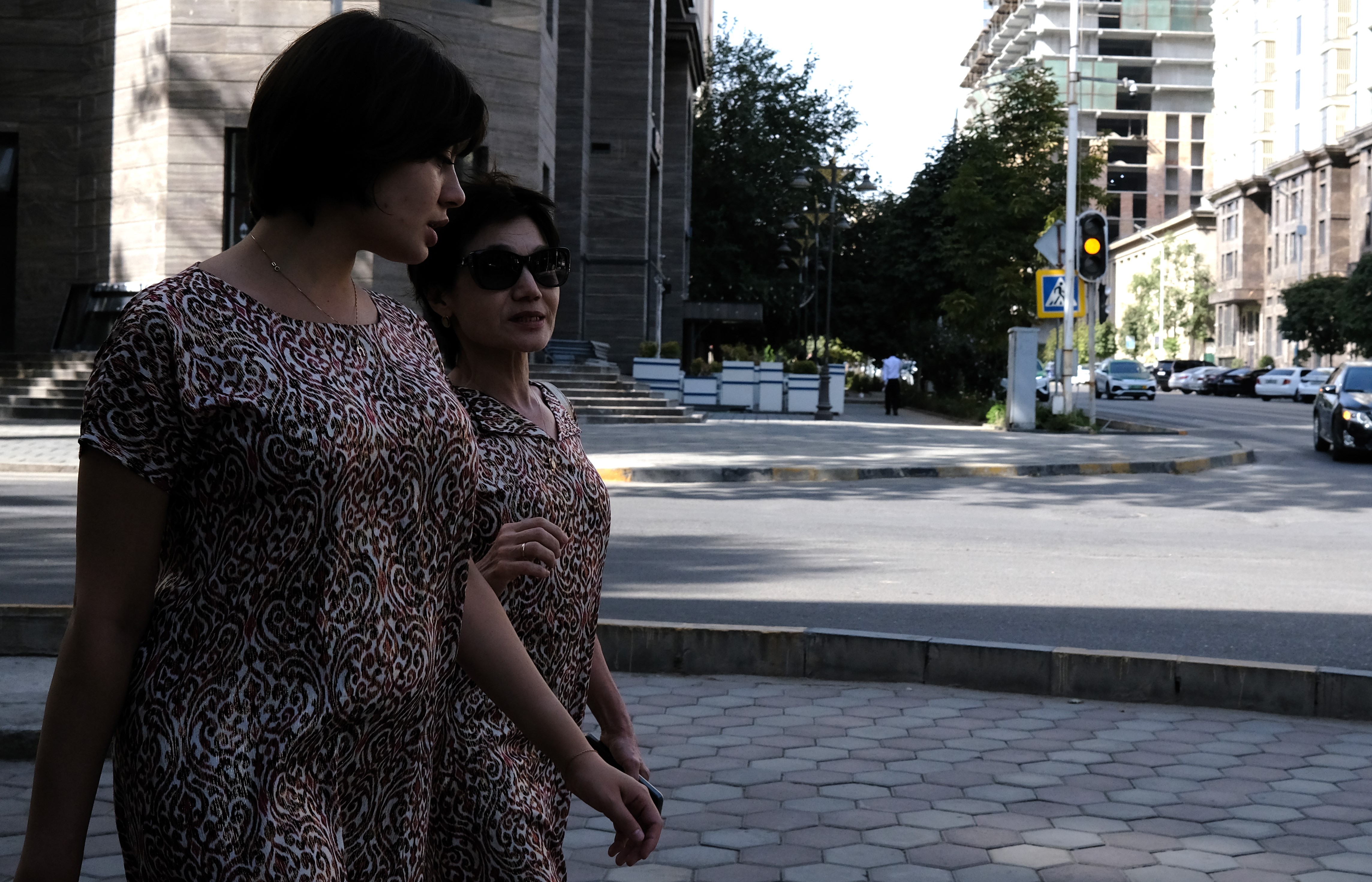
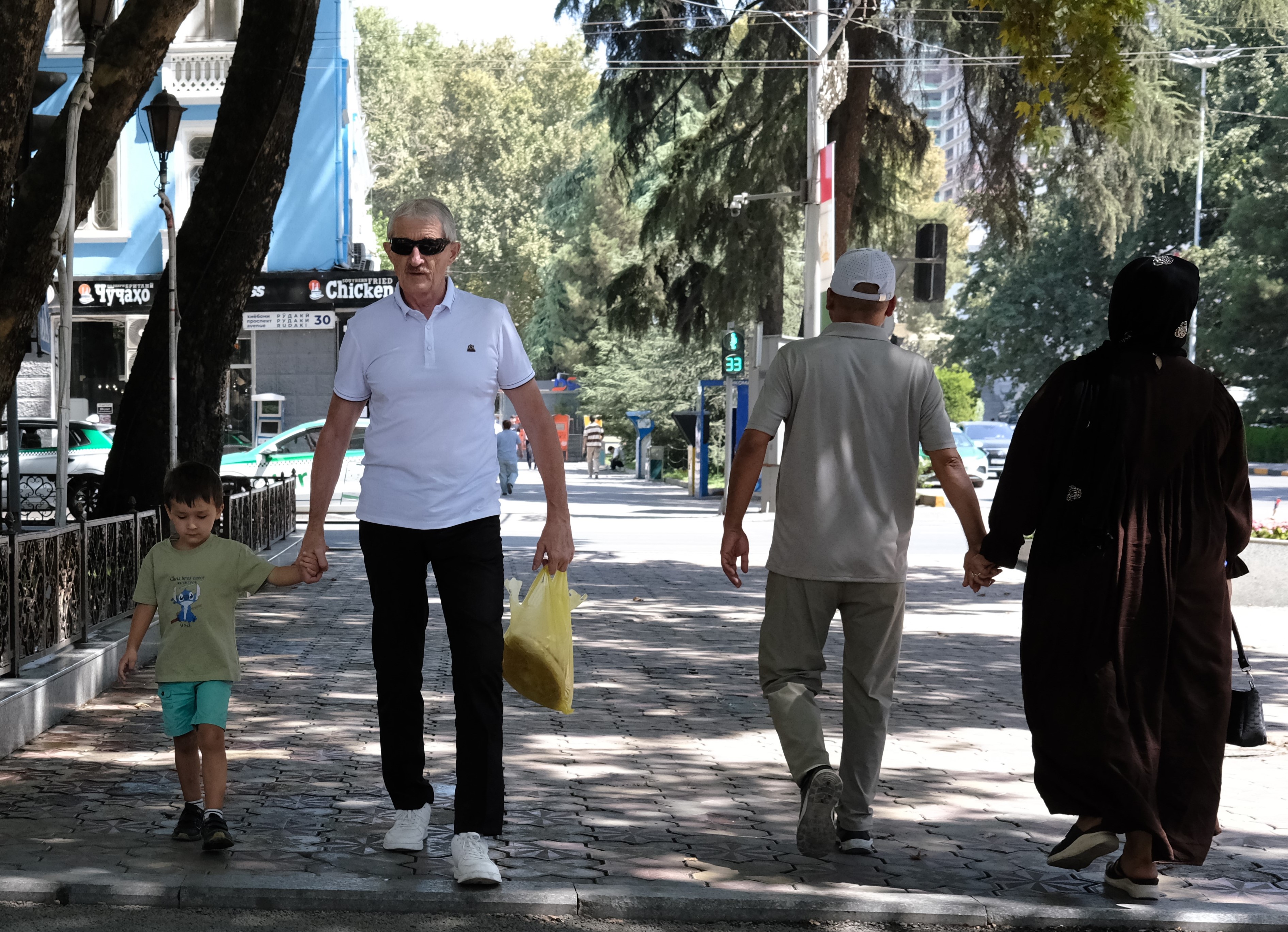
Yet, having read about Tajikistan’s secular laws and restrictions on the hijab, I was surprised, and a little deflated, to find Dushanbe feeling more like the better bits of Pakistan or Iran than a capital of an ex-soviet socialist republic: more headscarves, conservative clothing, featureless public spaces and buildings, and a different rhythm of everyday life—or at least that was my hurried impression as I dashed around with our driver, trying to buy two SIM cards and change our money into somoni before heading off to the mountains.
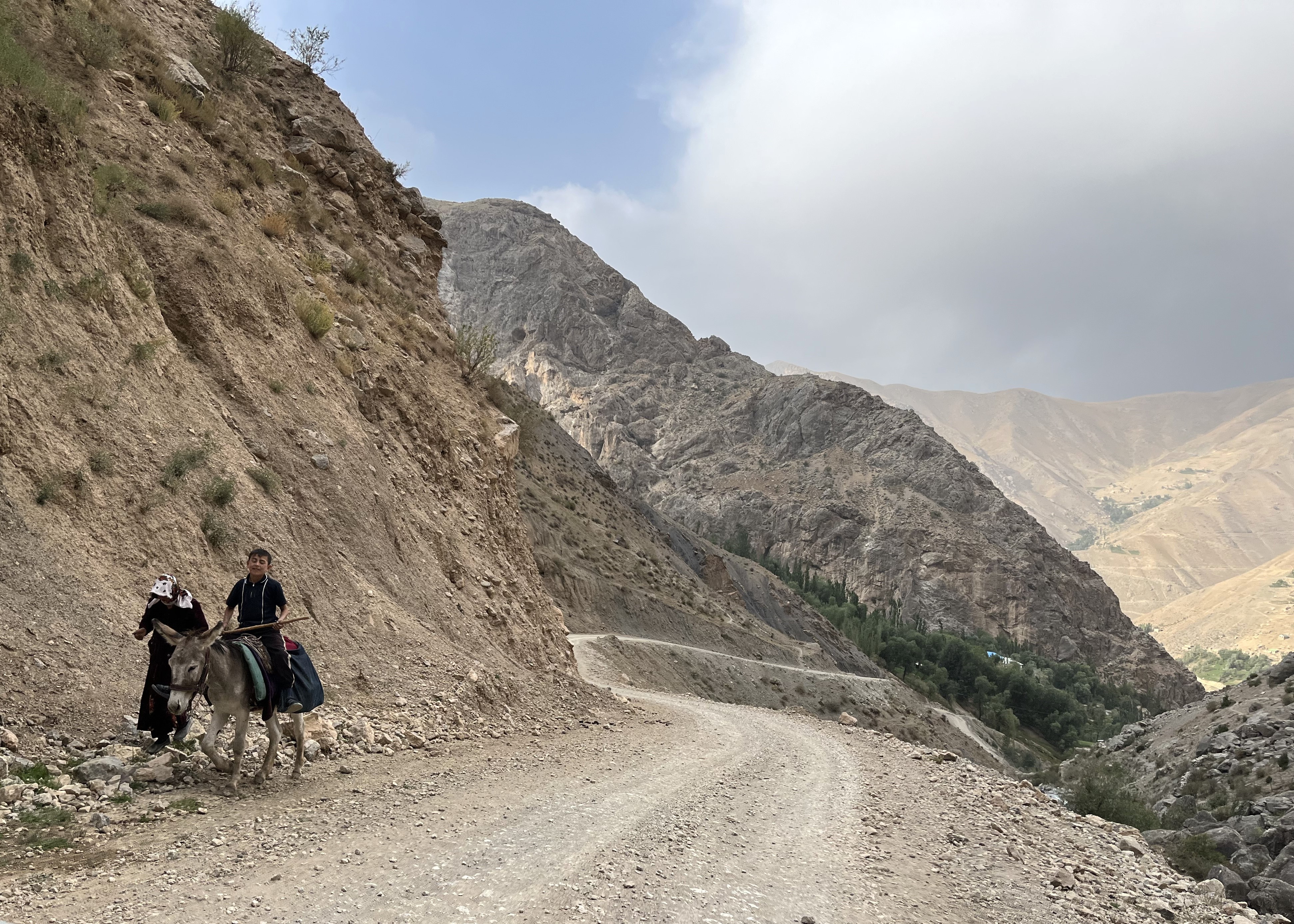
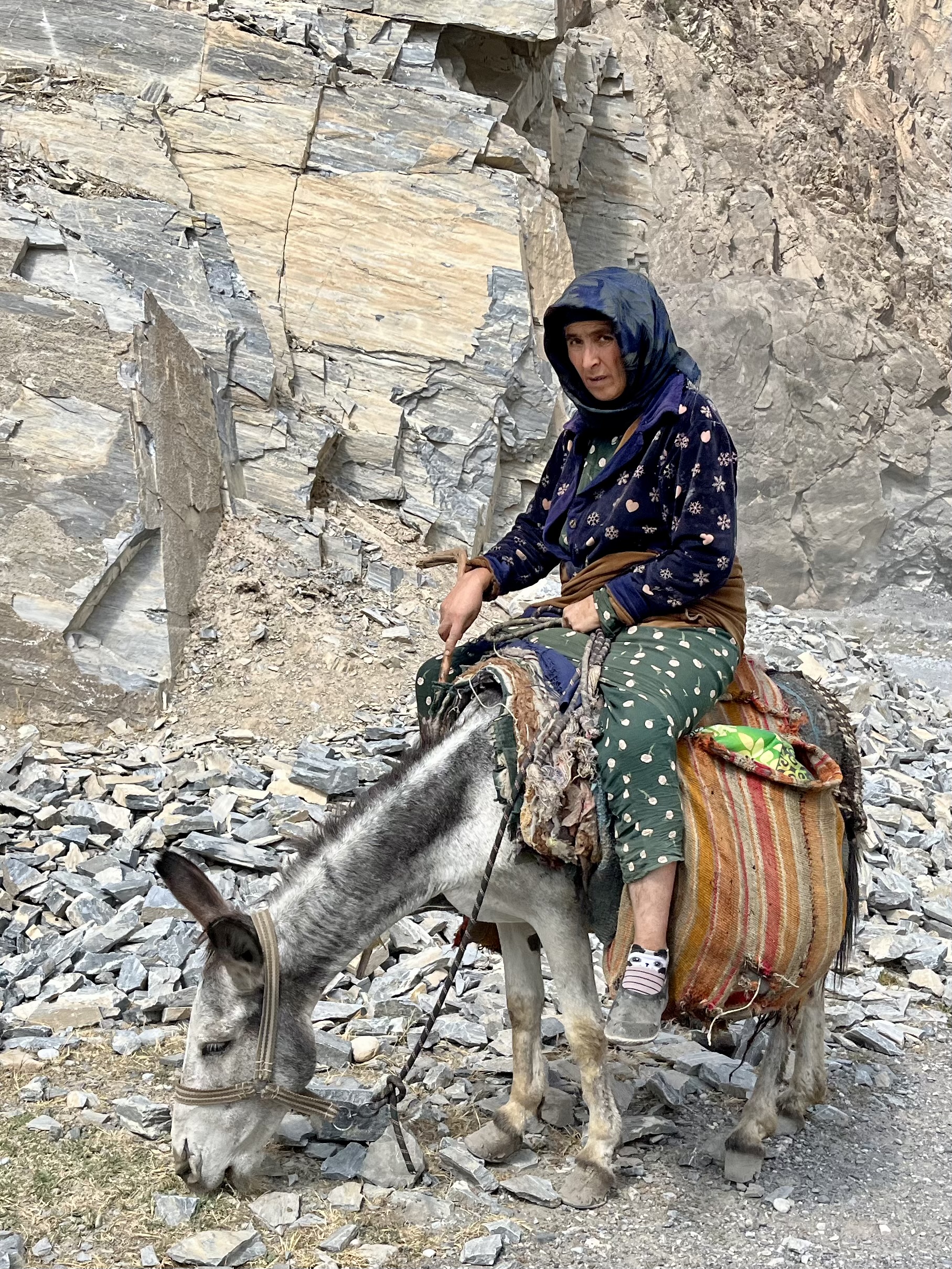
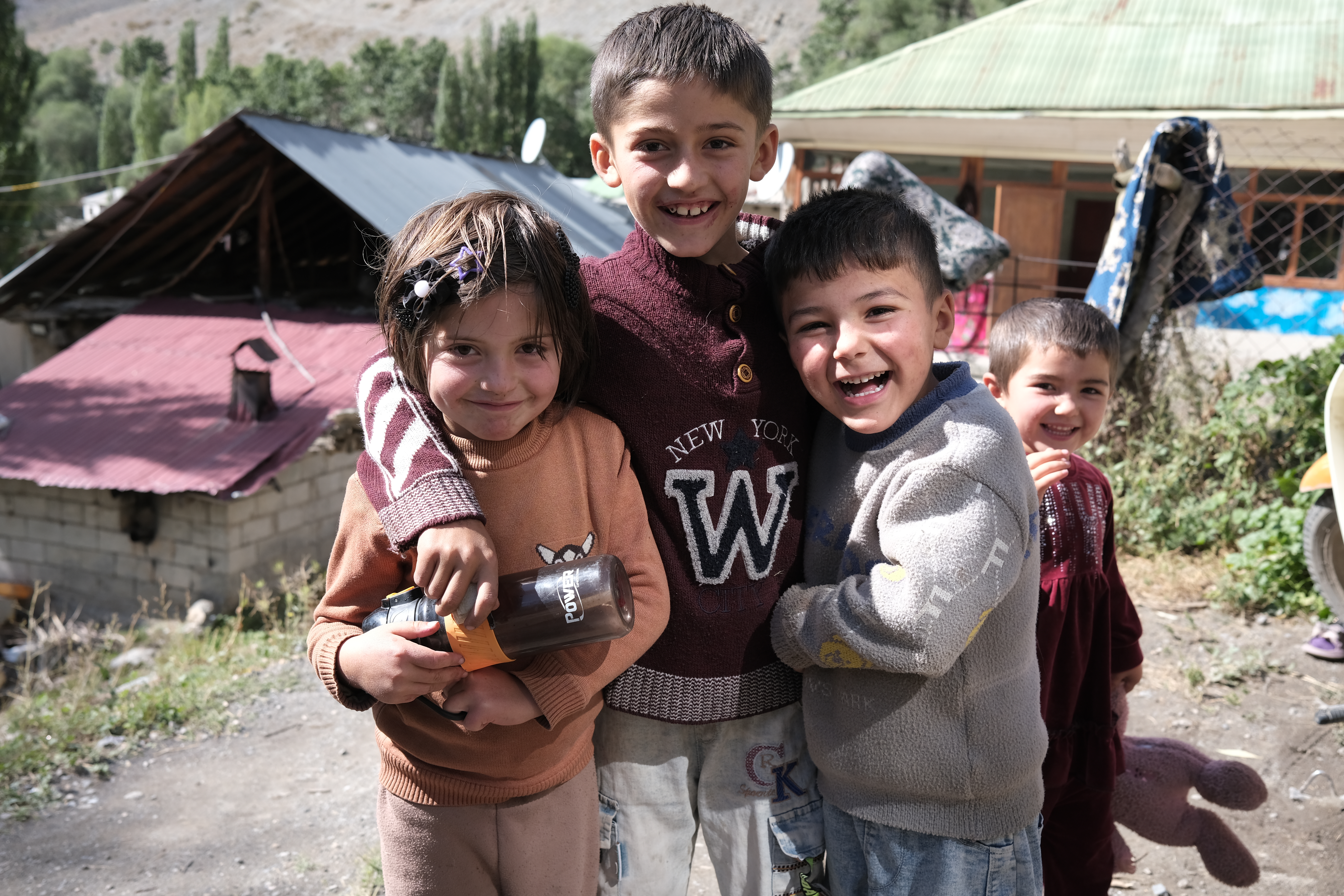
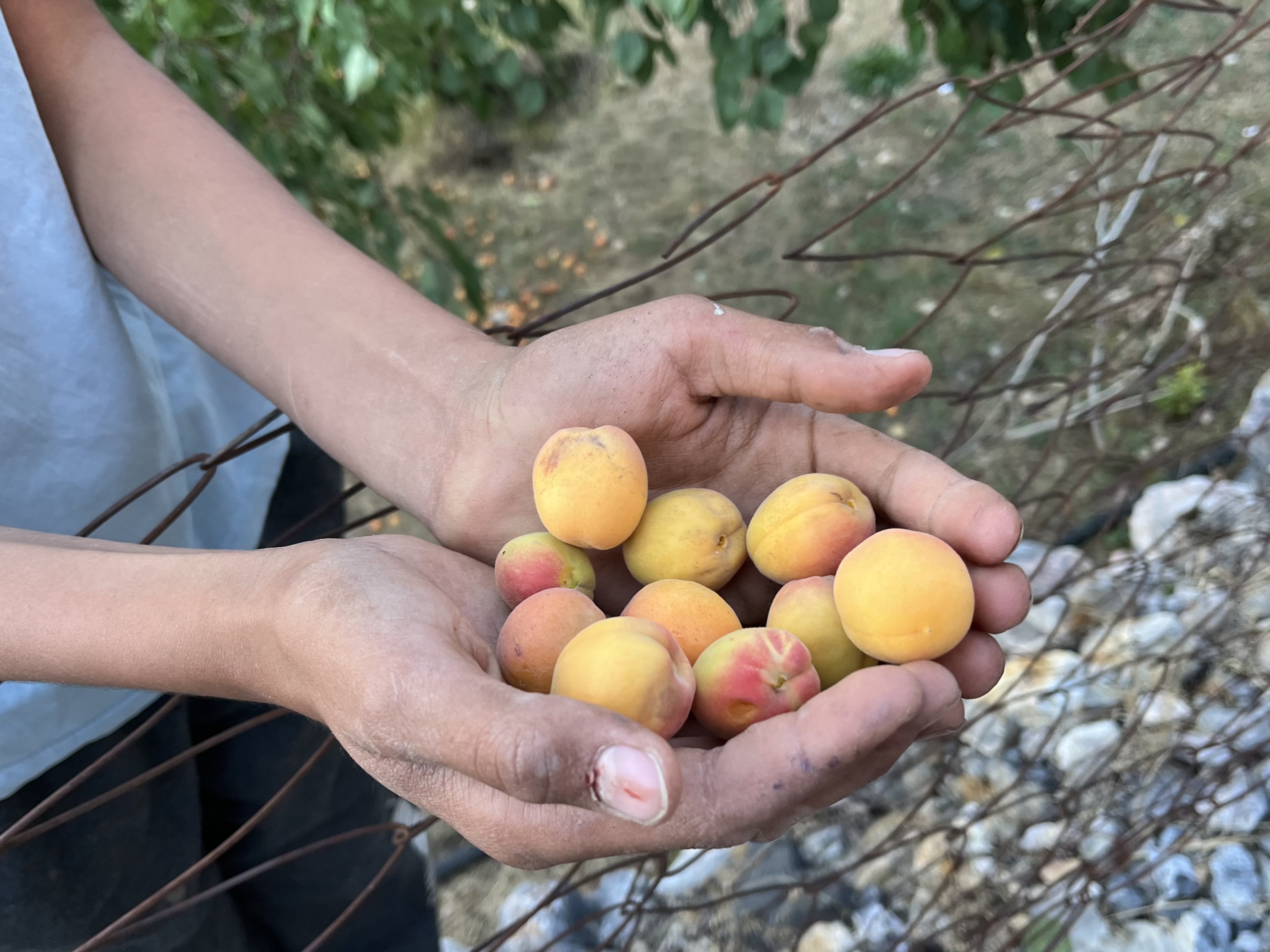
Woman on a donkey, on the road to Voru.Happy children in Margeb, a village at the entrance to the Yaghnob Valley surrounded by steep slopes and high peaks.Yaghnob Valley is a world apart. Remote, untouched and difficult to reach.The people of the remote Yaghnob Valley speak a language called Zivok, a living descendant of Sogdian, the ancient Eastern Iranian language of a civilisation that once flourished along the Silk Road before the Arab conquests of the eighth century.Local boys in Margeb gathered fallen apricots from the ground and passed them to us through the fence. An act of small sweet kindness we will remember long after the trip.
This isn’t just a country that has mountains. The mountains are the country. A whopping 93% of Tajikistan is mountainous.
The roads prove it.
An hour or so north of Dushanbe, which itself lies at a respectable altitude of between 750 and 900 metres above sea level, the road enters the Anzob Tunnel, five kilometres of damp, dimly lit darkness burrowing through the mountains. You can barely see beyond the faint, scattered lights and the dark shape of the car in front. You drive on, hoping that the small, distant patch of light ahead is the exit and not an oncoming lorry.
I hadn’t come to Tajikistan, as many do, to tackle the Pamir Highway, that great Central Asian automotive bucket-list adventure, complete with nomad selfies and glamping yurts. Nor had I come to spend my days being driven from one lake to another, climbing out of a Land Cruiser, taking a photograph and climbing back in. There are only so many lakes a man can admire before even a beautiful one begins to look like the last.
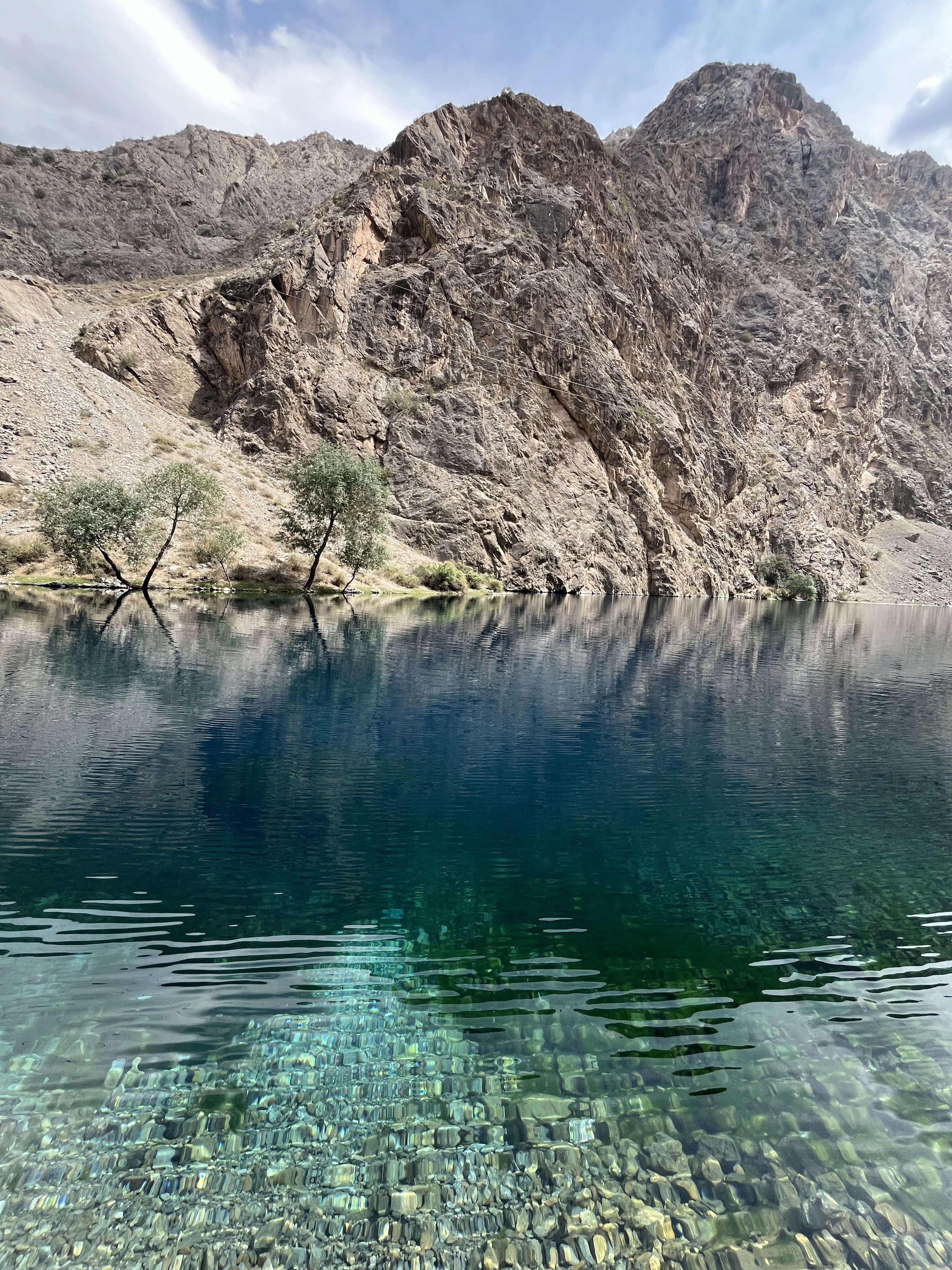
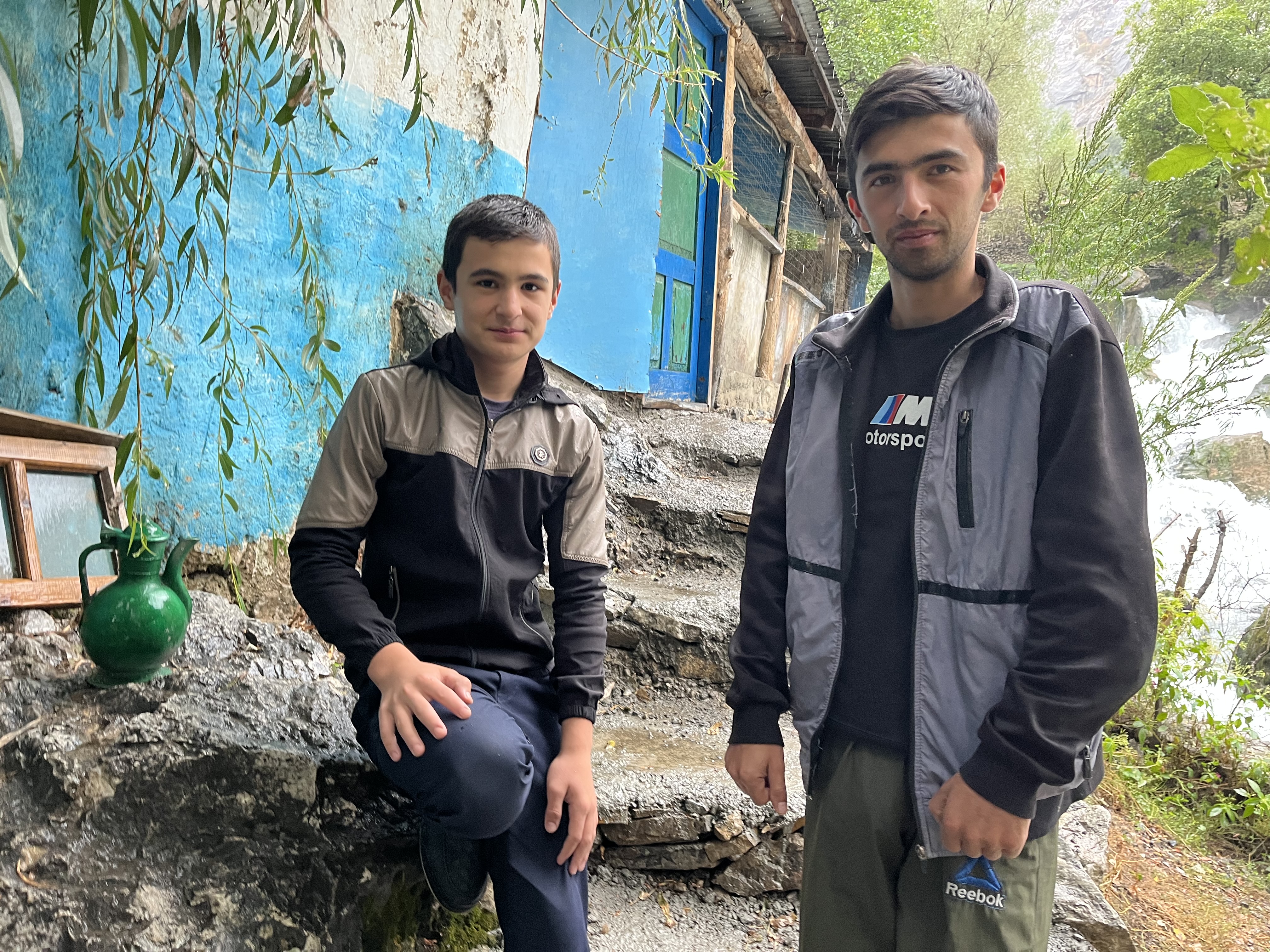
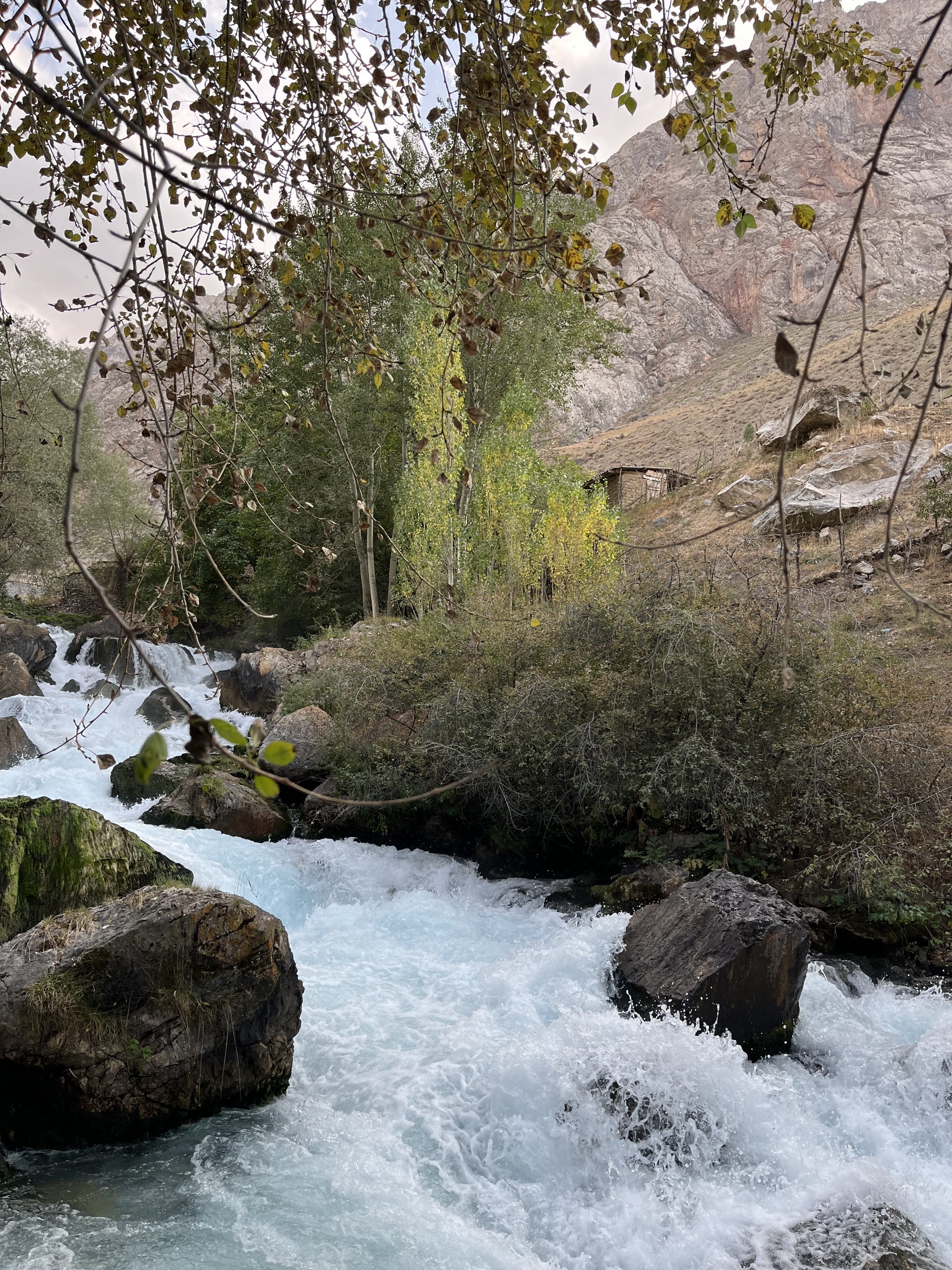
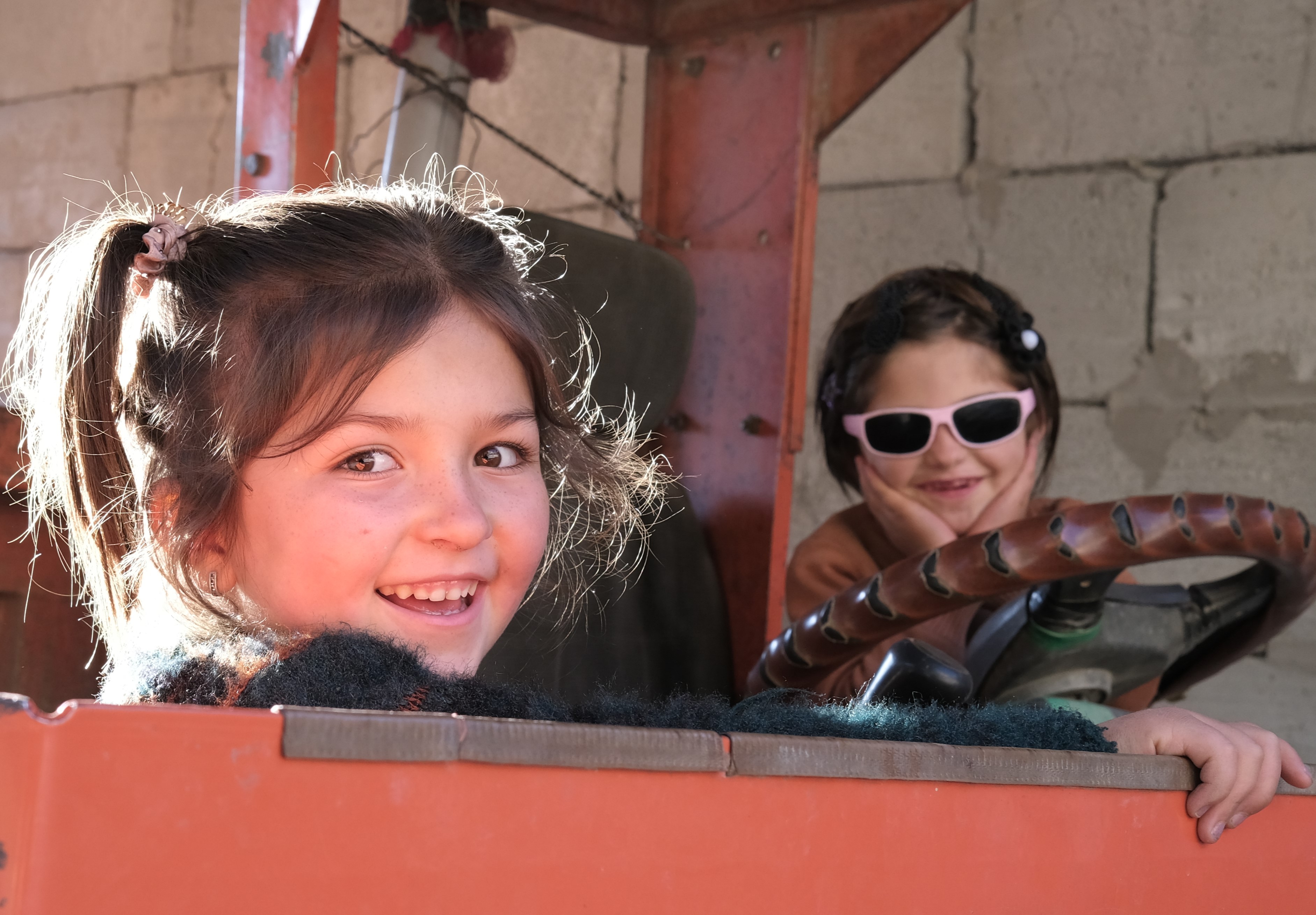
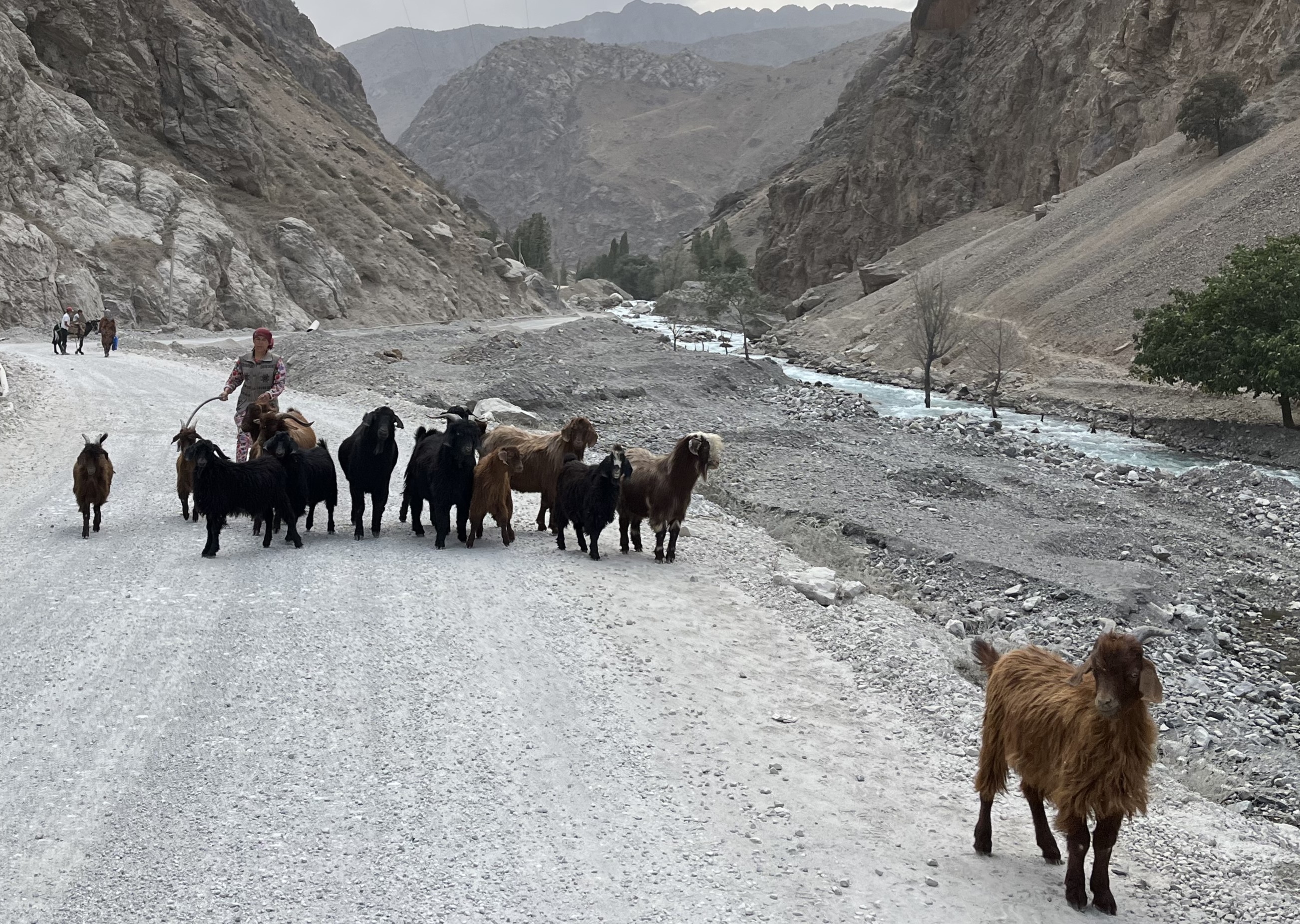
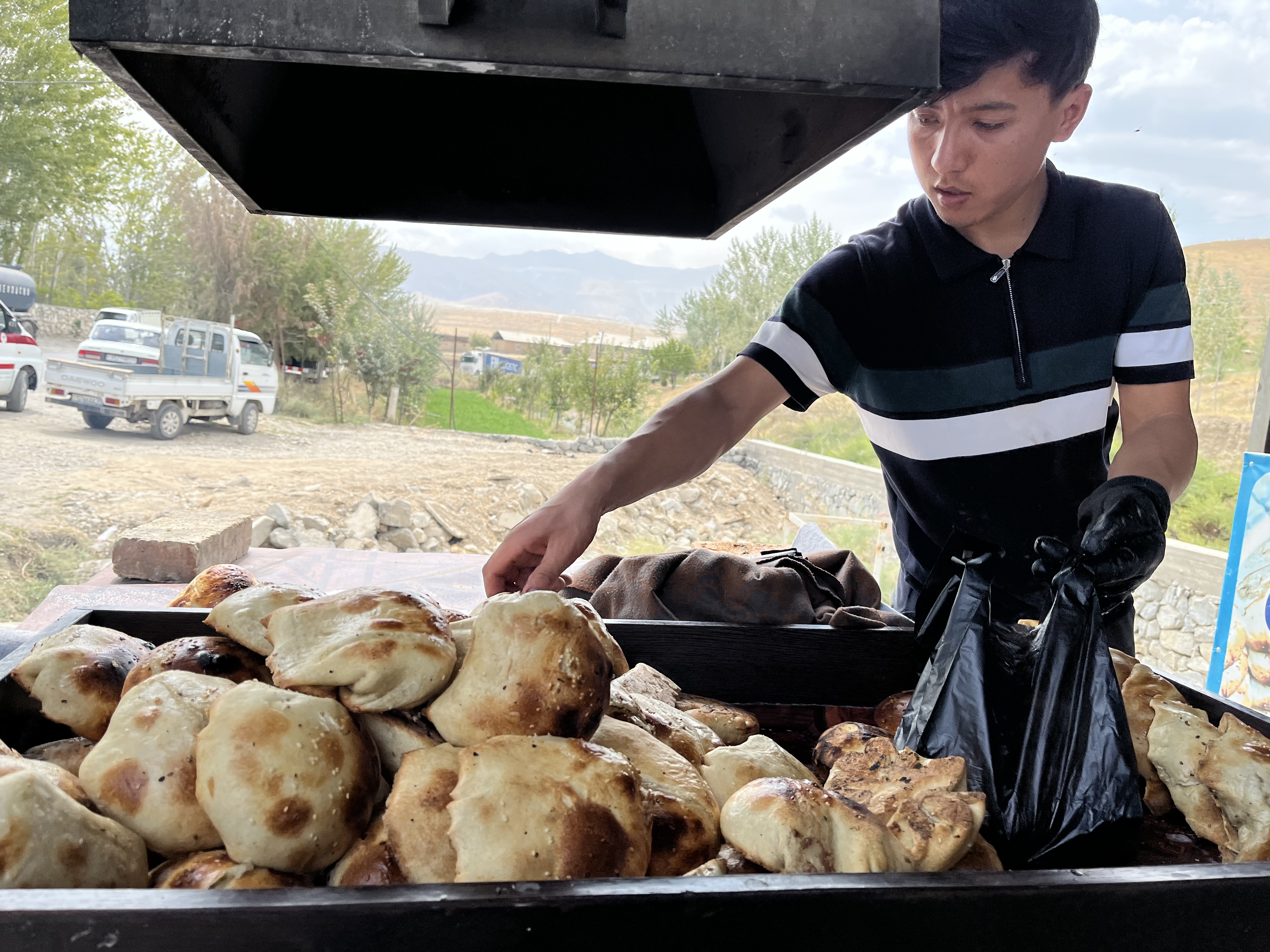
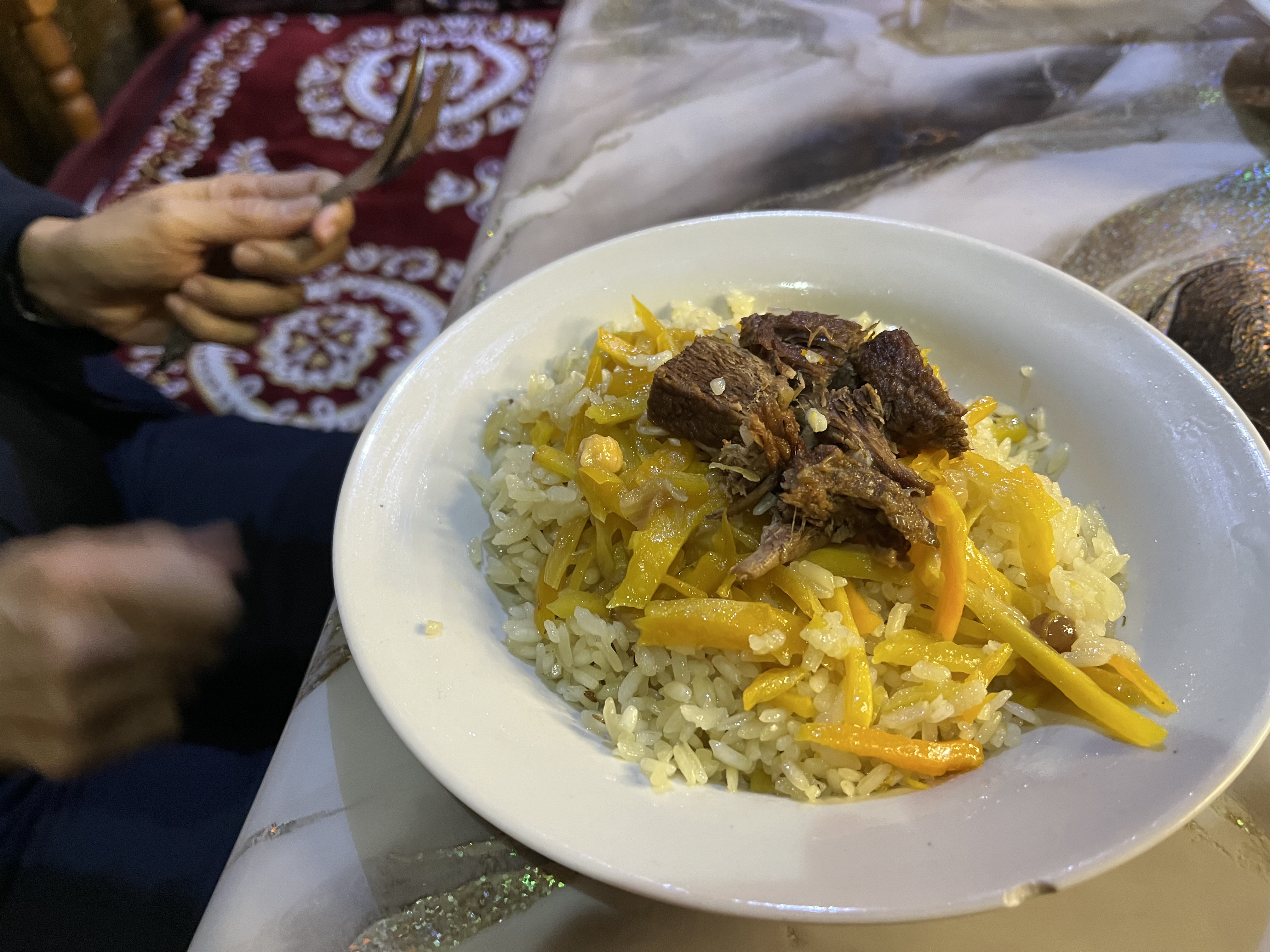
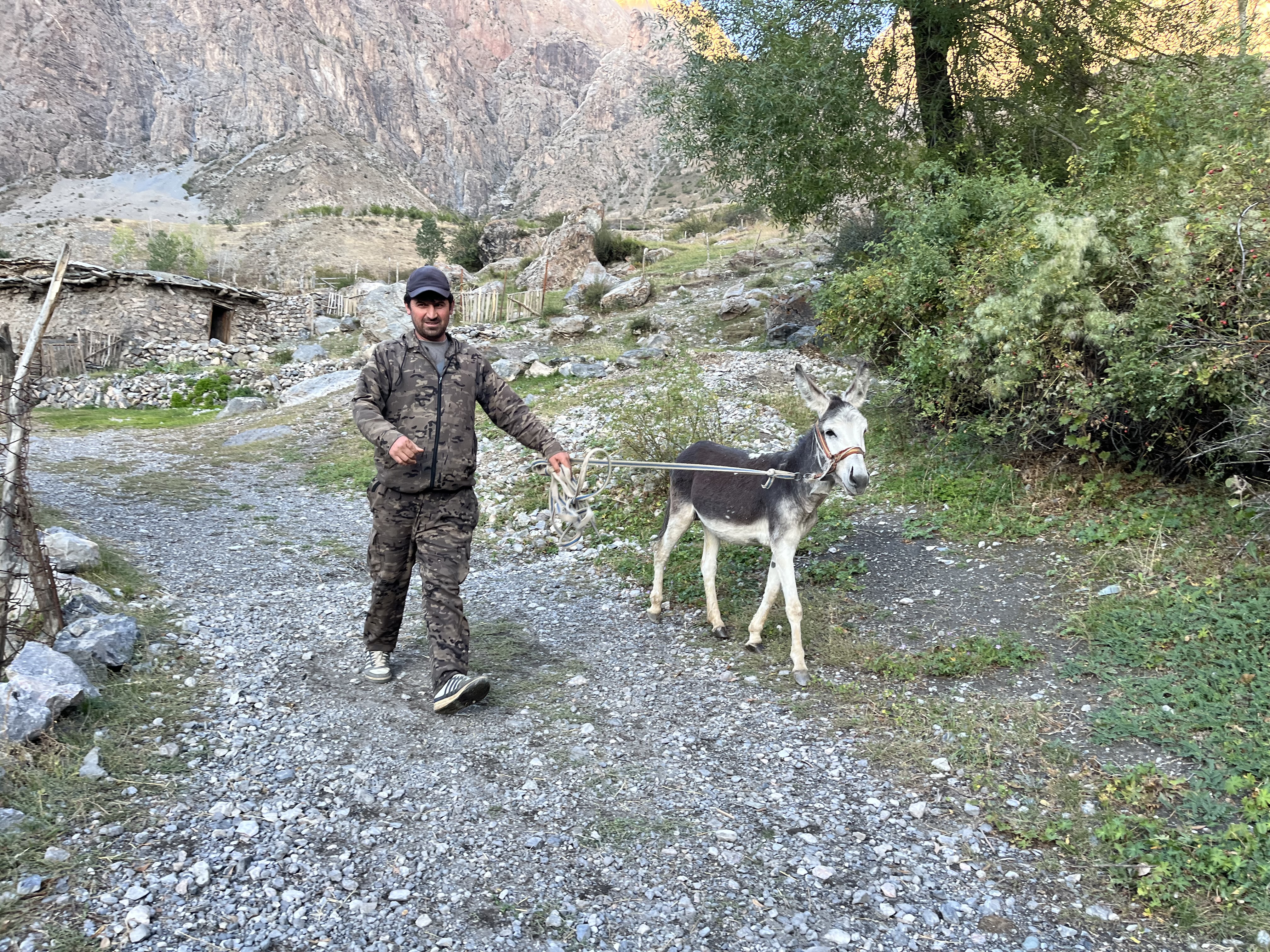
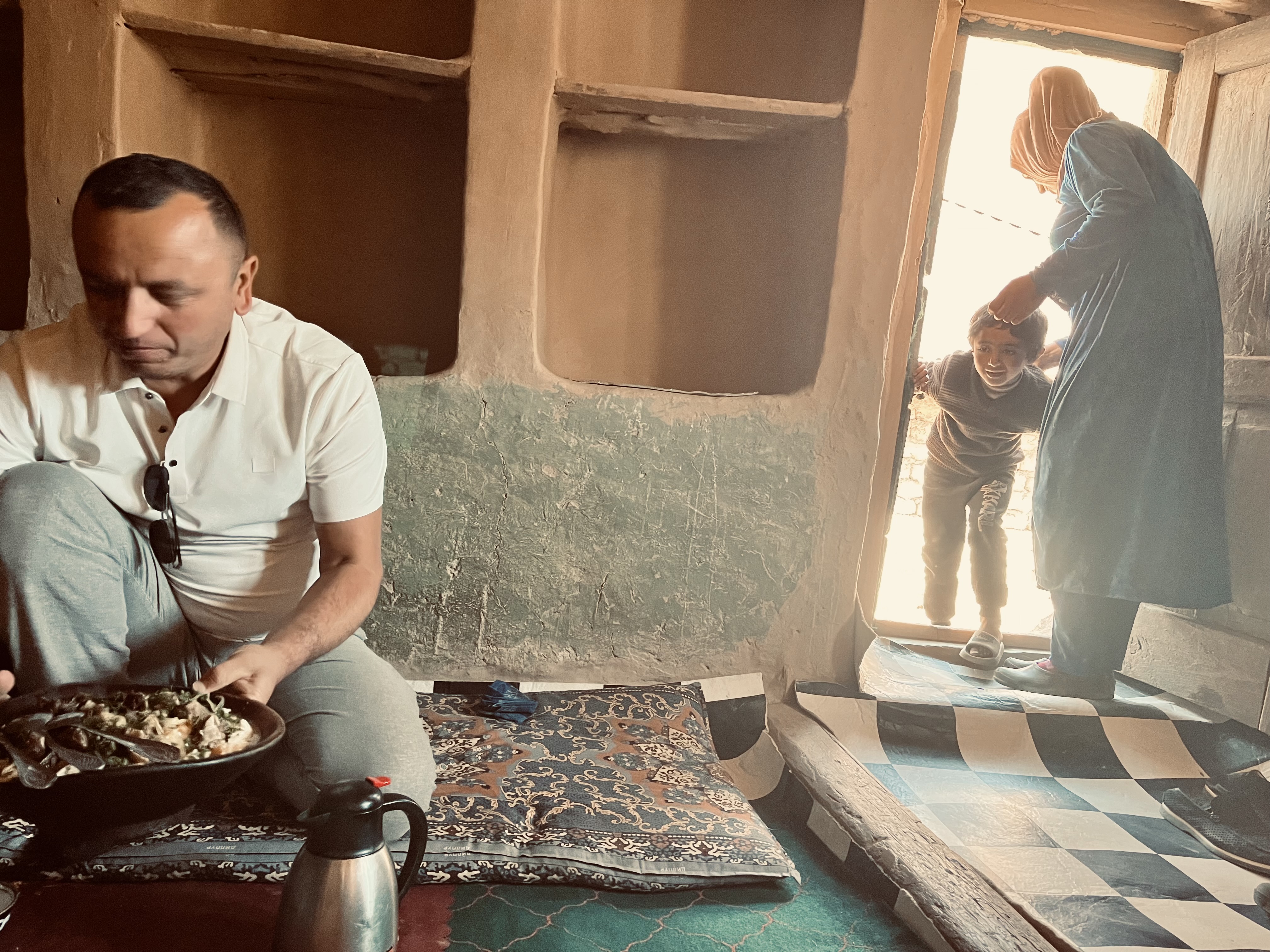
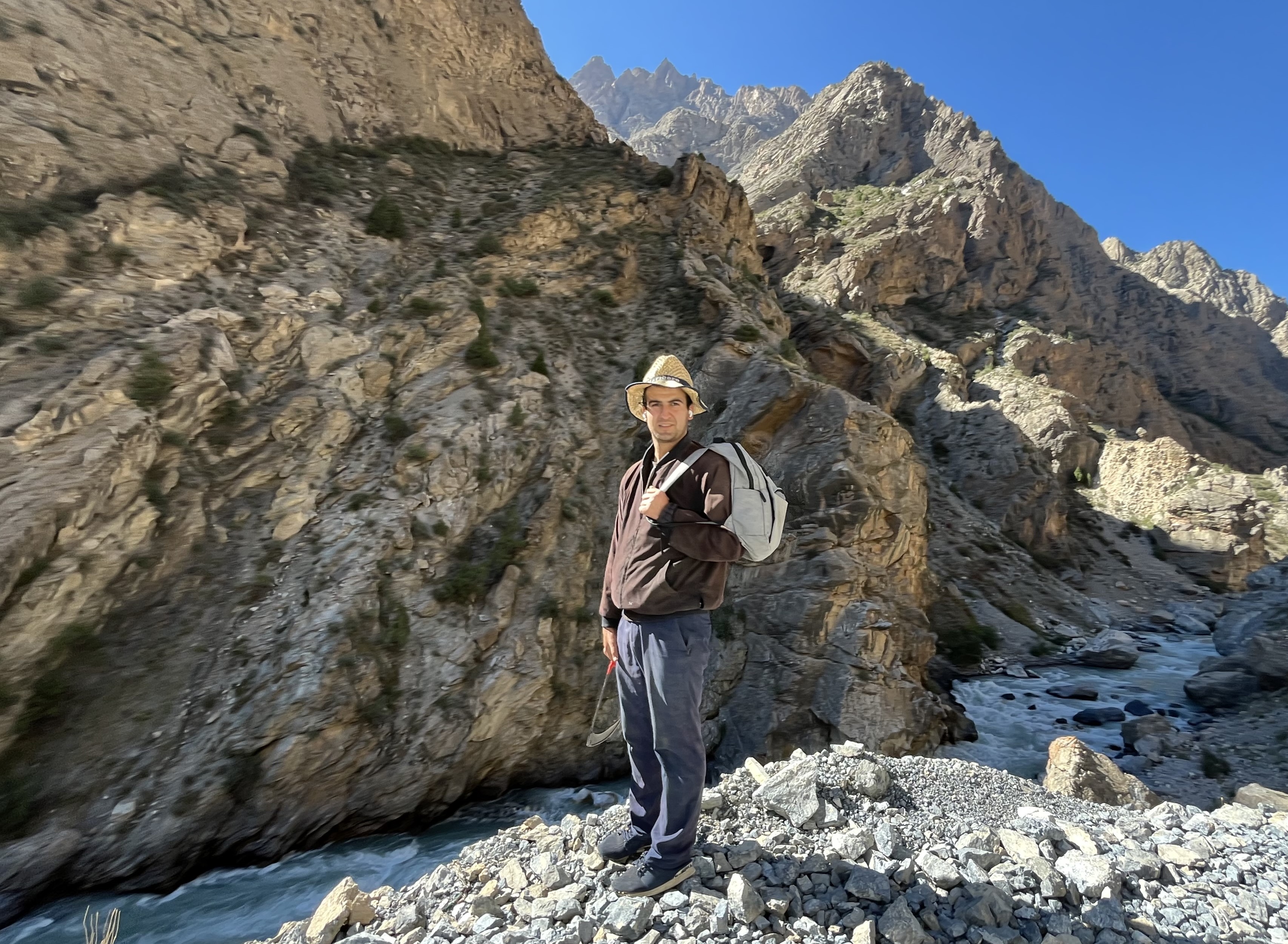
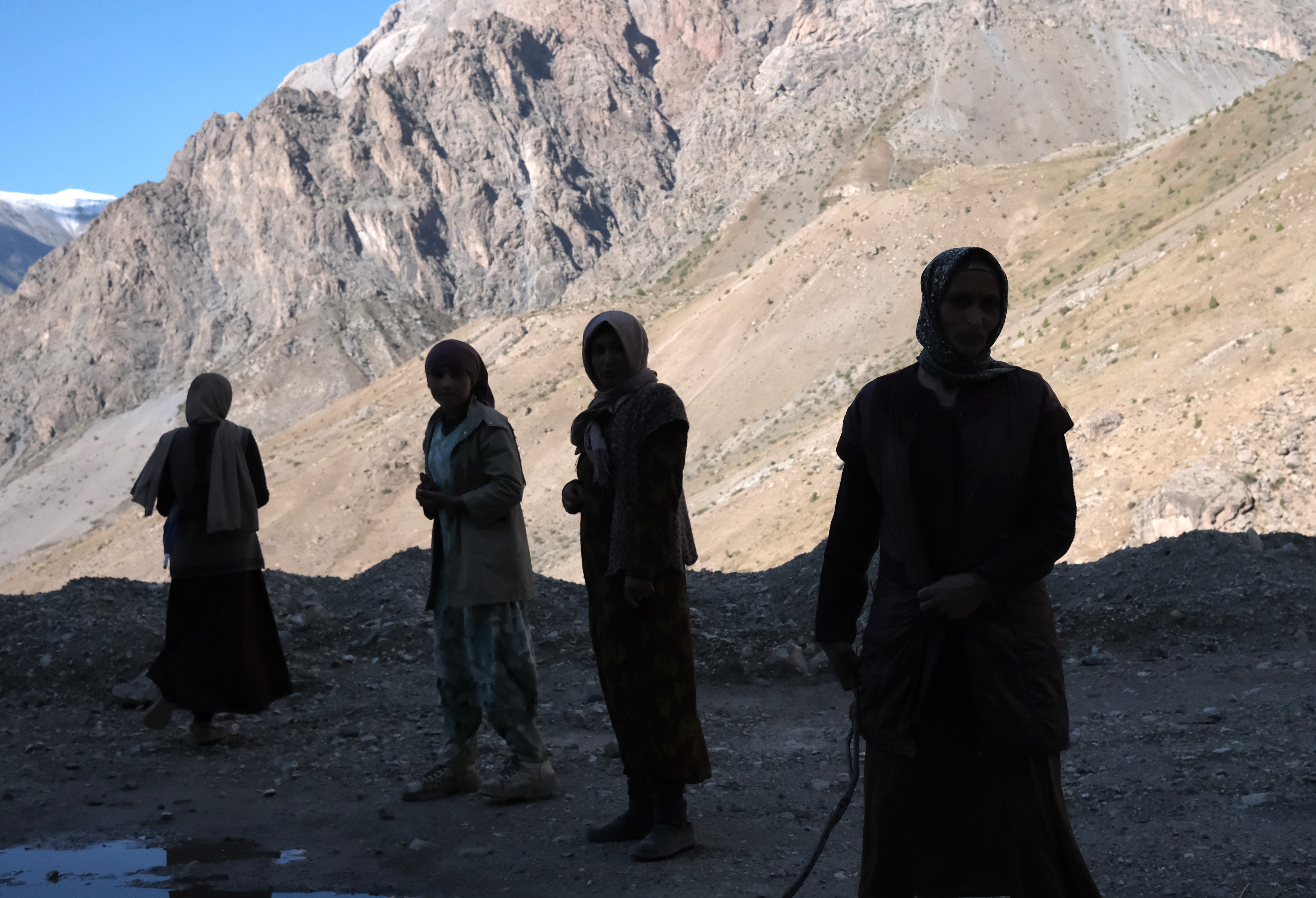
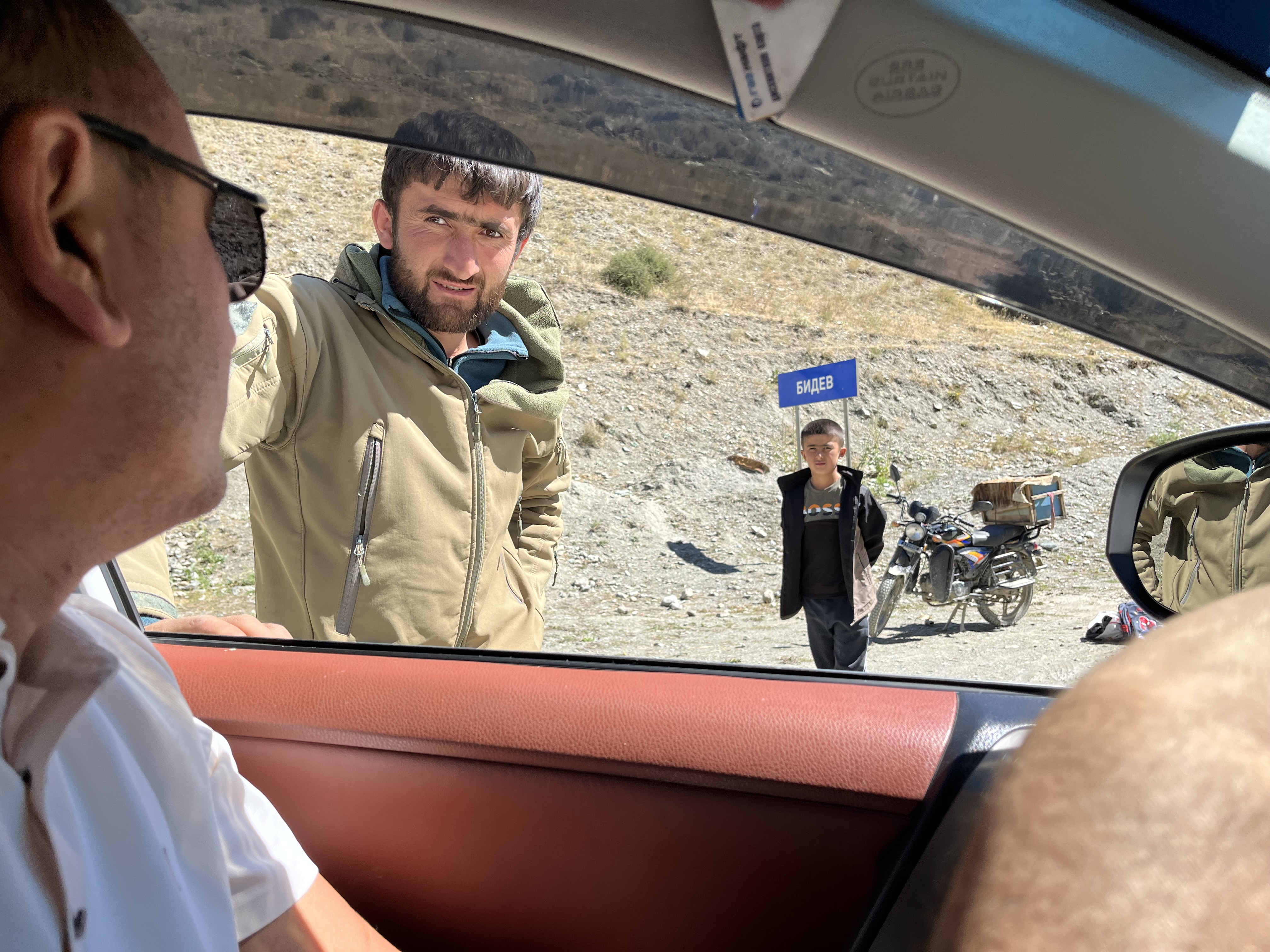
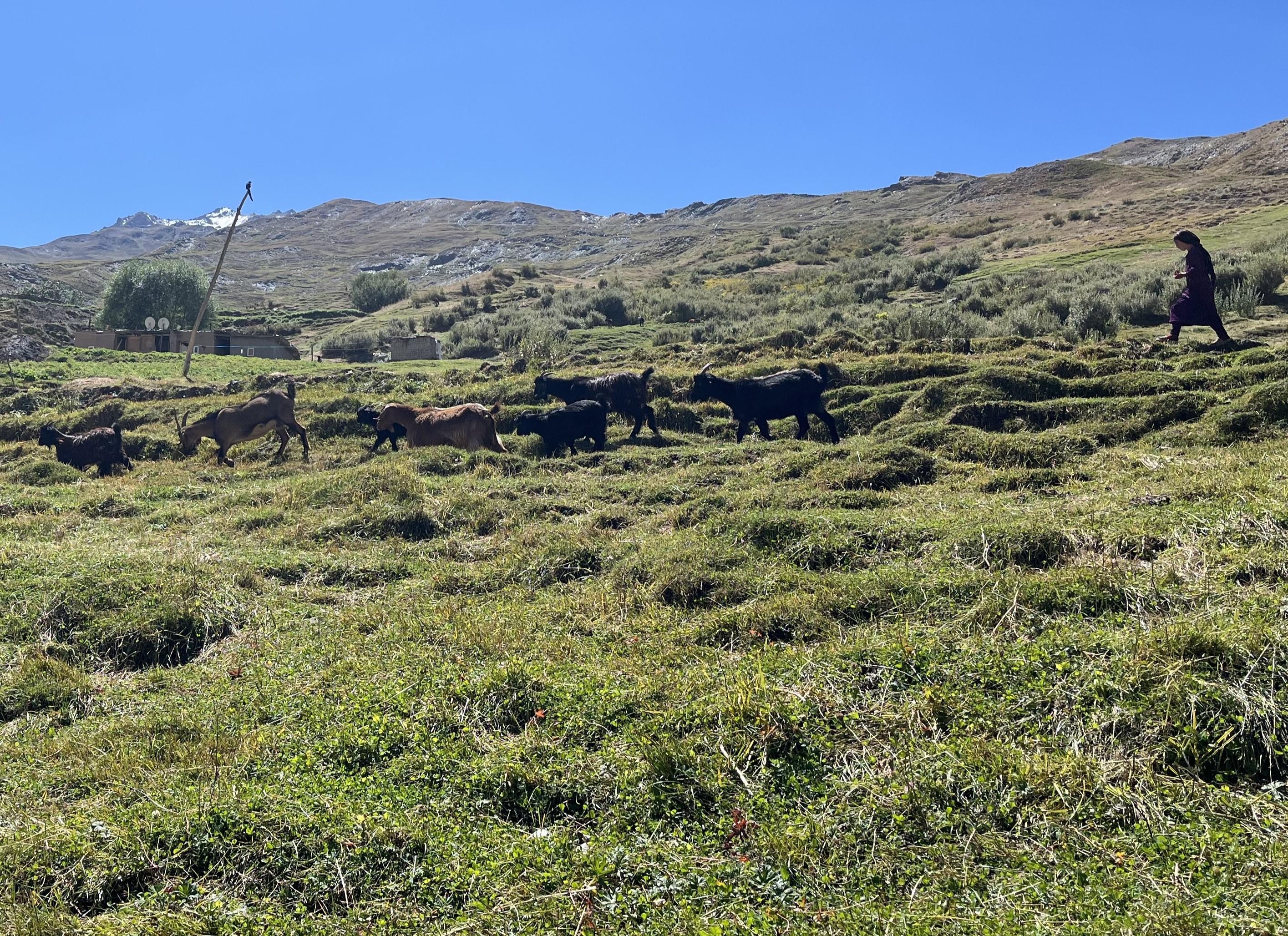
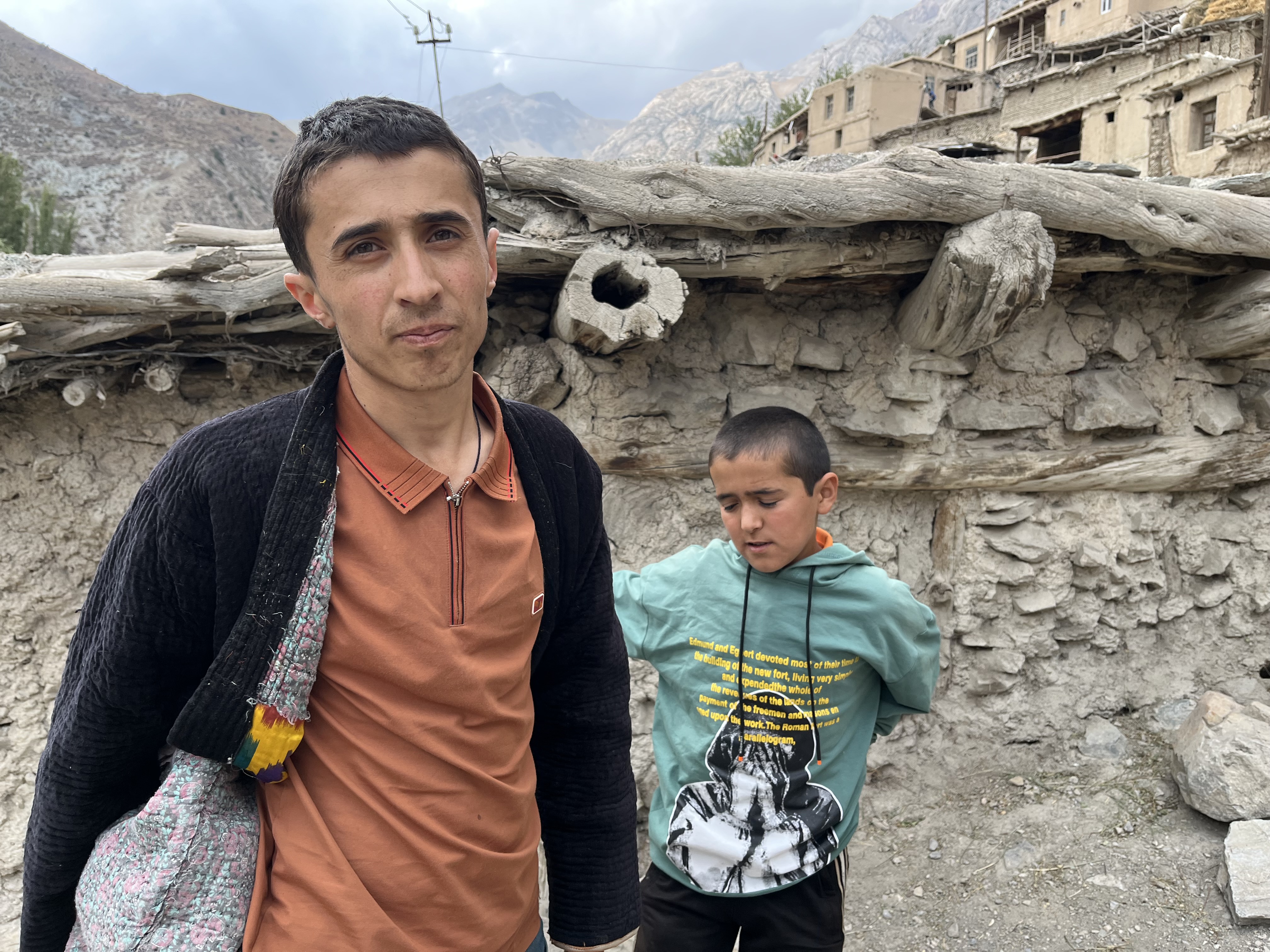
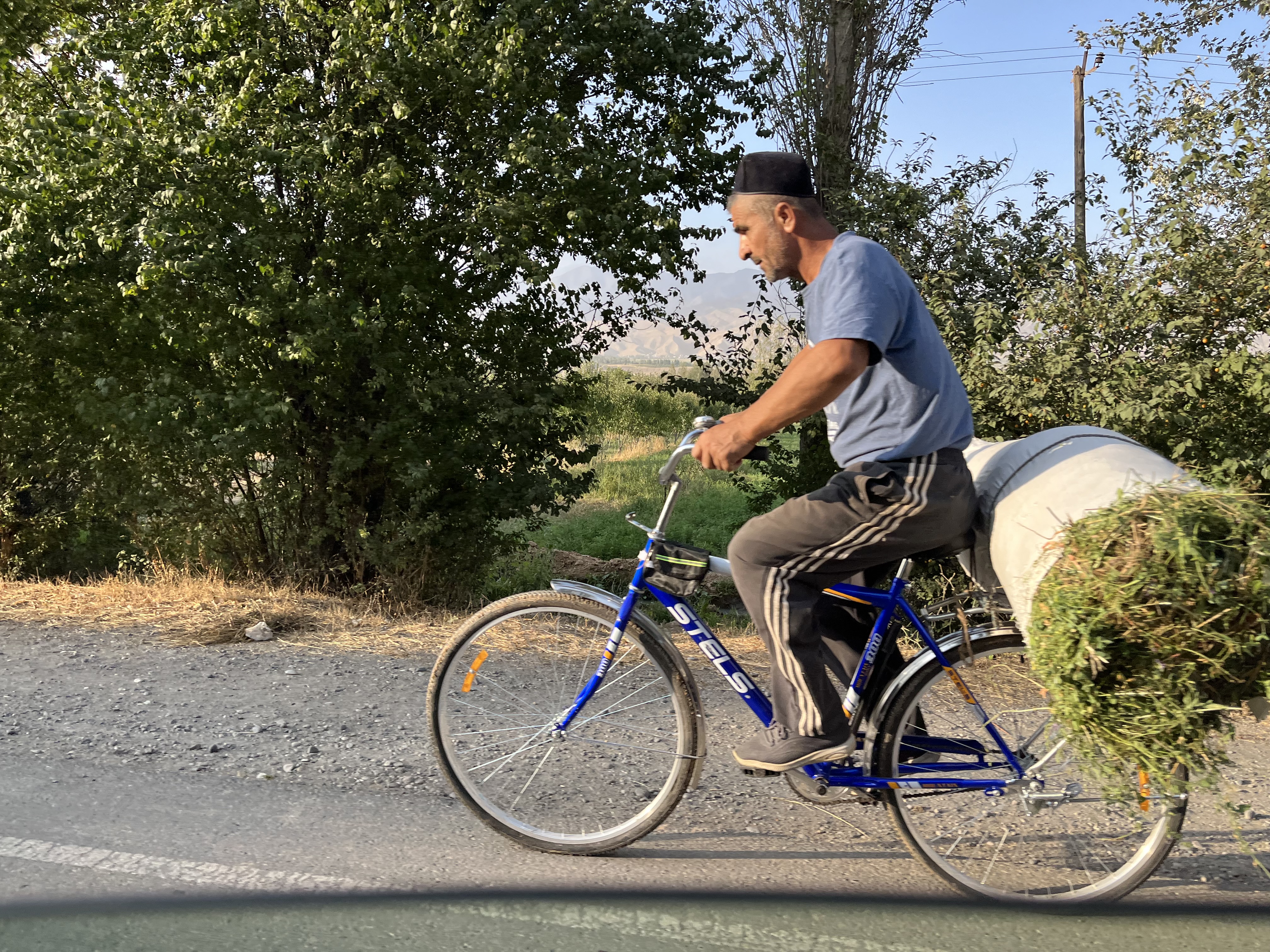
Mizhgon (eyelashes), is the first of the Seven Lakes (Haft Kul) of the Fann Mountains. The others have names just as evocative: Soya (shadow), Gushor (awake), Nofin (bellybutton), Khurdak (little one), Marguzor (blossoming place) and Hazorchashma (a thousand springs). Our hosts in Padrud: Navruz, a student earning some holiday money, and Mohamad, who appeared to be running the homestay. We spent a night in Padrud right beside a roaring cascade, its torrents tumbling over rocks in a rush of icy blue water. Early autumn mountain scenery, the constant thunder of the falls and a proper bed with sit down toilets – better than camping beside a waterfall.Two friends, smiling and playing in Margeb.Goats on the road, Fann Mountains.Samsa – the Tajik version of siew pao. Piping hot, filled with meat and eaten with a spicy tomato sauce.Our dinner of mountain plov in Padrud.In Margeb, a man in army fatigues takes his grey donkey down the mountains in the evening.Zokir ready to tuck into our plate of delicious home-cooked qurutob, Yaghnob Valley.A lone traveler on our way down from Yaghnob, with the mighty Zarafshan Range rising behind him.A group of women walking along a mountain road in Yaghnob. In these remote valleys, the future of women lies in the balance between preserving tradition and having the freedom to choose their own path.Checking the way forward in Bidev (2,580 m), a remote outpost deep in the mountains of Yaghnob.The Yaghnobi people have lived for centuries in isolated mountain villages, preserving their own language and traditions. In the 1970s, the Soviets forced thousands from their mountain villages to work on cotton farms in the lowlands. Many died. Their abandoned villages now lie in ruins.Hamadon and friend outside their homes in the mountain village of Voru where houses are built of stones and weathered earth, with wooden doors, small windows and terraces, looking like they are stacked one above another up the mountainside.
I wanted to explore the country’s small, scenic and historically rich western region called Sughd, slowly enough to see what was going on beyond the scenery.
We started with Iskanderkul and Sarytag, then to Voru and Panjakent, drove up and stayed a night at the Seven Lakes, or Haft Kul. From there, we dropped Khujand from the plan and doubled back to Panjakent before heading to the mountain village of Margeb that served as gateway to the hauntingly isolated, heartstoppingly beautiful Yaghnob Valley. Finally, it was back to Dushanbe for our flight to Tashkent.
We travelled in a Toyota RAV4. The first driver spoke passable English, though his people skills could have done with a little servicing. The second, Zokir, who took us to Yaghnob, was a gem: perpetually laughing and smiling despite the tough mountain roads. We had no common language, but somehow managed to get along fine with a smattering of Russian, extravagant gesturing, and plenty of shrieks, grunts, oohs and aahs. Think three Teletubbies on a road trip.
Eight days later, we were back in Dushanbe, having covered a fair stretch of western Tajikistan. It had been a good trip, with its share of surprises, sore bums and roads that looked considerably shorter on Google Maps.
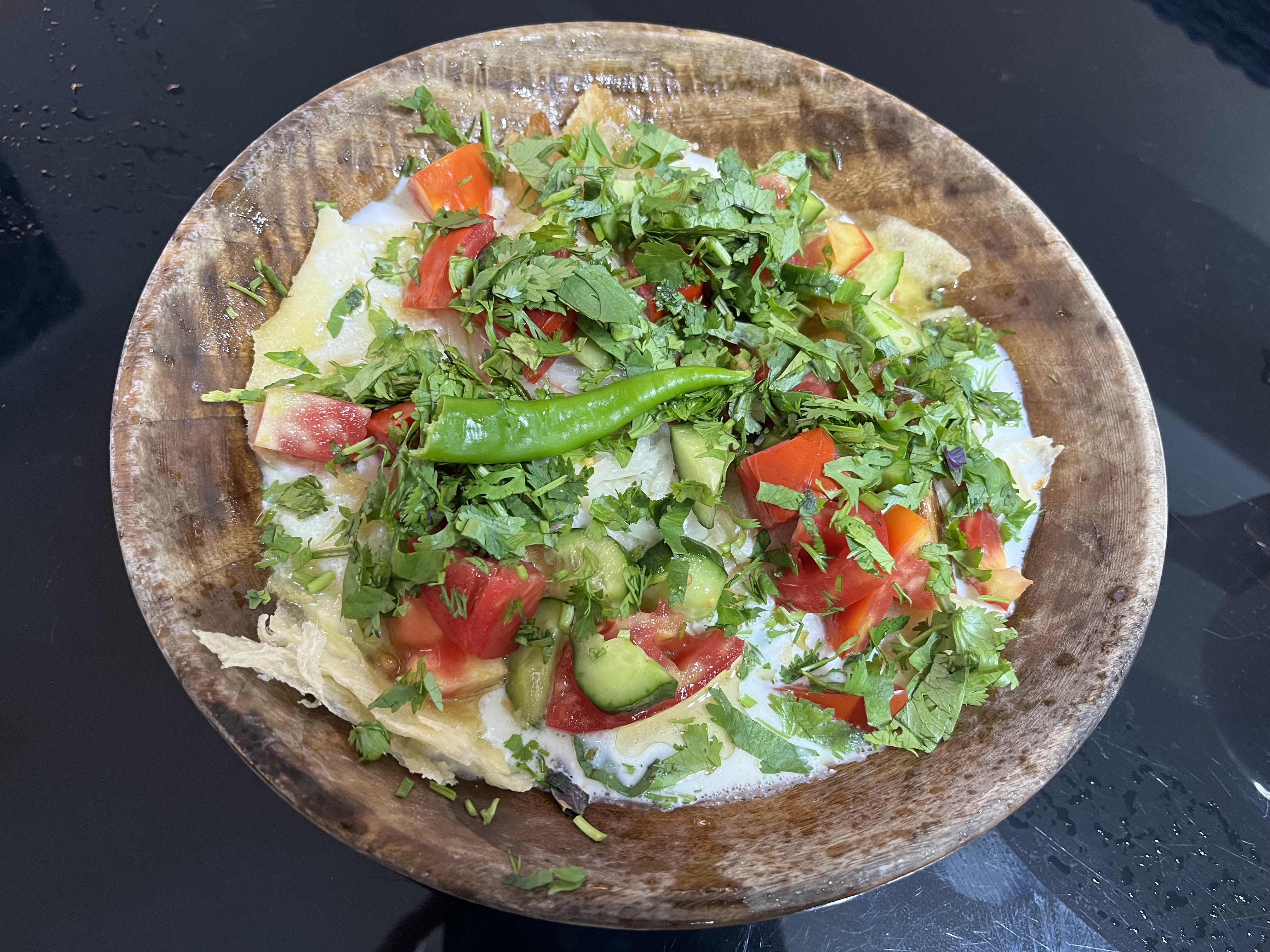
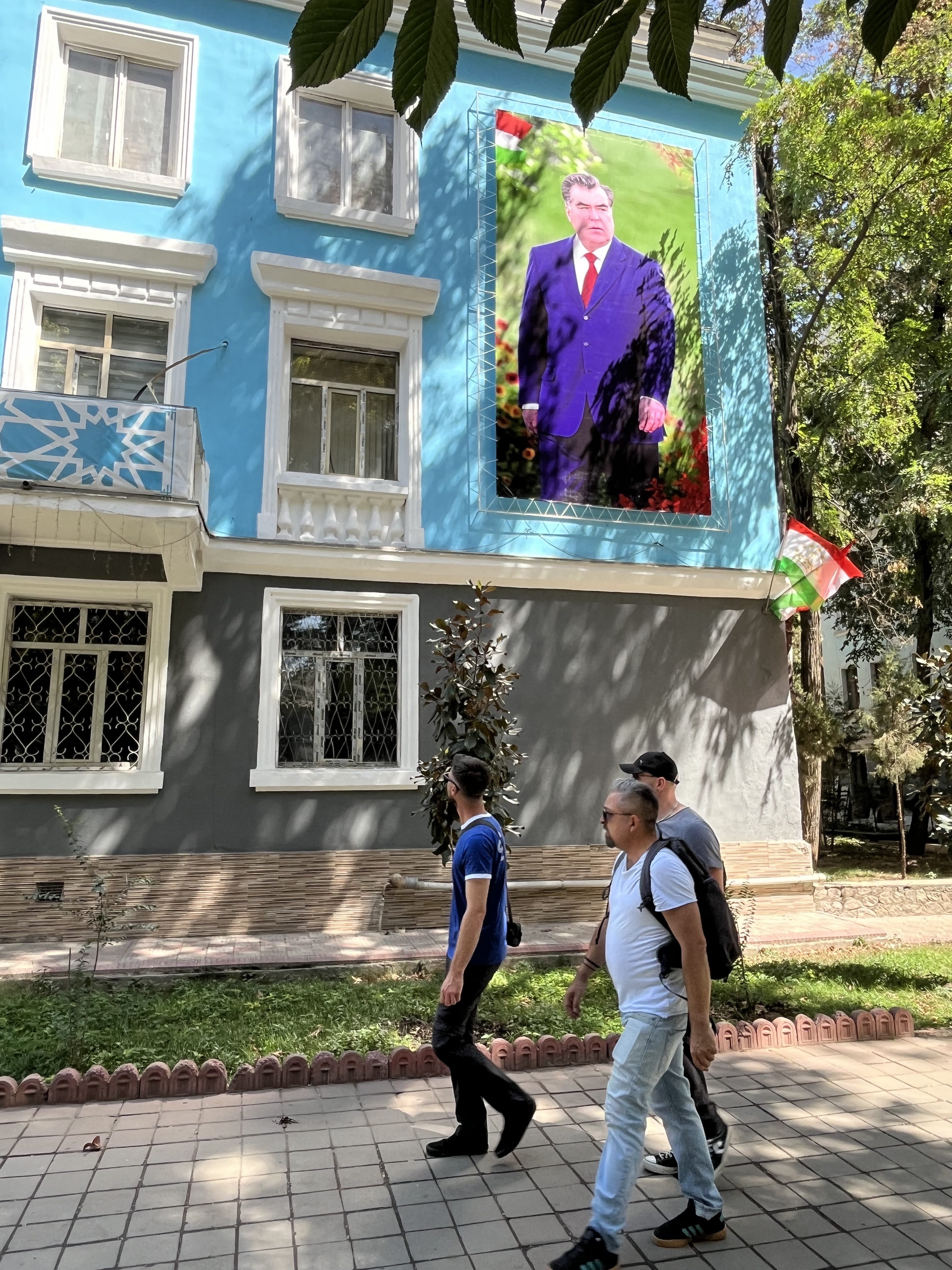
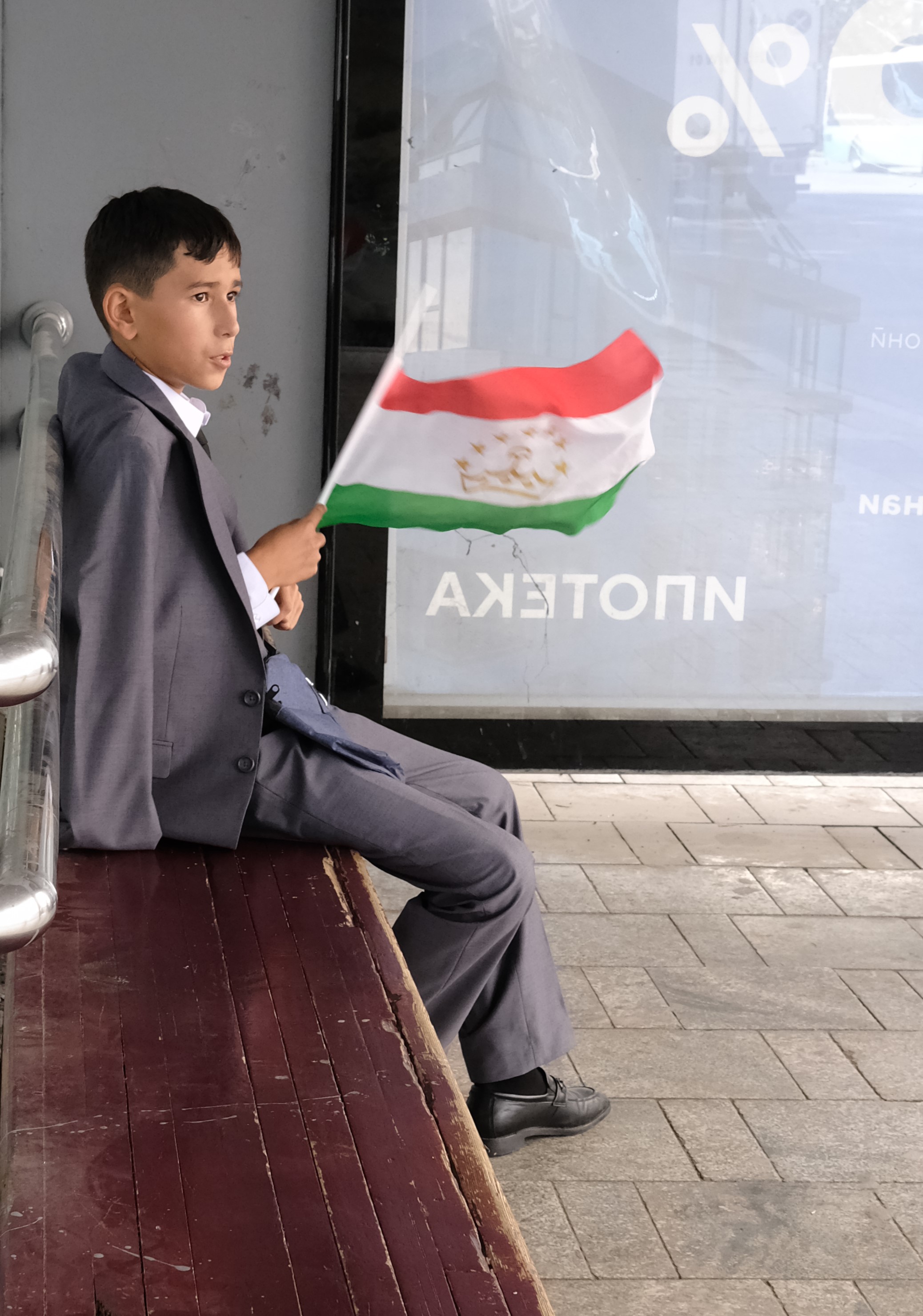
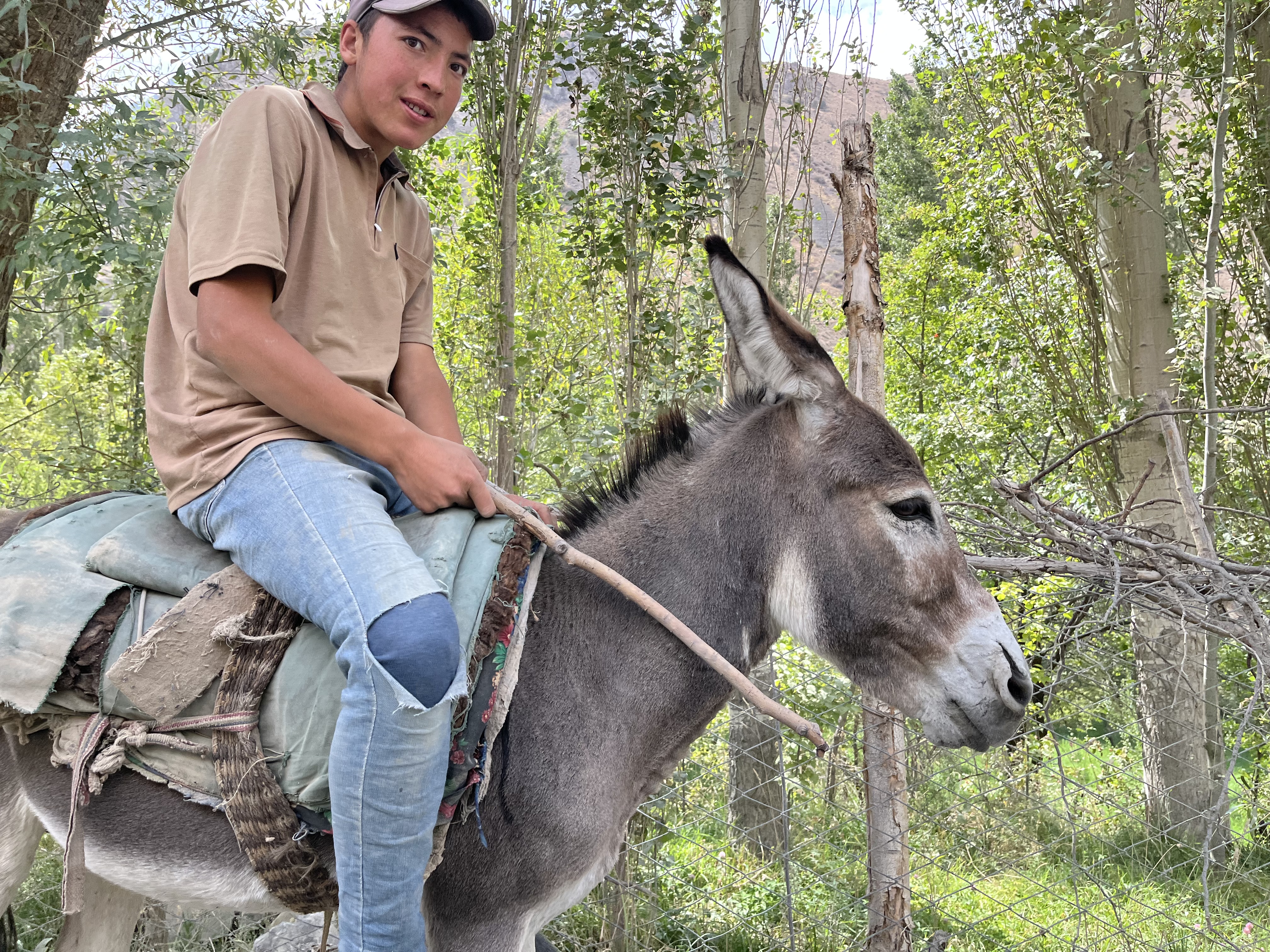
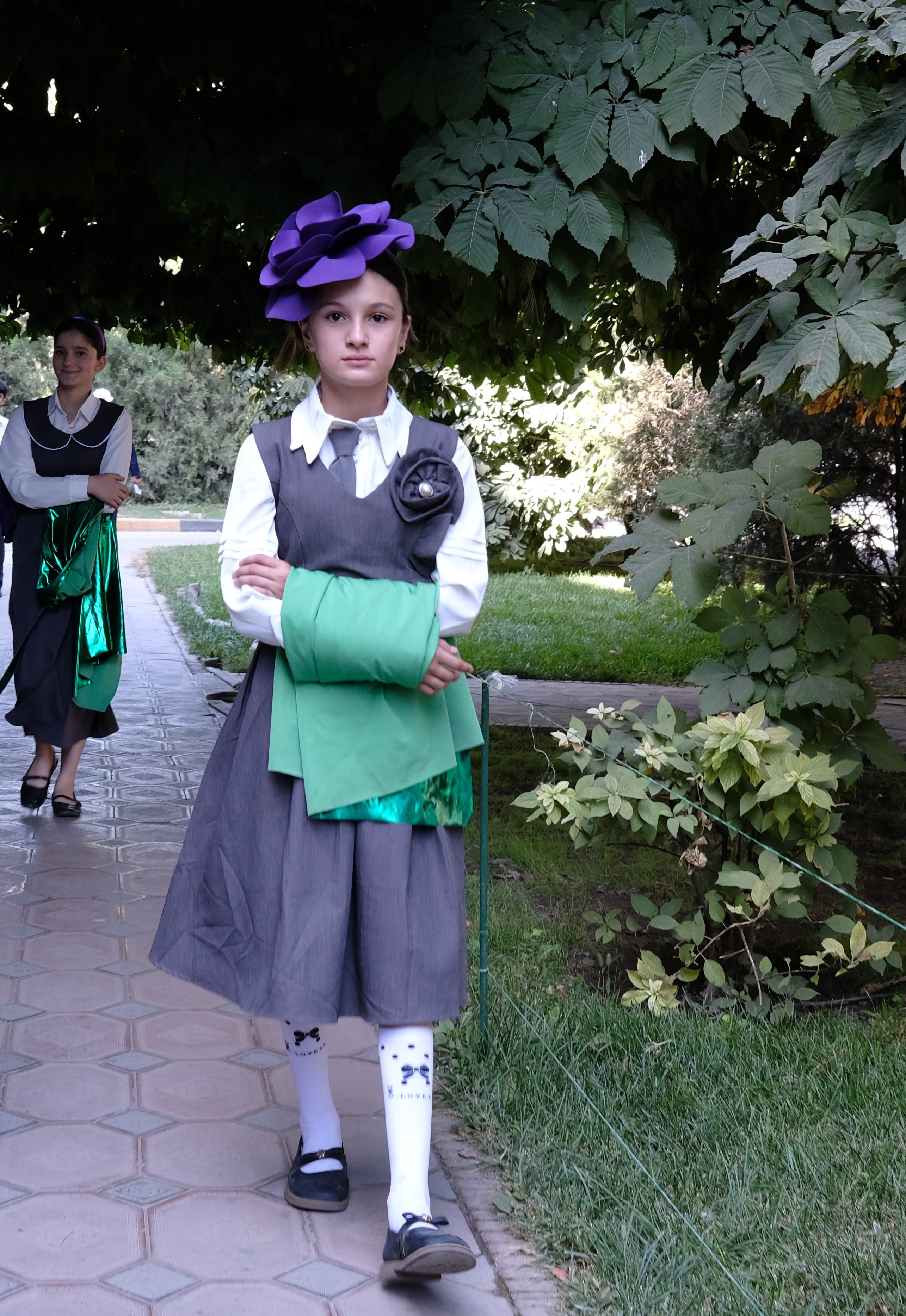
The Tajiks are essentially an ancient Iranian race. Their language is a Central Asian form of Persian, written in Russian Cyrillic since the 1940s, when Stalin ordered the change.A hot day in DushanbeAlthough only 5% to 7% of the land is arable, agriculture is important to the economy, employing over half the country’s workforce and generating around 25% of Tajikistan’s GDP.Qurutob, a traditional Tajik dish of torn layered and flaky flatbread (fatir) soaked in yoghurt (qurut) and topped with onions, tomatoes, cucumbers and herbs.Panjakent, Tajikistan’s third-largest town, sits in the country’s west, not far from the Uzbek border. It has a history stretching back more than 1,500 years, when ancient Panjakent was a flourishing Sogdian city on the Silk Road. Today, the ruins of that once-prosperous settlement lie just outside the modern town.Emomali Rahmon, whose face appears on buildings and streets throughout the country, has ruled Tajikistan for more than 30 years. His rule has become increasingly authoritarian, but it has also brought a degree of order and stability to this small, isolated nation, where mining is a mainstay of the economy — not counting the export of a third of its men aged 20 to 39 to Russia as labourers. Dushanbe still has an attractive older area with lots of trees and stately buildings but it is tearing down many of its old buildings and Soviet-era apartments and houses, replacing them with glass and steel. In some areas walking around the city feels like wandering through one enormous construction site.In 2024, remittances accounted for about 49% of Tajikistan’s GDP, among the highest in the world. The new wealth shows in the grand houses, luxury dwellings and smart cars, but behind it are families separated by migration and visible social divide between those who leave to earn a living and those who stay behind.In 1939, Russians made up 57% of Dushanbe’s population. By 1989, their share had fallen to nearly a third. After the Soviet Union collapsed and civil war broke out in the 1990s, most left. Today, only a small Russian community remains but their influence lingers. Russian is still widely spoken.Waving the Tajik flag on Independence Day on 9 September. For a country that endured a bloody civil war from 1992 to 1997, torn apart by regional rivalries and ideological divisions, freedom and peace are no small achievements. Especially in this tough neighbourhood with Afghanistan and China next door, and Russia, Iran, Pakistan and India within a drone’s throw away.Unlike the mules and donkeys I’ve seen in Pakistan, India and Egypt, those in Tajikistan looked healthy and well cared for.Walking back after the Independence Day parade.Sarytag, a village with a homestay and tranquil walks approximately 7 km from the western shores of Iskanderkul Lake.