
We travel not for trafficking alone:
By hotter winds our fiery hearts are fanned
For lust of knowing what should not be known
We take the Golden Road to Samarkand

James Elroy Flecker, The Golden Journey to Samarkand (1913)
To be honest, I hadn’t really thought much about Samarkand before I found myself there. It’s one of those names that gets tossed around in history books and travel guides—forever linked to the Silk Road, ancient caravans, bustling markets, and epic land crossings. Writers like Goethe, Byron, and Oscar Wilde spun it into the Western imagination as a distant, exotic land, dripping with both treasures and cruelty. A place that’s half-fact, half-fantasy, sitting somewhere between legend and history. But for me, Samarkand wasn’t exactly top of my list. It was more of a “maybe someday” destination—a place you figure you’ll hit when you finally decide to get lost in the forgotten expanses of Eurasia.
And then, in September, I went. The landscape was mellowing as the leaves started to turn from green to gold, and I wasn’t chasing some romantic vision of ancient traders or long-dead kings. No, I went because the opportunity came up, and you don’t say no when it’s for Samarkand, Uzbekistan. My friend Dilshod arranged for his buddy Abdujamil to show me around, and just like that, I was in. What I found was a city that both surprised me and confirmed what I half-expected: Samarkand is as grand and imposing as they say, but there’s something raw and real beneath the surface. It’s a city where history doesn’t sit quietly in the background—it’s in your face.

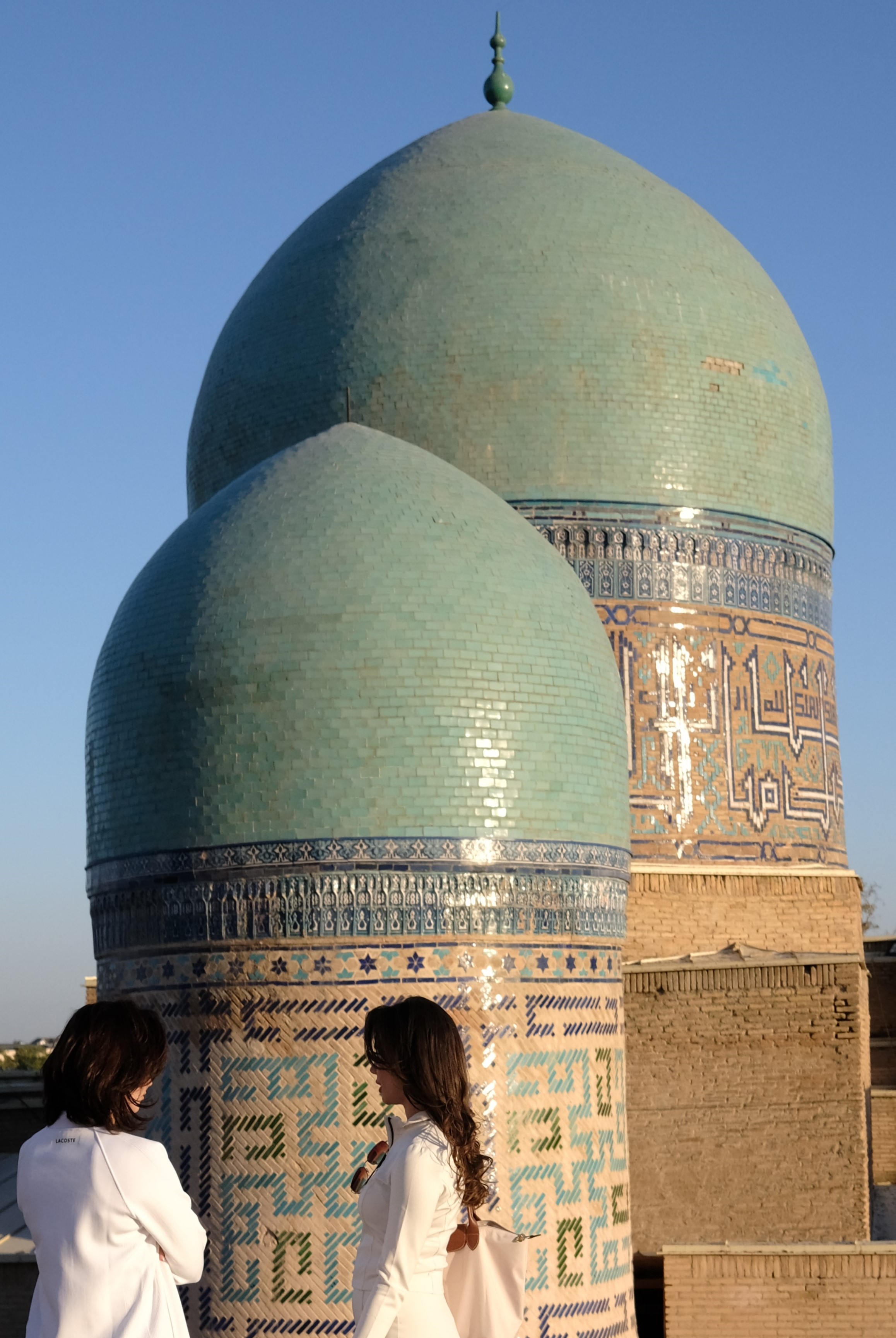
Let’s be clear about one thing: Tamerlane—Amir Timur as the locals call him—still looms large over everything. Born 50 miles from Samarkand, he built his empire with blood and a brutal efficiency that would make even the toughest modern-day despot flinch. And yet, amid all the conquering, he decided to make Samarkand his masterpiece. You can’t run far without seeing his mark. Monuments, mosques, and mausoleums stamp his gleaming blue presence all over the city, shimmering in the sunlight and reminding you of the power he wielded. The place feels like a shrine to conquest.
But Samarkand isn’t just about Tamerlane. This city is older than his empire, older than most things you can name. Long before Timur, this place was home to the Sogdians—an Iranian people who built their own version of Samarkand before the Arabs rolled in, swords in hand and the Qur’an, and changed everything. The city’s history is layered like that—one civilization piled on top of another. You can feel it as you walk the streets—there’s something Persian in the air, something ancient beneath all the grand monuments.
And even though you’re standing in modern Uzbekistan, Samarkand feels more like a distant cousin to ancient Persia. People here speak Tajik, a near twin to Farsi, and the atmosphere of the city is steeped in that blend of Persian and Turkic culture. Samarkand, along with Bukhara, gives you a glimpse of Transoxiana—the land beyond the Oxus River—where every alley, courtyard, and market stall tells you a little more about a place that has been at the crossroads of history for thousands of years.

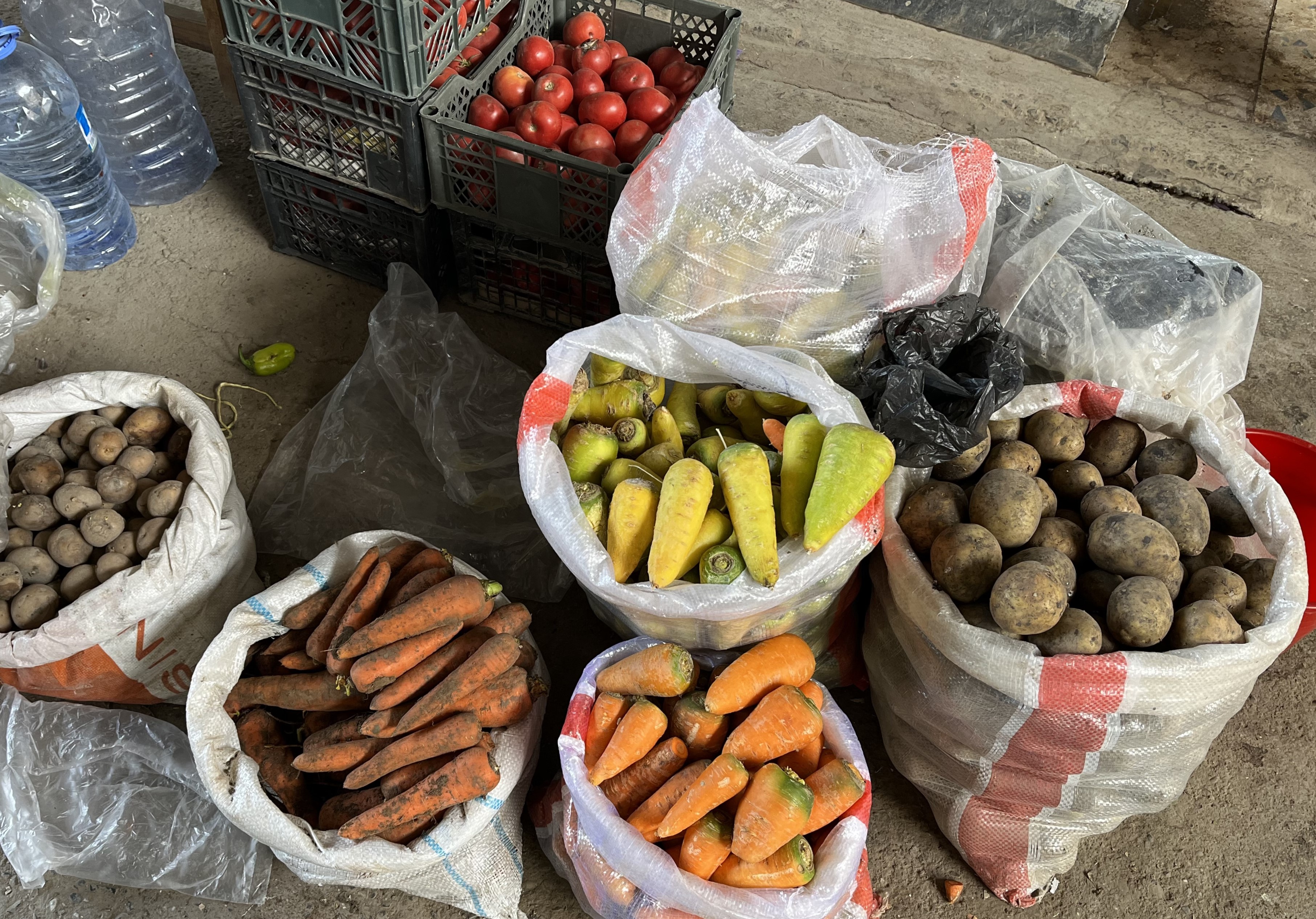
Normally, I wouldn’t go on about fruit, but the melons here deserve a mention. They’re something else: sweet as honey, fragrant like something you’d bottle and sell as perfume, bursting with the flavour of the earth they grew in.
Sun, soil, desert—it all comes together in a way I wasn’t ready for. Melons of every size and shade, sold on the streets like the season’s finest delights. Honestly, they’re worth the trip alone.

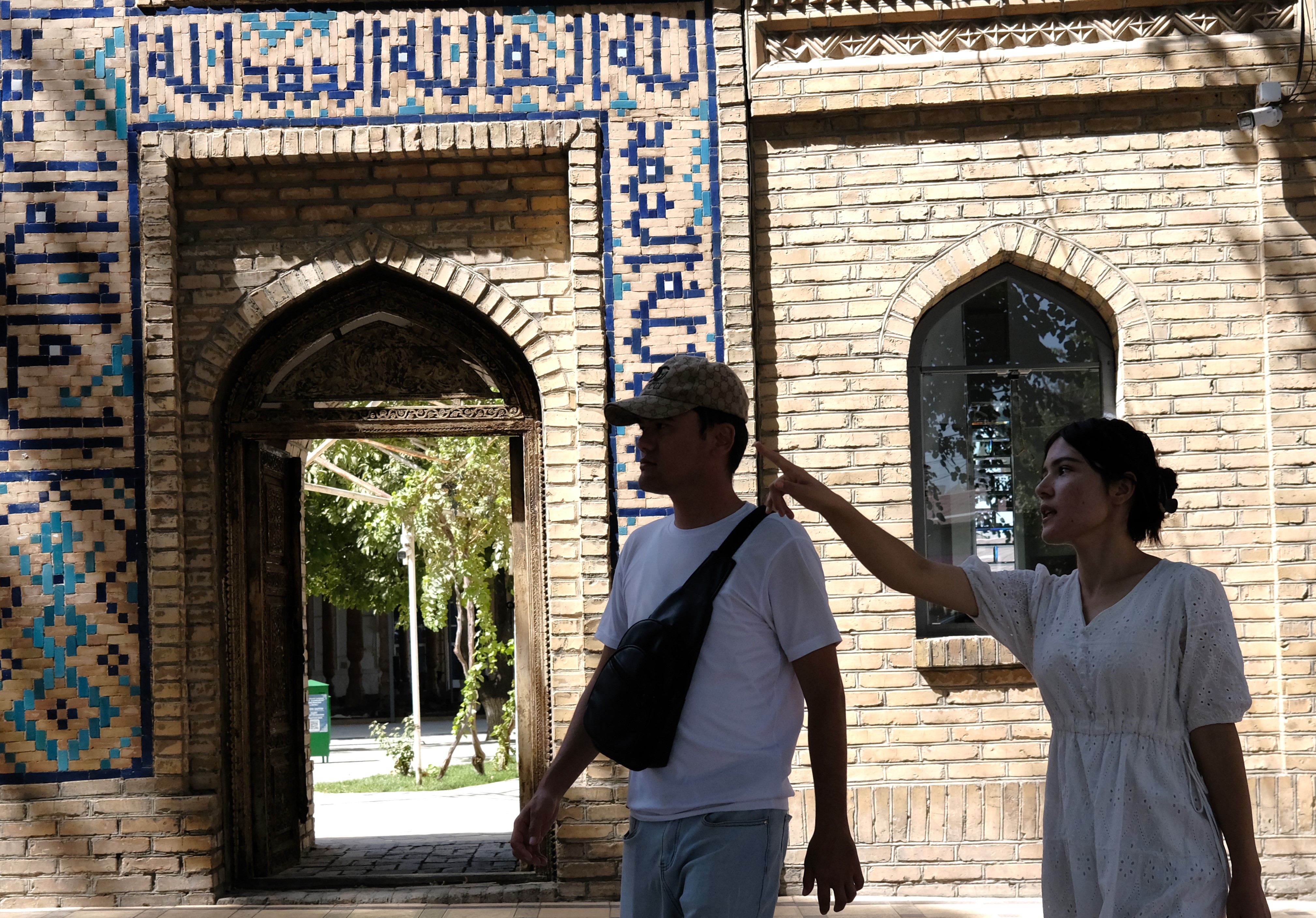

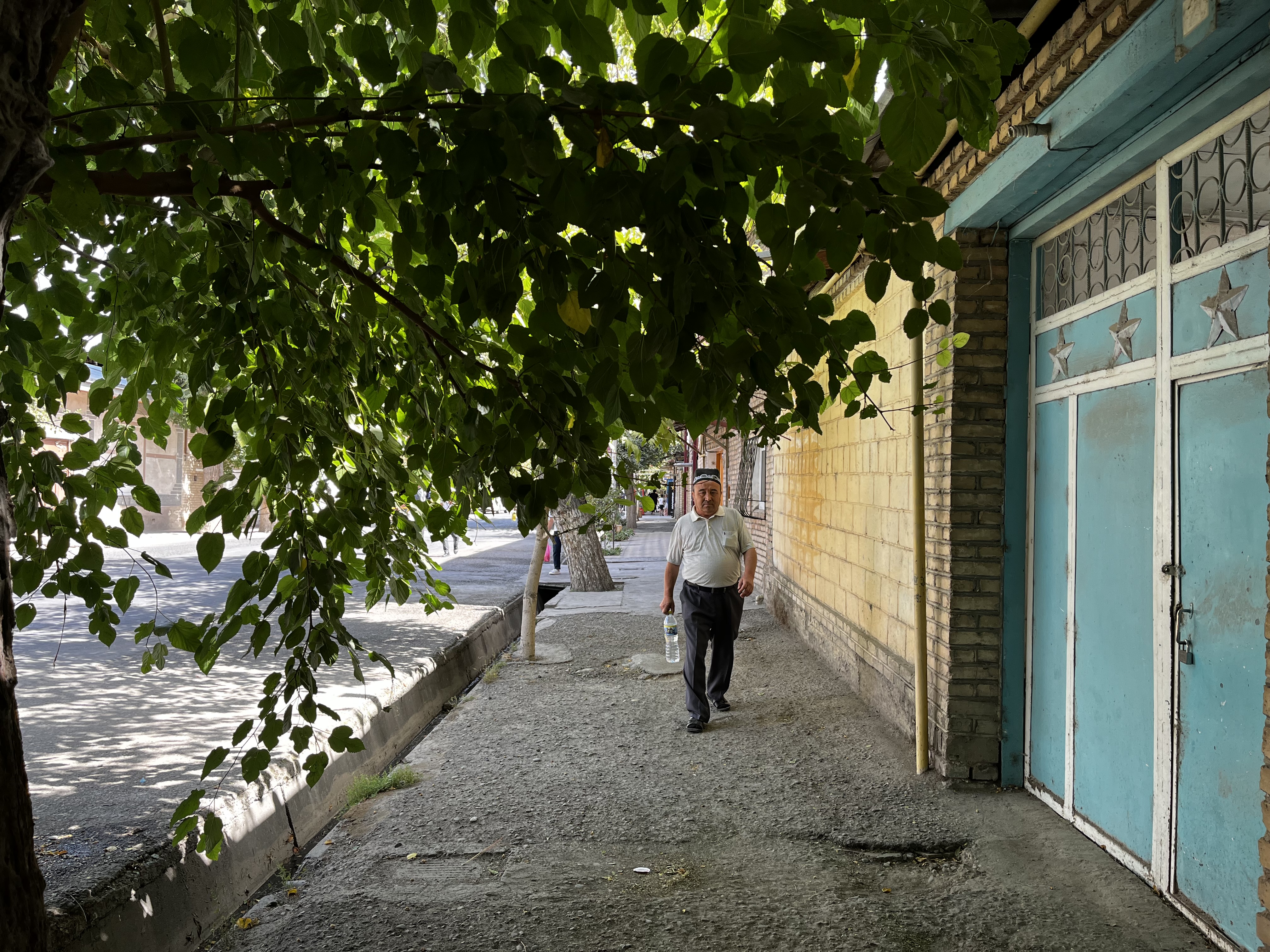
I spent most of my two and a half days walking the tree-lined streets and exploring the hidden courtyards. These are the places where Samarkand still holds onto its quiet, Central Asian charm. The heyday of the Silk Road is long gone. The Russians rolled through in the 19th century, leaving parts of the city in ruins before it was rebuilt by the Soviets in their signature blocky, concrete style. Today Samarkand is a thriving, modern city, the third largest in Uzbekistan. But somehow, despite all that, there’s a sense that Samarkand has never really let go of its past. It’s still there.
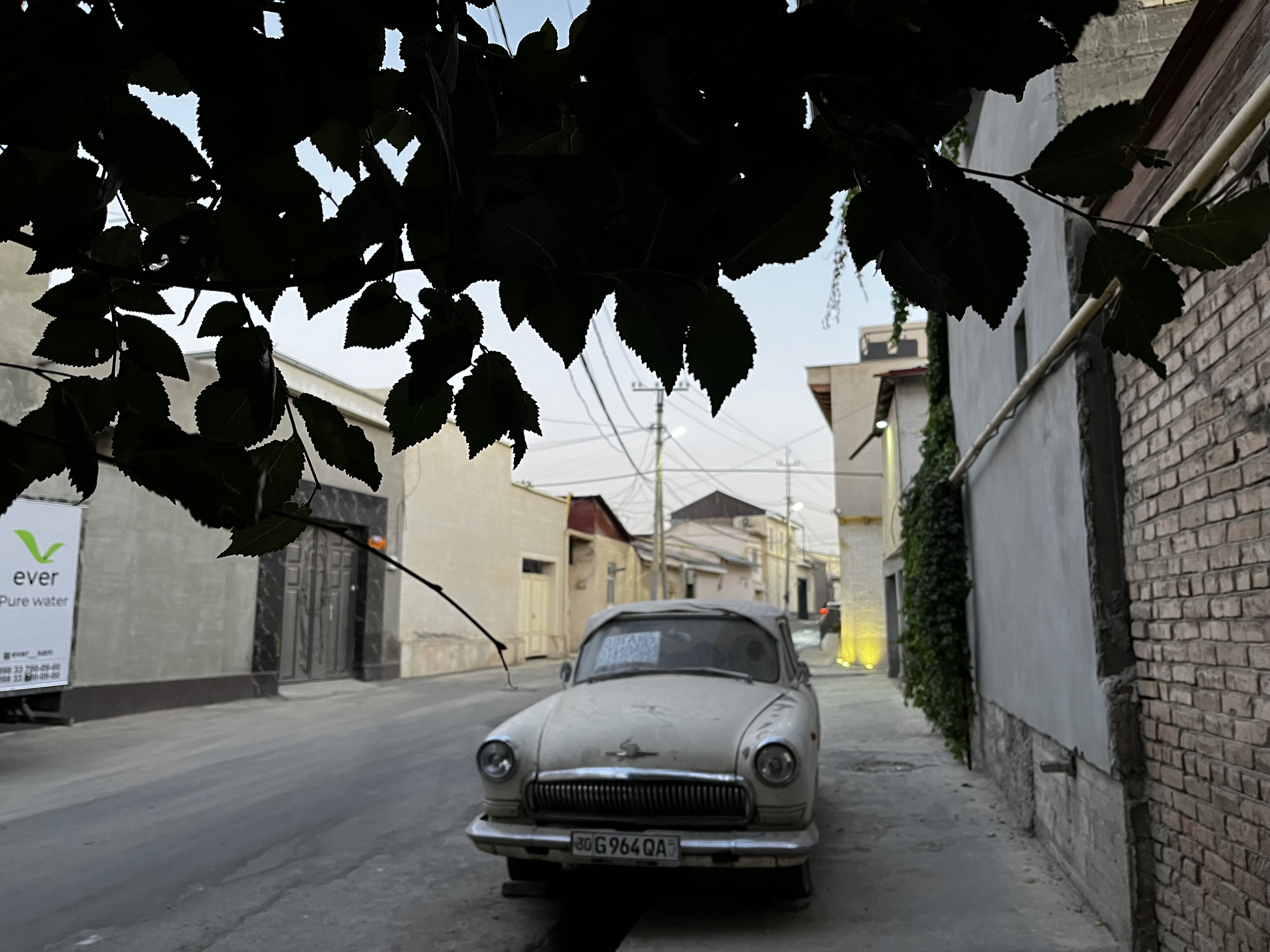
Samarkand might not be the bustling trade hub it once was. The atmosphere has shifted—modernity has taken over, with Chinese-made BYD electric cars gliding down the tidy streets where camels and donkeys once trod. The bearded traders with their sunburnt faces and laden beasts are gone, now only seen in old photographs. But even so, Samarkand still has that weight of history pressing down on you. You feel it in the silence, in the stillness of the dappled sunlight filtering through the trees where time appear to move a little slower, if at all.


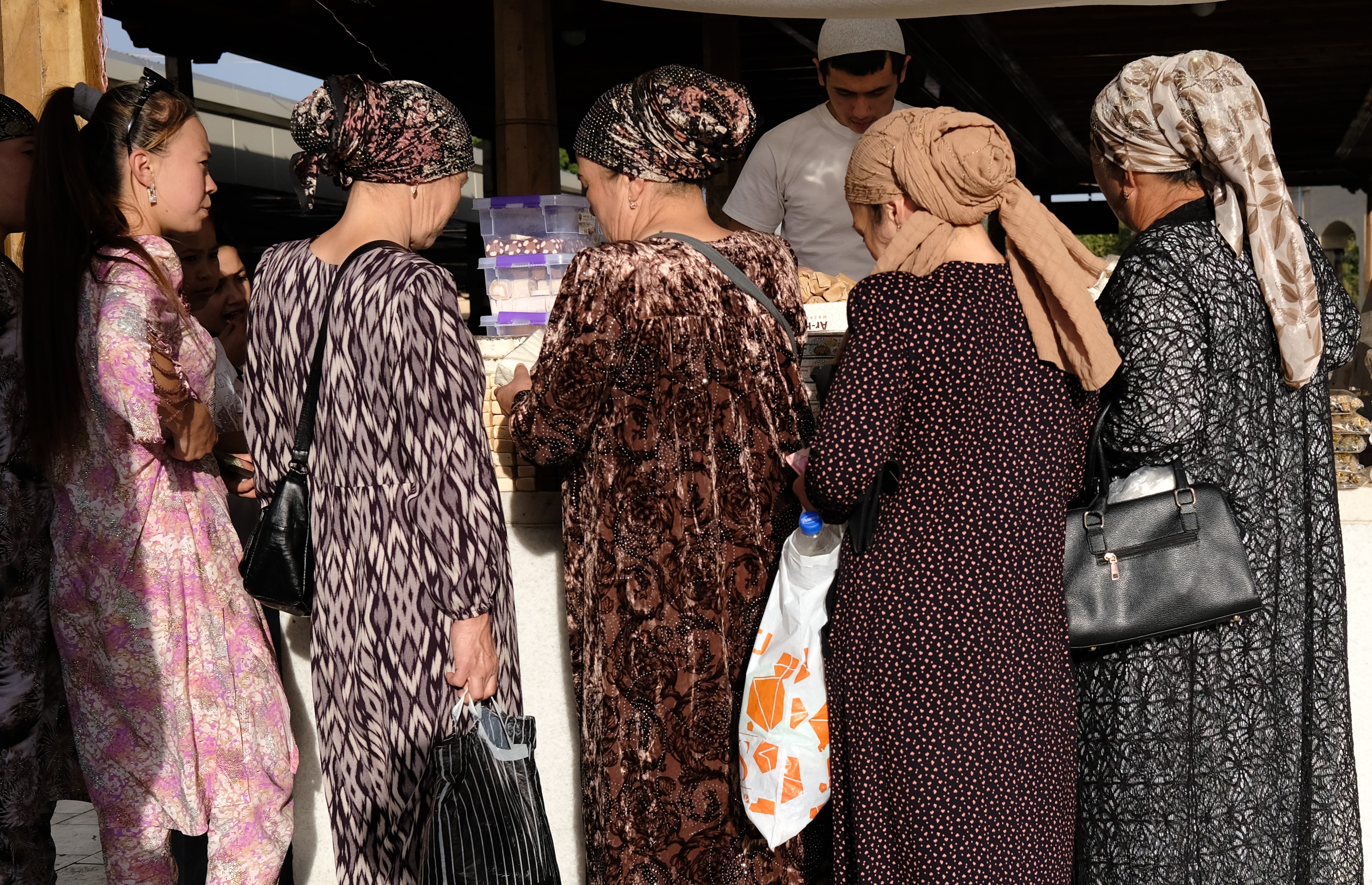



 Kerk Boon Leng Photographs & Notes
A beautiful write up! You capture the essence of Samarkand so well. I’ve been back 2 weeks and am still trying to process my feelings. There is nowhere in the world quite like it!
Thank you Anna. I agree with you that Samarkand is truly special. There are so many layers to its long history. I am somewhat more fascinated by the authentic everyday homes, shops and lesser known buildings than by the grand buildings and monuments although I admit the public buildings in Registan are spectacular. The people in Samarkand are incredibly friendly too. I got a bit lost trying to find my hotel in the evening, a young boy kindly walked beside me, pushing his bicycle, to guide me back.
Time and again you churn out amazing photos. Walks of life beautifully capture. Hope I can be as adventurous as you. When I watched Yusuf Hashim on Ted, reminded me of you bro. Cheers!
Thanks Kuan, I just watched Yusuf Hashim’s TED talk on Re-Imagining Life. Amazing man! He is right – life is short, we must live life, not just exist. Most of the time we don’t need to travel too far or expensively to gain a new perspective. Going somewhere, anywhere for the first time can be an adventure if we are willing to see, hear and open our hearts.
Good morning Kerk… I really love the way how you make your trip… immersing yourself deeply into the the place, just like living in the city rather than just touring… I hope I get the change to go travel with you in future…..
Hi Jo! Thanks for visiting. They call it Slow Travel now, as a counter to mass tourism. But it’s not speed that matters—it’s depth. Even 24 hours in a city can reveal its soul if we’re curious, prepared, and open to seeing through the eyes of locals. As Marcel Proust said, “The real voyage of discovery consists not in seeking new landscapes, but in having new eyes.”
Your Samarkand write up is on another level. Been stirring through my brain for past week …..this coming from a traveller who has been through Isfahan and Peshawar. Envious Kerk… absolutely glorious Samarkand….it’s the name.
Thank you, RC. You’re a true blue traveler.
Samarkand is a must-see on Uzbekistan’s popular Tashkent-Samarkand-Bukhara circuit, now including Khiva. While summers can be hot and winters cold, Uzbekistan is a year-round destination. Locals thrive in all seasons, so visitors can too—aim to avoid tourist crowds more than weather extremes.
The best way to reach Samarkand is by train, especially the Afrosiyob high-speed train, which makes the 300 km journey in just over two hours. It’s a comfortable ride with friendly crew serving complimentary water, tea, coffee, and a pastry.
Citizens of Malaysia, Indonesia, and Singapore enjoy a 30-day visa-free stay. For flights, Batik Air is the best departing Kuala Lumpur for Tashkent on Mondays and Fridays at 5 pm, with return flights the same days at 11:30 pm.